

Maddy summaryThe FAIR Act of 2025 would prohibit companies from requiring pre-dispute arbitration agreements or waivers that prevent individuals from joining class or collective lawsuits in employment, consumer, antitrust, or civil rights cases. This directly affects workers, consumers, and small businesses who currently face forced arbitration for issues like workplace discrimination, product defects, or unfair business practices. The bill makes such agreements unenforceable while allowing voluntary arbitration after disputes arise and leaving collective bargaining agreements unaffected. It applies to all disputes occurring after the law takes effect, without changing how voluntary arbitration works post-dispute.
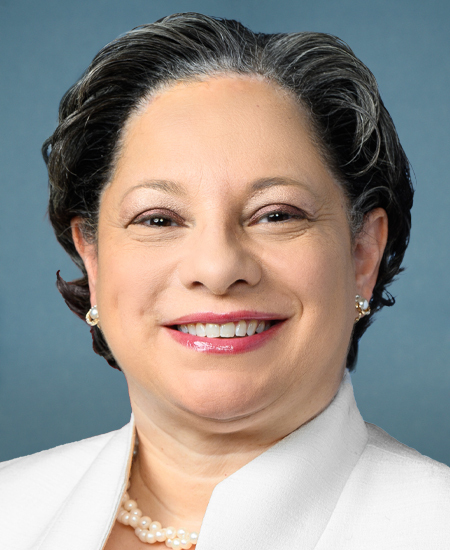
Rep. Jennifer L. McClellan
Sponsored bills
Maddy summaryHR 5309, the Congressional Tribute to Constance Baker Motley Act of 2025, authorizes a posthumous Congressional gold medal for Constance Baker Motley, a pioneering civil rights attorney and judge. The bill directs the Treasury Secretary to strike the medal with her image and name, to be presented to her son, Joel W. Motley III, and her niece, Constance Royster. It also permits the sale of bronze duplicates at cost to cover expenses, with proceeds going to the U.S. Mint fund. This is a commemorative measure with no substantive policy changes, honoring Motley’s legacy as the first African-American woman appointed to a federal judgeship.
Maddy summaryHR 5327 would grant federal recognition to the Nottoway Indian Tribe of Virginia, making the tribe eligible for federal services and benefits. The bill defines the tribe's service area as specific Virginia counties (Nottoway, Southampton, Sussex, Surry, Isle of Wight, Franklin, and Dinwiddie), specifies membership based on the tribe's most recent membership rolls, and allows the Secretary of the Interior to take certain lands held in fee by the tribe into trust. It clarifies that the tribe cannot conduct gaming activities, preserves existing hunting, fishing, trapping, gathering, and water rights, and does not affect the application of the Indian Child Welfare Act. The legislation does not create a new reservation but addresses how lands already held by the tribe might be formally recognized.
Maddy summaryThis resolution (HRES 691) commemorates the 135th anniversary of the 1890 Institutions - 19 historically Black land-grant universities established under the 1890 Morrill Act - to be observed on August 30, 2025. It recognizes these institutions’ 135 years of contributions to agricultural education, research, and extension, serving over 88,000 students in fields like STEM and agriculture. The resolution encourages federal and state ceremonies to celebrate their work and supports continued partnership with the USDA, though it does not create new funding or policy changes. It is a non-binding expression of congressional support for these institutions’ historical and ongoing mission.
Maddy summaryThe RESULTS Act (HR 5269) changes how Medicare calculates payment rates for clinical diagnostic laboratory tests. It requires Medicare to collect data on private payor rates for widely available non-Advanced Diagnostic Laboratory Tests (non-ADLTs) from a qualifying independent claims data entity (a national nonprofit organization meeting specific criteria) rather than relying on data reported directly by laboratories. For tests where data is unavailable, the bill establishes default payment rates based on previous years' rates adjusted for inflation. The law also requires Medicare to publicly explain payment rates with supporting data, affecting Medicare beneficiaries, clinical laboratories, and private payors that provide services covered by Medicare.
Maddy summaryHRES 684 is a non-binding House resolution designating September 9, 2025, as "National Firearm Suicide Prevention Day." It aims to raise public awareness about firearm suicide statistics (including that firearms were used in 55% of U.S. suicides in 2023) and promote safe firearm storage as a key suicide prevention strategy. The resolution encourages health professionals to discuss safe storage with patients and supports existing awareness efforts led by organizations like Brady and End Family Fire. It directly affects the public and healthcare providers by emphasizing evidence-based prevention practices, not by creating new laws.
Maddy summaryThis bill amends the Social Security Act to remove a payment limitation for certain Medicaid Home and Community-Based Services (HCBS) waivers. Specifically, it strikes a provision (subparagraph (C) of Section 1915(c)(11)) that restricted how states could fund these waivers under Medicaid. The change directly affects state Medicaid programs that use HCBS waivers to provide home and community care for people with disabilities or elderly individuals. By removing this restriction, states gain more flexibility in allocating Medicaid funds for these services, without altering eligibility or service requirements.
Maddy summaryThe Preventing HEAT Illness and Deaths Act of 2025 establishes a National Integrated Heat Health Information System (NIHHIS) within NOAA to coordinate federal efforts on heat-related health risks. It creates an interagency committee to develop a strategic plan for improving data sharing, forecasting, and decision support tools for heat events, with a focus on communities disproportionately affected by extreme heat. The bill authorizes a Community Heat Resilience Program that provides grants to states, tribes, and local governments for projects like urban forestry, cooling centers, and heat action plans, requiring at least 40% of funds to target communities with environmental justice concerns. The legislation also mandates a study to identify gaps in heat information and response capabilities across the country. This comprehensive approach aims to reduce heat-related health impacts, particularly for vulnerable populations including older adults, outdoor workers, and communities of color.
Maddy summaryHR 5007 requires the U.S. Immigration and Customs Enforcement (ICE) Director to submit quarterly reports starting 30 days after enactment. These reports must include the total number of arrests, detainees in custody, and deportations from the previous quarter, along with breakdowns showing the percentage of individuals convicted of crimes and their ICE Threat Level category (based on offense severity). The reports must be published online by ICE, providing transparency on enforcement data. This bill does not change immigration law or policy but mandates regular public disclosure of specific arrest, detention, and deportation statistics.
Maddy summaryThis bill (HJRES 115) terminates a presidential emergency declaration made on August 11, 2025, which claimed a "crime emergency" in Washington, D.C. It directly affects the District of Columbia by ending federal restrictions that prevented D.C. from using $1 billion in locally-raised funds for public safety, law enforcement, fire services, and schools. The resolution cites that the emergency declaration was legally flawed - section 740 of the DC Home Rule Act does not permit federalizing the Metropolitan Police Department - and notes that D.C. violent crime has reached a 30-year low. The bill formally ends the emergency under the DC Home Rule Act, restoring D.C.'s authority over its own budget and public safety resources.