

Maddy summaryThe RISEE Act of 2023 creates a National Oceans and Coastal Security Fund to support coastal communities and ecosystems. It allocates 37.5% of offshore wind revenue directly to eligible coastal states using a formula based on tidal shoreline length, coastal population density, and distance from offshore wind projects. States must use these funds for coastal protection, habitat restoration, infrastructure, or fisheries research, with strict annual reporting requirements to the Department of the Interior. The bill prohibits using these funds for litigation or creating marine monuments, ensuring resources directly support coastal community needs.
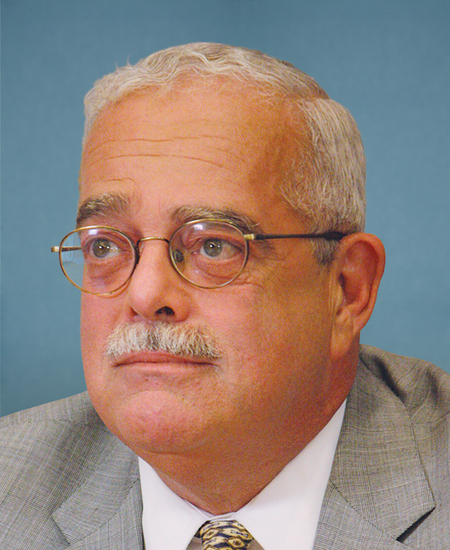
Rep. Gerald E. Connolly
Sponsored bills
Maddy summaryHR 724, the Arctic Refuge Protection Act, repeals the existing oil and gas program for the Arctic National Wildlife Refuge in Alaska and designates approximately 1.56 million acres of the refuge's coastal plain as federal wilderness. This bill directly affects the Arctic Refuge by permanently prohibiting oil and gas leasing and development in that specific area. The key mechanism is adding the designated land to the National Wilderness Preservation System under the Wilderness Act, requiring it to be managed for its natural conditions. This change legally protects the area from future fossil fuel extraction activities.
Boundary Waters Wilderness Protection and Pollution Prevention Act This bill withdraws approximately 234,328 acres of federal land and waters in a specified area in the Rainy River Watershed of Superior National Forest in Minnesota from entry, appropriation, and disposal under the public land laws; location, entry, and patent under the mining laws; and operation of the mineral leasing, mineral materials, and geothermal leasing laws. The area is adjacent to the Boundary Waters Canoe Area Wilderness and the Boundary Waters Canoe Area Wilderness Mining Protection Area. Land or interest in land within such area that is acquired by the United States shall be immediately withdrawn in accordance with this bill. The Forest Service is authorized to permit the removal of sand, granite, iron ore, and taconite from national forest system lands within such area if the removal is not detrimental to the water quality, air quality, and health of forest habitat within the Rainy River Watershed.
Maddy summaryHR 1106, the COST of Relocations Act, requires federal agencies to conduct detailed benefit-cost analyses before moving offices or reassigning positions that affect more than 5% or 100+ employees (whichever is smaller) outside their current commuting area. Agencies must quantify benefits and costs, include stakeholder engagement plans, diversity strategies, and risk assessments in their analysis, and submit it to their Inspector General. The Inspector General then reviews the analysis and reports findings to Congress within 90 days, assessing compliance with federal guidelines and comparing relocation options. This applies to major relocations like moving entire agency components or replacing significant staff positions outside their current location, aiming to increase transparency and accountability in federal decision-making.
Maddy summaryHR 1088, the Shirley Chisholm Congressional Gold Medal Act, authorizes a posthumous Congressional Gold Medal to honor Congresswoman Shirley Chisholm, the first African-American woman elected to Congress (1968) and the first Black candidate for a major party's presidential nomination (1972). The bill directs the Treasury Secretary to design and strike a gold medal featuring Chisholm's image, which will be presented by Congress and then permanently displayed at the Smithsonian Institution. Duplicate bronze medals may be sold to the public to cover production costs, with proceeds deposited into the U.S. Mint fund. This bill commemorates Chisholm's legacy and achievements without creating new laws or affecting any current policies.
Maddy summaryThis bill authorizes a posthumous Congressional gold medal for Constance Baker Motley, a pioneering civil rights attorney and federal judge. It directs the Treasury to strike a gold medal featuring her image and name, to be presented to her son, Joel Motley III, and niece, Constance Royster. The medal is a commemorative tribute recognizing her historic contributions to civil rights and her service as the first African-American woman appointed to a federal judgeship. No new policies or programs are created; the bill solely honors her legacy through a commemorative medal.
Maddy summaryThe HELP Copays Act (HR 830) changes how health insurance plans calculate patient cost-sharing. It requires that payments made by third parties (like pharmacies, charities, or discount programs) toward medical costs count toward a patient's deductible, copay, or out-of-pocket limit. This directly affects insured individuals who receive financial assistance, discounts, or product vouchers for healthcare expenses. The law ensures these external payments reduce the patient's actual out-of-pocket costs more quickly, aligning with existing Affordable Care Act and Public Health Service Act requirements.
This resolution calls on the United States and North Korea to begin the process of reuniting Korean Americans with their immediate relatives in North Korea. (Many families were divided after the signing of the Korean War Armistice Agreement, which divided the Korean Peninsula into North and South Korea.)
Maddy summaryThis bill authorizes a single Congressional Gold Medal to honor all U.S. Army Dustoff crews who served during the Vietnam War (1962-1973). It recognizes their critical role in evacuating nearly 900,000 wounded personnel, including U.S., South Vietnamese, and allied forces, under extreme combat conditions. The medal, designed with input from the Secretary of Defense, will be presented to the U.S. Army Medical Department Museum for permanent display. Duplicate bronze medals may be sold to cover costs, but the primary action is the commemorative recognition of these crews' service.
Maddy summaryThis bill amends the Higher Education Act to expand eligibility for student loan repayment plans. It adds "service as a primary family caregiver of a veteran" to the list of qualifying public service roles under the program. Specifically, it allows family caregivers participating in the VA's comprehensive caregiver assistance program (under 38 U.S.C. § 1720G) to count their caregiving work toward student loan forgiveness. This directly affects military and veteran family caregivers who provide care through the VA's established program.