

Maddy summaryThe DERAIL Act requires the Secretary of Transportation to update federal regulations within 90 days to define a "high-hazard flammable train" as any train carrying at least one tank car of flammable liquid or gas, plus additional safety-related materials. Railroad carriers must report within 24 hours after a derailment involving toxic-by-inhalation materials to the National Response Center, state officials, local authorities, and Tribal governments. The report must specify all toxic-by-inhalation materials on the train. This bill directly affects railroad companies and the Department of Transportation by establishing new safety reporting standards for hazardous material incidents.
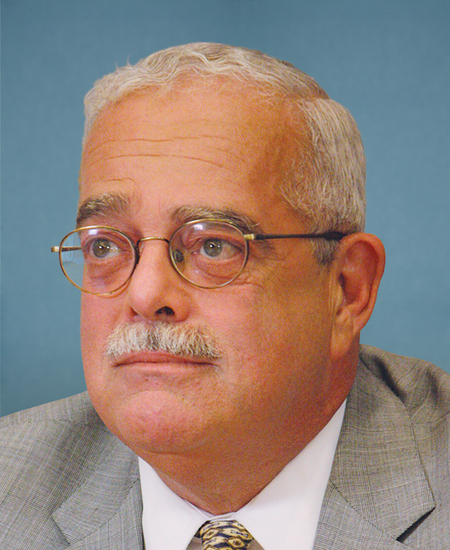
Rep. Gerald E. Connolly
Sponsored bills
Maddy summaryThis bill establishes pay equity for federal firefighters by adjusting how their retirement benefits are calculated and setting a standard workweek. It requires retirement annuities to include overtime hours worked as part of a firefighter's regular schedule (e.g., overtime during standard shifts), rather than excluding them. The bill also mandates a maximum 60-hour regular workweek for federal firefighters, set by the Office of Personnel Management within one year of enactment. These changes directly affect federal firefighters, aiming to improve pay comparability with municipal firefighters and other federal employees while supporting recruitment and retention.
Maddy summaryThis bill authorizes the President to posthumously award Doris Miller, an African-American Navy cook who served during World War II, the Medal of Honor - the highest military honor - for his actions during the December 7, 1941, Pearl Harbor attack. It directly affects Miller (who died in 1943) by correcting a historical oversight: he was initially recognized with a Navy Cross but never received the Medal of Honor, despite being among those who could have earned it. The key provision waives standard time limits for posthumous Medal of Honor awards under U.S. Code, enabling the President to formally recognize Miller's valor - specifically his actions manning a machine gun under fire and saving lives - after his death. The bill cites that no African-American sailor received the Medal of Honor for Pearl Harbor actions, while Miller's heroism was documented in Navy reports.
Maddy summaryThe Federal Employees Sustainable Investment Act establishes a new investment option within the federal retirement savings system, called the Corporate Responsibility Stock Index Fund, for federal employees. This fund would invest in stocks meeting specific environmental, social, and governance criteria, including reducing greenhouse gas emissions, strong corporate governance, fair workplace practices, and human rights standards. The fund must mirror a passively managed index meeting these criteria and perform comparably to other investment choices available to federal employees.
Maddy summaryHR 1244 authorizes Congress to award a gold medal collectively to Africans and their descendants who were enslaved in the U.S. from 1619 to 1865, recognizing their contributions to America's economic foundation. The bill directs the Treasury Secretary to design and strike the medal, which will be permanently displayed at the Smithsonian's National Museum of African American History & Culture. It also permits the sale of bronze duplicates to cover costs, with proceeds going to the U.S. Mint. This is a commemorative measure, not a policy change, focusing on symbolic recognition of historical contributions.
This bill provides for the award of a Congressional Gold Medal posthumously to Doris Miller in recognition of his acts of valor while a member of the Navy during World War II.
Maddy summaryHR 1263, the Transformation to Competitive Integrated Employment Act, aims to end the use of special certificates that allow employers to pay people with disabilities below minimum wage or customary rates for similar work. The bill requires employers currently using these certificates to transition to competitive integrated employment where individuals with disabilities receive at least minimum wage or the customary rate for similar work. It creates grant programs for states and specific employers to support this transition, with a timeline to phase out special certificates over four years. The act also establishes reporting requirements and technical assistance to help individuals with disabilities find and retain integrated employment.
Maddy summaryThe Richard L. Trumka Protecting the Right to Organize Act of 2023 strengthens workers' rights to organize unions by making it harder for employers to interfere with organizing efforts. Key provisions include changing the definition of "employee" to make it more difficult to classify workers as independent contractors, prohibiting employers from threatening to permanently replace striking workers, and requiring employers to provide voter lists for union elections. The bill also creates a new electronic voting system for union elections, strengthens whistleblower protections for workers reporting labor violations, and increases penalties for unfair labor practices. These changes directly affect workers seeking to form unions, employers who may interfere with organizing, and labor organizations. The bill aims to make it easier for workers to exercise their right to collective bargaining under the National Labor Relations Act.
Maddy summaryHRES 132 is a non-binding House resolution expressing condolences for the over 36,000 earthquake victims in Türkiye and Syria and commending humanitarian response efforts. It specifically condemns the Assad regime for obstructing aid delivery and exploiting the disaster, urging the Biden administration to open all UN border crossings for aid and prevent U.S.-funded assistance from being diverted to Syria’s government. The resolution also calls for continued enforcement of the Caesar Syria Civilian Protection Act to protect Syrian civilians. As a symbolic resolution, it does not create new law but formally directs the administration’s diplomatic approach to the crisis.
Maddy summaryHR 1012, the Cardiac Arrest Survival Act of 2023, creates a uniform federal liability shield for individuals and entities involved in using or managing automated external defibrillators (AEDs) during cardiac emergencies. It protects AED users (including non-professionals), property owners/managers where AEDs are located, and AED owners/acquirers from civil lawsuits - unless harm resulted from gross negligence, willful misconduct, or a licensed professional acting within their scope of practice. The law overrides inconsistent state "Good Samaritan" laws, ensuring consistent protection regardless of AED signage, registration, or user training. This aims to encourage wider AED deployment in public spaces by reducing liability concerns for businesses and property owners.