

Maddy summaryThe Homeless Children and Youth Act of 2023 amends the McKinney-Vento Homeless Assistance Act to better support homeless children and youth. It extends the timeframe for determining homelessness from 14 to 30 days, creates a new definition for "child or youth defined as homeless under any other Federal program" (including those covered by Head Start, Child Care Development Block Grant, and other programs), and requires that all individuals identified as homeless under any provision of the Act be eligible for services without additional verification. The bill mandates public reporting of detailed homeless data through the Homeless Management Information System (HMIS), including demographic information about homeless individuals by age, disability, and length of homelessness. It also requires that all homeless populations proposed to be served receive equal priority without discrimination based on subpopulation.
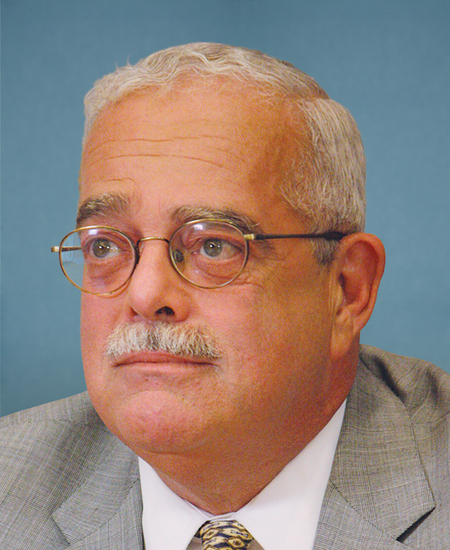
Rep. Gerald E. Connolly
Sponsored bills
Maddy summaryHR 5217, the Refuge From Cruel Trapping Act, prohibits the possession or use of body-gripping traps (devices that kill or severely injure wildlife) within National Wildlife Refuges. It directly affects individuals and entities using such traps in refuges, with key exceptions allowing federal agencies to use them for controlling invasive species or protecting endangered species, Alaska refuge operations, and tribal subsistence hunting. Violations carry penalties including civil fines up to $500 per trap, up to 180 days in jail, and forfeiture of the trap and captured wildlife. The bill requires the Secretary of the Interior to issue implementing regulations within 120 days, though enforcement begins 120 days after enactment regardless of regulations.
Maddy summaryThe TREATS Act amends the Controlled Substances Act to allow healthcare providers to use telehealth for the initial evaluation when prescribing certain medications for opioid use disorder. Specifically, it replaces the requirement for an in-person medical evaluation with an option for a telehealth evaluation for medications in schedules III, IV, or V (excluding methadone) that are FDA-approved to treat opioid use disorder. The telehealth evaluation must be conducted via real-time audio or video communication meeting federal and state requirements, as defined by the bill. This change directly affects providers prescribing these medications and patients seeking treatment for opioid use disorder in these categories.
Maddy summaryThis bill removes certain pay adjustments from federal pay cap calculations. It excludes annual pay adjustments under Section 5303 and locality-based pay adjustments under Section 5304 when determining if an employee's total pay exceeds maximum limits. This directly affects federal civilian employees, administrative law judges, and military personnel by preventing these adjustments from counting toward pay caps. As a result, employees may reach higher pay levels without triggering cap restrictions, addressing pay compression concerns.
Maddy summaryHR 4249, the VET PFAS Act, provides healthcare benefits to veterans and their families exposed to PFAS chemicals at military bases. Veterans who served at contaminated bases (including through water sources) and developed specific conditions like testicular cancer, ulcerative colitis, or pregnancy-induced hypertension become eligible for VA healthcare without needing medical proof of cause. Family members who lived at these bases or were in utero during such residence also qualify for covered conditions. The bill creates a "presumption of service connection" for these illnesses, meaning the VA assumes PFAS exposure caused the condition. It requires annual VA reports tracking beneficiaries, denials, and conditions treated.
Assault Weapons Excise Act This bill imposes an additional 1000% excise tax on large capacity ammunition feeding devices and semiautomatic assault weapons. It exempts from such additional tax devices and weapons acquired by the United States or by a state or local government.
Maddy summaryThis bill authorizes increased federal funding for early childhood special education programs under the Individuals with Disabilities Education Act (IDEA). It specifically restores funding for Part C (services for infants and toddlers with disabilities) and Section 619 (preschool programs for children with disabilities ages 3-5) by setting annual appropriations from $503 million to $1.22 billion for Section 619 and $932 million to $1.73 billion for Part C through 2028. These funds would directly support states in delivering high-quality early intervention and preschool services to children with disabilities and their families. The bill aims to reverse decades of reduced per-child funding, which had fallen significantly from historical highs.
Maddy summaryHR 5155 creates a new temporary visitor visa category specifically for family visits to the U.S. It directly affects U.S. citizens and lawful permanent residents wanting to host relatives for short stays, and their eligible relatives (including parents, children, siblings, and extended family). The bill requires visitors to have a financial sponsor, short-term medical insurance covering U.S. expenses, and proof of intent to leave within 90 days per year - reducing the previous 180-day limit. It explicitly states this visa does not count as immigrant status, and applicants who previously overstayed a similar visa face additional restrictions unless extraordinary circumstances apply.
Maddy summaryHJRES 84 designates August 20 as "Slavery Remembrance Day" to commemorate the arrival of the first enslaved Africans in what is now Virginia on August 20, 1619. The resolution urges the President to issue an annual proclamation encouraging Americans to observe the day with ceremonies and activities reflecting on slavery's history. It specifically honors 21 Black Congress members from the Reconstruction Era as honorary cosponsors and calls for acknowledging the enduring impacts of slavery. As a symbolic resolution, it does not create new laws or directly affect any group beyond establishing an annual observance.
Maddy summaryHRES 636 is a non-binding House resolution condemning China's implementation of the Hong Kong national security law and related actions undermining Hong Kong's autonomy. It specifically criticizes the law's use to arrest over 200 people - including activists like the "Hong Kong 47" and media figure Jimmy Lai - and alleges it has eroded Hong Kong's independent judiciary, freedoms of speech and assembly, and its status as a separate financial hub. The resolution urges governments to hold China accountable, calls for dropping all national security law charges against detained activists, and questions Hong Kong's continued separate voting rights at international organizations. As a symbolic statement, it does not create new legal requirements but aligns with the existing Hong Kong Human Rights and Democracy Act by advocating for accountability measures.