

Maddy summaryThe Working Dog Commemorative Coin Act (HR 807) directs the U.S. Treasury to mint three types of commemorative coins honoring working dogs' service: $5 gold coins, $1 silver coins, and half-dollar coins with specific weight and composition requirements. Each coin will carry a surcharge ($35 for $5 coins, $10 for $1 coins, $5 for half-dollars) that will be paid directly to America's VetDogs to support their programs providing service dogs for veterans, the disabled, and others. The coins will be issued in 2027 with designs reflecting working dogs' roles in military, detection, therapy, and assistance work. The legislation specifies that all surcharge revenue must fund America's VetDogs' operations without creating new government programs. This is a commemorative measure focused on honoring working dogs' contributions through coin sales, with all surcharge funds going to a specific nonprofit organization.
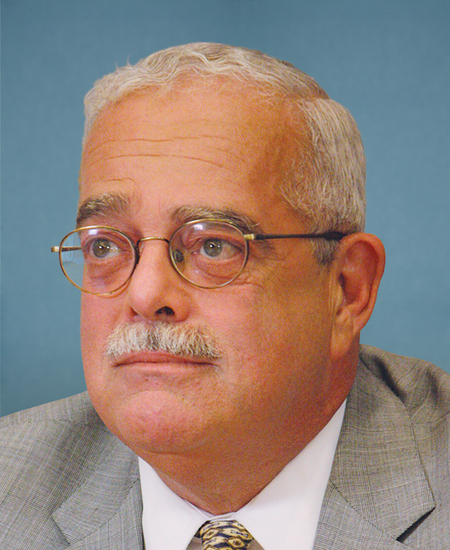
Rep. Gerald E. Connolly
Sponsored bills
Maddy summaryHR 10209 extends the required service period for participants in the Federal Cyber Scholarship for Service Program from 3 to 5 years. It also removes restrictions that previously limited scholarship recipients' access to full federal loans under the Higher Education Act, ensuring they can receive the full loan amount regardless of other education law limitations. This bill directly affects students who receive cybersecurity scholarships through the program, changing their post-graduation service commitment and simplifying their access to financial aid. The changes aim to strengthen the program's ability to recruit and retain cybersecurity talent for federal positions.
Maddy summaryThis bill establishes a Coordinator within the State Department to manage the relocation and resettlement of eligible Afghan allies and to assist U.S. citizens and lawful permanent residents in Afghanistan who seek U.S. support to leave the country. The Coordinator can hire temporary staff (preferring Foreign Service appointments), enter contracts, and coordinate with other federal agencies to use their funds for these efforts. The Coordinator must notify relevant congressional committees 15 days before transferring funds between agencies. The position and its authorities will expire three years after the bill becomes law.
Maddy summaryThis bill enhances the existing American Battlefield Protection Program by expanding eligibility for grants to include Tribes, nonprofit organizations, and educational institutions, alongside States and local governments. It clarifies that eligible sites must be identified in the 1993 Civil War battlefield report or 2007 Revolutionary War/War of 1812 report, excluding sites already within National Park boundaries. The bill also requires the Secretary to submit updated battlefield condition reports to Congress every 10 years, starting two years after enactment, tracking preservation efforts and battlefield changes. These changes streamline program administration and ensure ongoing assessment of historic battlefield sites.
Maddy summaryHR 3012 reauthorizes U.S. programs under the North Korean Human Rights Act of 2004 through 2028, extending funding and reporting requirements for existing initiatives. It directs the U.S. Agency for Global Media to continue broadcasting independent news into North Korea, supports transparent humanitarian aid delivery, and urges China to halt forcible repatriation of North Korean refugees. The bill directly affects North Korean citizens by promoting information access and refugee protection, and North Korean refugees in China by advocating for UNHCR access and refugee rights. Key provisions include extending program deadlines, reinforcing U.S. diplomatic efforts on human rights, and calling for swift confirmation of the Special Envoy on North Korean Human Rights Issues.
Maddy summaryHRES 837 is a non-binding resolution passed by the U.S. House of Representatives on November 1, 2023, reaffirming U.S. commitment to the Philippines. It specifically calls for invoking the U.S.-Philippines Mutual Defense Treaty if Philippine assets (including Coast Guard vessels) are attacked in the South China Sea, urges joint U.S.-Philippines patrols in the region, and objects to China's disputed territorial claims. The resolution does not create new laws or funding but expresses congressional support for existing defense agreements and diplomatic positions. It directly addresses U.S. foreign policy toward the Philippines and the South China Sea disputes.
Maddy summaryHR 5658, the Vote by Mail Tracking Act, requires that all mail-in ballots for federal elections be sent in envelopes containing a Postal Service barcode for tracking. This applies to every ballot mailed for federal office elections after the bill becomes law. The envelope must also meet Postal Service design standards for ballot envelopes, be machineable, and display the Official Election Mail Logo. The bill directly affects voters using mail-in ballots for federal races and mandates this tracking system to be implemented by the Postal Service.
Maddy summaryThis resolution (HRES 1558) is a symbolic House of Representatives measure supporting October as "National Domestic Violence Awareness Month." It does not create new laws or allocate funding but formally expresses the House's support for raising awareness about domestic violence and its impacts, and urges continued backing for existing programs that address domestic violence. The resolution cites statistics on domestic violence prevalence (e.g., 24 people per minute affected by intimate partner violence) to underscore the importance of the observance. It directly affects public awareness efforts but does not change policies or directly impact individuals.
Maddy summaryThis bill expands Medicaid coverage for low-income individuals diagnosed with breast or cervical cancer. It requires Medicaid programs to cover breast reconstruction surgery after a medically necessary mastectomy, adding this as a mandatory benefit under existing Medicaid rules. The bill also modifies eligibility criteria to ensure coverage for these specific cancer patients, aligning with prior Medicaid provisions. These changes apply to all states administering Medicaid, directly affecting eligible patients seeking cancer treatment and recovery services.
Maddy summaryThis bill requires federal agencies to create and publish detailed safety plans for employees and contractors working at physical worksites during nationwide public health emergencies (like pandemics). Agencies must develop these plans within 60 days of enactment, including protocols for personal protective equipment, testing, cleaning, occupancy limits, telework options for high-risk individuals, and communication methods. The plans must be posted on agency websites and the Office of Management and Budget’s site, with agencies also reporting implementation to Congress via Inspector General reviews. It directly affects all federal employees, contractors, and subcontractors physically present at agency worksites during a declared public health emergency.