

Maddy summaryThe Affordable Connectivity Program Extension Act of 2024 allocates $7 billion in funding for the Affordable Connectivity Program (ACP) during fiscal year 2024. The ACP provides subsidies to low-income households to help cover the cost of internet service and connected devices like laptops or tablets. This funding ensures the program can continue supporting eligible households throughout the year, with the money remaining available until fully spent. The bill extends existing program funding without changing eligibility criteria or service requirements.
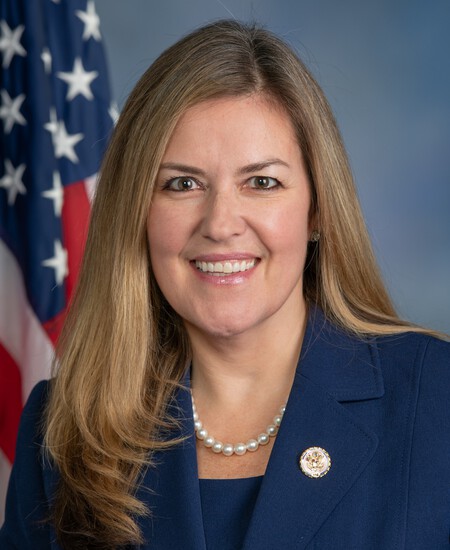
Rep. Jennifer Wexton
Sponsored bills
Maddy summaryThe Eviction Prevention Act of 2023 provides $125 million annually to states and local governments to fund legal counsel for eligible individuals (those with income below 125% of the federal poverty level) facing eviction. It establishes a national database requiring courts to collect detailed data on eviction cases, including tenant demographics, reasons for eviction, representation status, and case outcomes. The database will track court-ordered evictions, administrative evictions, and illegal evictions, with specific requirements for reporting by courts and law enforcement. This legislation authorizes $100 million annually for the database's operation through fiscal year 2028, aiming to improve understanding of eviction patterns and outcomes. The bill creates concrete mechanisms for increasing legal representation access and gathering comprehensive eviction data to inform policy decisions.
Maddy summaryThe Elizabeth Dole Home Care Act of 2023 increases the expenditure cap for home- and community-based care for veterans from 65% to 100% of costs, with exceptions for certain cases based on clinical need and geographic factors. It establishes new programs including Veteran-Directed Care, which allows veterans to select and manage their own in-home care services, and Home-Based Primary Care, which provides in-home health care overseen by VA providers. The bill requires improved coordination with existing programs like the Program of All-Inclusive Care for the Elderly (PACE) and mandates a centralized website with information about available services. It specifically targets veterans who would otherwise require nursing home care or face increased risk of hospitalization, and includes provisions to address home health aide shortages through pilot programs.
Maddy summaryHRES 874 is a symbolic resolution expressing the House's support for designating November as "Prematurity Awareness Month." It does not create new laws or alter funding but urges the public, organizations, and communities to observe the month through events, promote awareness, and support preterm birth prevention programs. The resolution highlights statistics on preterm births (383,000 babies born preterm in 2021) and health disparities, but its sole action is endorsing the awareness designation. As a non-binding resolution, it has no direct impact on policy or affected individuals beyond raising public visibility.
Maddy summaryThis bill creates a presumption that certain health conditions are linked to military firefighting service. It applies to veterans who served at least five years in a firefighting military role (e.g., fire suppression specialists) and develop specific illnesses within 15 years of leaving service. The covered conditions include heart disease, lung disease, and multiple cancers (like leukemia, lymphoma, and lung cancer), with the VA automatically presuming service connection for these if they meet the 10% disability threshold. This simplifies benefit claims by shifting the burden of proof to the VA, rather than requiring veterans to prove their illness was caused by service. The law affects military firefighters who served in designated fire-related roles and seek VA disability benefits for qualifying conditions.
Maddy summaryHRES 793 is a resolution passed by the U.S. House of Representatives calling on Hamas to immediately release all 199 hostages taken during Hamas' October 7, 2023 attack on Israel. The resolution condemns Hamas for the attack, the taking of hostages, and threats against hostages, while stating that holding hostages violates international humanitarian law under the Geneva Conventions. It demands the immediate release of all hostages and expresses sympathy for victims and their families. As a symbolic resolution, it does not create legal obligations but formally expresses the House's position.
Maddy summaryHR 6451, the Mental Health Justice Act of 2023, provides $250 million in federal grants to states, tribes, and localities to hire mental health professionals as first responders for specific emergencies. It directs these professionals to replace police in situations involving mental health crises, substance use, or intellectual/developmental disabilities - such as when a 911 caller describes a mental health emergency or a first responder identifies someone needing mental health support. The bill requires grantees to train responders in de-escalation techniques, link individuals to community-based services (not incarceration), and report on outcomes like reduced arrests or use of force. It also mandates data collection on demographics and prevents funneling people into institutional settings, with annual reports to Congress on program effectiveness.
Maddy summaryHRES 886 is a non-binding House resolution supporting Transgender Day of Remembrance (TDoR) by recognizing the epidemic of violence against transgender people and memorializing those lost in the year ending September 30, 2023. It specifically acknowledges the disproportionate impact of violence on transgender women of color, citing 33 documented deaths in the U.S. during that period (with estimates suggesting the actual number is higher due to underreporting). The resolution calls for Congress to prioritize studying and preventing such violence while affirming that all transgender people deserve dignity and respect. As a symbolic resolution, it does not create new laws or allocate funding but serves to raise awareness and honor victims.
Maddy summaryThe UNLEADED Act requires the FAA to create an education program about unleaded aviation gasoline for pilots, flight schools, airport operators, maintenance technicians, and fixed-base operators. The program must publish online information on fuel compatibility, availability, required certifications, safety, and federal incentives, plus maintain a real-time tracking system for authorized unleaded fuels. The FAA must also coordinate annual training for fixed-base operator staff on fuel handling and safety. The program runs until December 31, 2030, with annual updates provided to Congress on progress. This directly affects general aviation users transitioning from leaded 100LL fuel to new unleaded alternatives.
Maddy summaryHR 6415, the CARE for First Responders Act, creates targeted mental health support for first responders, including law enforcement, firefighters, EMTs, and 911 operators (previously excluded from many services). It establishes a 24/7 confidential mental health hotline integrated with the 988 Suicide Lifeline, funds mobile crisis teams for disaster response, and mandates specialized training to reduce stigma and improve access to culturally competent care. The bill requires the development of peer support programs and education for responders and their families on mental health coping strategies. It authorizes $5 million annually (2024-2028) for grants to states and organizations to implement these services, specifically addressing the higher rates of mental health challenges and suicide among first responders compared to the general population.