Abortion is Health Care Everywhere Act of 2021 This bill authorizes the use of certain foreign assistance funds to provide comprehensive reproductive health care services in developing countries, including abortion services, training, and equipment.
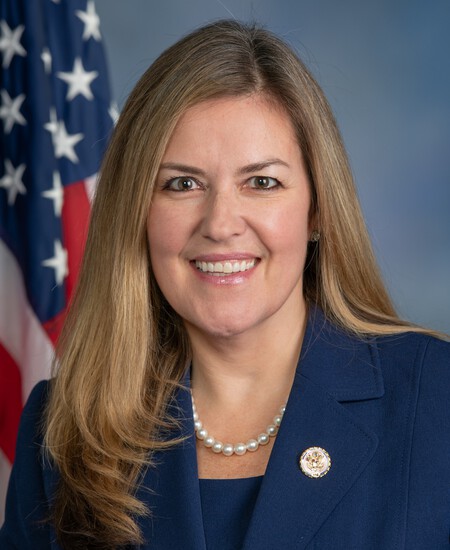
Rep. Jennifer Wexton
Sponsored bills
George Floyd Justice in Policing Act of 2021 This bill addresses a wide range of policies and issues regarding policing practices and law enforcement accountability. It increases accountability for law enforcement misconduct, restricts the use of certain policing practices, enhances transparency and data collection, and establishes best practices and training requirements. The bill enhances existing enforcement mechanisms to remedy violations by law enforcement. Among other things, it does the following: lowers the criminal intent standard—from willful to knowing or reckless—to convict a law enforcement officer for misconduct in a federal prosecution, limits qualified immunity as a defense to liability in a private civil action against a law enforcement officer, and grants administrative subpoena power to the Department of Justice (DOJ) in pattern-or-practice investigations. It establishes a framework to prevent and remedy racial profiling by law enforcement at the federal, state, and local levels. It also limits the unnecessary use of force and restricts the use of no-knock warrants, chokeholds, and carotid holds. The bill creates a national registry—the National Police Misconduct Registry—to compile data on complaints and records of police misconduct. It also establishes new reporting requirements, including on the use of force, officer misconduct, and routine policing practices (e.g., stops and searches). Finally, it directs DOJ to create uniform accreditation standards for law enforcement agencies and requires law enforcement officers to complete training on racial profiling, implicit bias, and the duty to intervene when another officer uses excessive force.
Public Service Loan Forgiveness Inclusion Act of 2021 This bill allows the first 60 monthly payments made by a borrower under a graduated repayment or extended repayment plan to become qualifying payments under the Public Service Loan Forgiveness (PSLF) program. However, the borrower must transfer to an eligible repayment plan, such as an income-based or standard repayment plan, for the remaining 60 monthly payments made under the PSLF program.
This joint resolution proposes a constitutional amendment authorizing Congress and the states to set reasonable limits on the raising and spending of money by candidates and others to influence elections. The amendment grants Congress and the states the power to implement and enforce this amendment by legislation. They are allowed to distinguish between natural persons and corporations or other artificial entities created by law, including by prohibiting such entities from spending money to influence elections.
Preventing Future Pandemics Act of 2021 This bill establishes measures to address global public health risks posed by wildlife markets, which are commercial markets that sell or slaughter wildlife for human consumption as food or medicine in communities where alternative nutritional or protein sources are available. Specifically, the bill prohibits importing, exporting, purchasing, or selling live wild animals in the United States for human consumption as food or medicine. The Department of the Interior must hire, train, and deploy at least 50 new U.S. Fish and Wildlife Service law enforcement attachés around the world, and the U.S. Agency for International Development must increase specified activities to address the threats and causes of zoonotic (animal-to-human transmission) disease outbreaks. Additionally, the United States must work with other United Nations member states to urge a global ban on commercial wildlife markets and enforcement of laws to end wildlife trafficking. Further, the President may impose sanctions against a foreign country or foreign nationals that the Department of State has determined are taking certain actions that enable or facilitate commercial wildlife markets. Among other reports required by the bill, the National Academies of Sciences, Engineering, and Medicine must conduct a study and submit a report that includes an evaluation of (1) the impact that consumption of terrestrial wildlife as food or medicine has on the transmission of novel viral and other pathogens, (2) the role of consuming terrestrial wildlife as food or medicine in the transmission of microbes from animals to humans, and (3) the conditions at live wildlife markets that lead to this transmission.

Research Investment to Spark the Economy Act of 2021 or the RISE Act of 2021 This bill authorizes the Departments of Agriculture, Commerce, Defense, Education, Energy, the Interior, Health and Human Services, and Transportation, National Aeronautics and Space Administration (NASA), National Science Foundation, and Environmental Protection Agency to provide support for research regarding COVID-19 (i.e., coronavirus disease 2019) or research disrupted by the COVID-19 pandemic. Support may be used to provide supplemental funding to extend the duration of a grant to a research institution, national laboratory, or individual that was awarded prior to the enactment of this bill, or to expand the purposes of such a grant as specified; issue awards to research the effects of the current pandemic and potential future pandemics; and provide flexibility on awards to account for facility closures or other limitations during the COVID-19 public health emergency. Agencies must provide the support as rapidly as possible. Provided funds shall remain available through FY2021.
Federal Death Penalty Abolition Act of 2021 This bill prohibits the imposition of a death penalty sentence for a violation of federal law. It eliminates statutory authority for the death penalty as a sentencing option for federal offenses. It also requires a person who was sentenced to death before enactment of this bill to be resentenced.
American Innovation and R&D Competitiveness Act of 2021 This bill eliminates the five-year amortization requirement for research and experimental expenditures scheduled to begin in 2022, thus allowing continued expensing of such expenditures in the taxable years in which they are incurred.
Charlotte Woodward Organ Transplant Discrimination Prevention Act This bill expressly prohibits health care providers and other entities involved in matching donated organs with recipients from denying or restricting an individual's access to organ transplants solely on the basis of the individual's disability, except in limited circumstances. Specifically, these entities may consider an individual's disability when making decisions about transplants only if a physician finds, based on an individualized evaluation, that the individual's physical or mental disability is medically significant to the provision of the transplant. A disability shall not be considered medically significant if the individual has an adequate support system in place to comply with transplant-related medical requirements. These entities must also make reasonable changes to their policies to make transplants and related care more available to individuals with disabilities. Aggrieved individuals may bring claims of discrimination to the Office of Civil Rights of the Department of Health and Human Services or before a federal court. The bill provides for expedited resolutions of these claims.
Medicare-X Choice Act of 20 21 This bill establishes and funds the Medicare Exchange health plan, which allows individuals who are not otherwise eligible for Medicare to enroll in a government-administered health insurance plan. The Centers for Medicare & Medicaid Services (CMS) must offer such plan in certain individual health insurance exchanges beginning plan year 2022 and offer it in all individual health insurance exchanges beginning plan year 2025. CMS must offer the plan in the small group market in all geographic areas for plan year 2025. The plan must cover primary care services without cost sharing and meet the same requirements, including essential health benefits, as existing health insurance exchange plans. Unless they opt out, health care providers enrolled under Medicare or under a state Medicaid plan must participate in the plan and are reimbursed at Medicare rates. The bill establishes a grants program for community organizations, educational institutions, and health agencies to create service partnerships and establish interactive data systems for health care providers. Additionally, the bill expands the premium tax credit available for plans purchased through an exchange and eliminates the restriction on the Department of Health and Human Services negotiating prescription drug prices for Medicare.