This resolution celebrates the contributions of small businesses in every U.S. community and supports the designation of National Small Business Week. Further, it supports efforts to provide small businesses with aid and assistance through certain programs and initiatives.
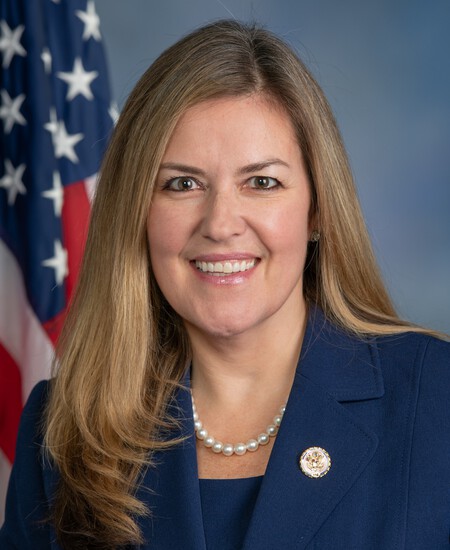
Rep. Jennifer Wexton
Sponsored bills
Prohibition of Medicaid Funding for Conversion Therapy Act This bill prohibits state Medicaid programs from covering conversion therapy. The bill defines conversion therapy as any practice or treatment that seeks to change a person's sexual orientation or gender identity in exchange for monetary compensation.
This resolution urges the International Olympic Committee to consider that the Olympic Charter's principles of solidarity and nondiscrimination are hard to reconcile with holding the 2022 Winter Games in China, a country that the resolution states stands credibly accused of perpetuating crimes against humanity and genocide against ethnic and religious minorities.
Protecting the Information of our Vulnerable Children and Youth Act or the Kids PRIVCY Act This bill expands the requirements for digital services when handling the personal information of children. Specifically, the bill (1) requires digital services to obtain express, affirmative consent that is specific, informed, and unambiguous before processing the personal information of a child or teenager under the age of 18; (2) prohibits certain targeted advertising; and (3) allows individuals to access, correct, or delete their personal information. The bill increases the civil penalty for violations of the children's online privacy protections and provides for enforcement by the Federal Trade Commission and a private right of action.
This resolution expresses the sense of the House of Representatives that the murder of Alireza Fazeli Monfared should be investigated and prosecuted and that the practice of honor killings in Iran is a violation of internationally recognized human rights. Further, it urges the Department of State to rebuke Iran for this practice and to condemn Iranian human rights abuses against vulnerable populations, including abuses based on sex, sexual orientation, and gender expression.
Statutes of Limitation for Child Sexual Abuse Reform Act This bill creates incentives, including authorizing the Children's Bureau's Office of Child Abuse and Neglect to make grants, for states to (1) eliminate their criminal and civil statutes of limitations for child sexual abuse, and (2) revive previously time-barred civil claims.
Expanding Contracting Opportunities for Small Businesses Act of 2021 This bill increases the allowable award price for federal government contracts with certain small businesses, including socially and economically disadvantaged small businesses, small businesses owned and controlled by women, and small businesses owned and controlled by service-disabled veterans.
United States Call Center Worker and Consumer Protection Act of 2021 This bill establishes restrictions on businesses that relocate call centers or redirect customer service calls to locations outside the United States. Specifically, a business must notify the Department of Labor that it intends to move its customer service call center overseas and Labor must maintain a publicly available list of such businesses. Subject to narrow exceptions, a business appearing on such list is ineligible to receive federal grants or guaranteed loans for five years after the business is added to the list. Further, agencies must condition the awarding of government contracts on the requirement that any call center activity pursuant to the contract must be performed in the United States. Additionally, the bill requires call center employees to disclose their physical location at the beginning of each call initiated or received, unless all employees of the business participating in the communication are located in the United States, among other exceptions.
Averting Loss of Life and Injury by Expediting SIVs Act of 2021 or the Allies Act of 2021 This bill increases the number of special immigrant visas available to qualified Afghan nationals who worked for the U.S. government or the North Atlantic Treaty Organization (NATO) missions in Afghanistan. The bill also relaxes certain qualifications for such visas. Specifically, this bill makes available an additional 8,000 visas for principal aliens under this special visa program, to be available until all such visas have been issued. (The numerical limitations in this program apply only to the principal alien who applies for the visa, not to any accompanying spouse or child.) Under this bill, an alien may qualify based on a credible basis for concern about the possibility of an ongoing serious threat in Afghanistan due to their work with the U.S. government or a NATO mission, where currently the alien must have experienced such a threat. The bill also eliminates a requirement for each applicant to submit a credible sworn statement describing that threat. Furthermore, for an applicant qualifying for a visa by performing duties for U.S. military personnel stationed with a NATO mission, this bill eliminates a requirement that the duties performed qualify as sensitive and trusted duties. If an alien submits a visa application that included an accompanying spouse or child but the alien passes away before the application is granted, the surviving spouse or child shall remain eligible to receive a visa under that application. Currently, a surviving spouse or child retains eligibility only if the application was approved before the alien passed away.

VOCA Fix to Sustain the Crime Victims Fund Act of 2021 This bill adds a new source of revenue for the Crime Victims Fund and makes changes to formula grants supported by the fund. Specifically, the bill directs revenues collected from deferred prosecution and non-prosecution agreements to be deposited into the Crime Victims Fund. Currently, such revenues are deposited into the general fund of the Treasury. Additionally, the bill increases the percentage—from 60% to 75%—of state compensation payments to crime victims in the prior fiscal year used to calculate formula grants for state victim compensation programs. Finally, the bill directs states to waive the matching requirement for recipients of state victim assistance formula grants during and for one year after a pandemic-related national emergency. It also allows states to waive the matching requirement pursuant to a policy established by the state.