

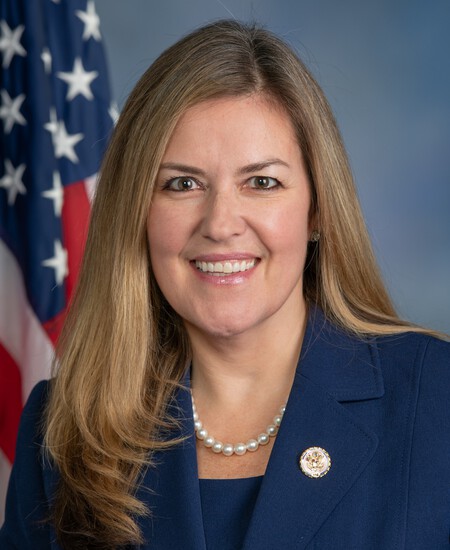
Photo of Jennifer Wexton
D United States House · District 10 · Virginia

Rep. Jennifer Wexton

Compare
Total votes
2,168
all sessions
Attendance
90%
227 missed
Lower than 97% of chamber peers
With party
98%
of cast votes
Higher than 97% of chamber peers
Bipartisan score
1%
crosses aisle rarely
Lower than 99% of chamber peers
Sponsored
510
bills & resolutions
Lower than 77% of chamber peers
Committees
0
assignments
510 bills and resolutions

Sponsored bills

Total
510
Primary
38
Co-sponsor
472
This page
510
matching current filters
Co-sponsor HR 17
In committee · United States House · Co-sponsor
Paycheck Fairness Act

Maddy summaryThe Paycheck Fairness Act (HR 17) strengthens equal pay protections by amending the Fair Labor Standards Act. It prohibits pay discrimination based on sex, pregnancy, childbirth, sexual orientation, gender identity, and sex characteristics. The bill modifies employer defenses for pay differences to require demonstration that any disparity is job-related, consistent with business necessity, and accounts for the entire pay differential. It also prohibits employers from relying on wage history when making hiring decisions or setting pay, enhances penalties for violations, and requires the EEOC to collect compensation data disaggregated by sex, race, and national origin.

In committee Mar 10, 2023 1 co-sponsor
Co-sponsor HCONRES 22
In committee · United States House · Co-sponsor
Recognizing the significance of equal pay and the disparity between wages paid to men and women.

Maddy summaryHCONRES 22 is a symbolic resolution recognizing the persistent gender pay gap in the U.S., documenting that women earn significantly less than men across racial groups (e.g., Black women earn 67 cents for every dollar earned by White men). It highlights the economic impact of this disparity, noting women lose over $958 billion annually in wages and face barriers like occupational segregation and workplace harassment. The resolution does not create new laws or policies but formally acknowledges the issue and reaffirms Congress’s commitment to addressing the gap. It references specific Equal Pay Days (e.g., March 14 for all women) to underscore the time women must work to earn what men did the previous year.

In committee Mar 9, 2023 1 co-sponsor
Co-sponsor HRES 215
In committee · United States House · Co-sponsor
Recognizing the cultural and historical significance of Nowruz.

Maddy summaryHRES 215 is a symbolic resolution recognizing Nowruz, the ancient Persian New Year celebrated by over 300 million people worldwide, including Iranian Americans. It acknowledges Nowruz’s 3,000-year cultural history, its themes of renewal and human rights, and expresses appreciation for Iranian Americans’ contributions to U.S. society. The resolution has no binding policy impact but formally supports the holiday’s observance and the values of freedom and tolerance it embodies.

In committee Mar 9, 2023 1 co-sponsor
Co-sponsor HR 1477
In committee · United States House · Co-sponsor
Freedom To Invest in Tomorrow's Workforce Act

Maddy summaryThis bill expands the use of 529 college savings accounts to cover career training and credentialing costs. It allows funds to pay for tuition, fees, books, and testing expenses related to recognized postsecondary credential programs (like vocational certifications) that meet specific standards under the Workforce Innovation and Opportunity Act. The change directly affects workers seeking industry-recognized credentials - such as nursing certifications or IT certifications - instead of traditional degrees. It treats these expenses the same as traditional college costs for 529 account withdrawals, making it easier to save for career-focused training. The provision applies to expenses paid after the bill's enactment date.

In committee Mar 8, 2023 1 co-sponsor
Co-sponsor HR 1403
In committee · United States House · Co-sponsor
STEM RESTART Act

Maddy summaryThe STEM RESTART Act creates a federal grant program to help mid-career workers, particularly women and people from underrepresented racial groups, return to STEM careers. It provides funding for small and medium-sized businesses to establish "returnship" programs that offer above-entry-level positions with full benefits for 10 weeks or more. The program requires grantees to track participants' demographics and employment outcomes, with $50 million authorized annually from 2024-2028. These returnships must provide compensation equivalent to full-time employees with similar experience, including benefits like health care and child care. The bill targets workers who left the workforce but want to return, especially those from rural areas or underrepresented populations.

In committee Mar 7, 2023 1 co-sponsor
Co-sponsor HR 1322
In committee · United States House · Co-sponsor
Law Enforcement Officers Equity Act

Maddy summaryHR 1322 expands federal retirement benefits to include specific non-traditional law enforcement roles. It adds IRS employees focused on tax collection, U.S. Postal Inspection Service staff, Department of Veterans Affairs police officers, and U.S. Customs and Border Protection seized property specialists to the definition of "law enforcement officer" under federal retirement systems. Current employees in these newly covered positions must elect to pay deposits for past service to receive full retirement credit, while their agencies must contribute additional funds for that past service. The bill also temporarily prevents mandatory separation for current law enforcement officers for three years after enactment.

In committee Mar 1, 2023 1 co-sponsor
Co-sponsor HR 1277
In committee · United States House · Co-sponsor
Military Spouse Hiring Act

Maddy summaryThe Military Spouse Hiring Act expands the Work Opportunity Tax Credit to include military spouses. Employers who hire a spouse of an active-duty military member - certified by a local agency as meeting eligibility requirements on the hiring date - can claim this tax credit. The credit reduces the employer's federal tax liability for hiring such individuals. This provision applies to new hires after the bill's enactment date.

In committee Mar 1, 2023 1 co-sponsor
Co-sponsor HR 1235
In committee · United States House · Co-sponsor
Federal Firefighter Pay Equity Act

Maddy summaryThis bill establishes pay equity for federal firefighters by adjusting how their retirement benefits are calculated and setting a standard workweek. It requires retirement annuities to include overtime hours worked as part of a firefighter's regular schedule (e.g., overtime during standard shifts), rather than excluding them. The bill also mandates a maximum 60-hour regular workweek for federal firefighters, set by the Office of Personnel Management within one year of enactment. These changes directly affect federal firefighters, aiming to improve pay comparability with municipal firefighters and other federal employees while supporting recruitment and retention.

In committee Feb 28, 2023 1 co-sponsor
Co-sponsor HR 1059
Passed · United States House · Co-sponsor
SECURE Notarization Act of 2023

Maddy summaryThe SECURE Notarization Act of 2023 establishes federal standards for electronic and remote notarizations in interstate commerce, allowing notaries to verify identities and perform notarizations remotely using video communication. Key requirements include creating audio-visual recordings of remote notarizations, verifying identities through two distinct methods (or a credible witness), and retaining recordings for at least 5 years. The bill ensures federal courts and all states must recognize valid notarizations performed under these standards, regardless of whether the notarization was done electronically, remotely, or with a physical signature. It does not require notaries to use electronic methods and preserves state authority to enforce stricter rules, as long as they meet the minimum federal baseline.

Passed Feb 28, 2023 1 co-sponsor
Co-sponsor HR 20
In committee · United States House · Co-sponsor
Richard L. Trumka Protecting the Right to Organize Act of 2023

Maddy summaryThe Richard L. Trumka Protecting the Right to Organize Act of 2023 strengthens workers' rights to organize unions by making it harder for employers to interfere with organizing efforts. Key provisions include changing the definition of "employee" to make it more difficult to classify workers as independent contractors, prohibiting employers from threatening to permanently replace striking workers, and requiring employers to provide voter lists for union elections. The bill also creates a new electronic voting system for union elections, strengthens whistleblower protections for workers reporting labor violations, and increases penalties for unfair labor practices. These changes directly affect workers seeking to form unions, employers who may interfere with organizing, and labor organizations. The bill aims to make it easier for workers to exercise their right to collective bargaining under the National Labor Relations Act.

In committee Feb 28, 2023 1 co-sponsor
Showing 201 to 210 of 510 bills
Previous 1 … 20 21 22 … 51 Next