

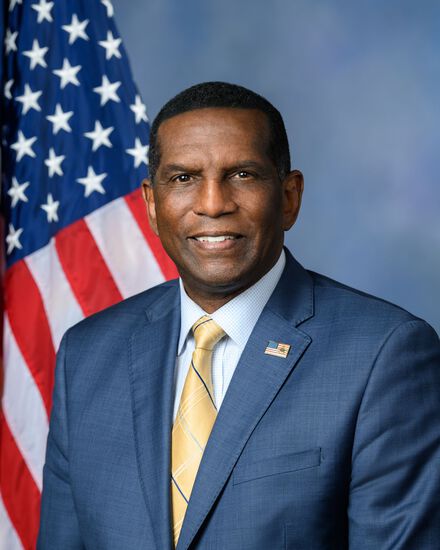
Photo of Burgess Owens
R United States House · District 4 · Utah

Rep. Burgess Owens

Compare
Total votes
2,837
all sessions
Attendance
99%
27 missed
Near the chamber average
With party
95%
of cast votes
Near the chamber average
Bipartisan score
3%
crosses aisle rarely
Near the chamber average
Sponsored
959
bills & resolutions
Near the chamber average
Committees
8
assignments
959 bills and resolutions

Sponsored bills

Total
959
Primary
63
Co-sponsor
896
This page
959
matching current filters
Co-sponsor HR 915
In committee · United States House · Co-sponsor
Motor Carrier Safety Selection Standard Act

Maddy summaryHR 915 requires businesses that contract with motor carriers (like shippers, brokers, or freight forwarders) to verify three safety and compliance details before shipping goods: 1) the carrier's valid registration, 2) minimum required insurance coverage, and 3) that the carrier is not disqualified for safety reasons by the Federal Motor Carrier Safety Administration (FMCSA) or a state. This verification must occur 45 days before shipment. The bill creates a temporary standard that expires when new FMCSA regulations are issued within 18 months of enactment. It does not change carrier safety rules but sets a new requirement for businesses selecting carriers.

In committee Nov 26, 2024 1 co-sponsor
Co-sponsor HR 807
Signed into law · United States House · Co-sponsor
Working Dog Commemorative Coin Act

Maddy summaryThe Working Dog Commemorative Coin Act (HR 807) directs the U.S. Treasury to mint three types of commemorative coins honoring working dogs' service: $5 gold coins, $1 silver coins, and half-dollar coins with specific weight and composition requirements. Each coin will carry a surcharge ($35 for $5 coins, $10 for $1 coins, $5 for half-dollars) that will be paid directly to America's VetDogs to support their programs providing service dogs for veterans, the disabled, and others. The coins will be issued in 2027 with designs reflecting working dogs' roles in military, detection, therapy, and assistance work. The legislation specifies that all surcharge revenue must fund America's VetDogs' operations without creating new government programs. This is a commemorative measure focused on honoring working dogs' contributions through coin sales, with all surcharge funds going to a specific nonprofit organization.

Signed into law Nov 25, 2024 1 co-sponsor
Co-sponsor HR 7227
In committee · United States House · Co-sponsor
Truth and Healing Commission on Indian Boarding School Policies Act of 2024

Maddy summaryThis bill establishes a Truth and Healing Commission to investigate the history and impacts of U.S. Indian Boarding School policies on Native American communities, including cultural, emotional, and physical effects on survivors, descendants, and tribal communities. The Commission will document these impacts through research, public meetings, and testimony, working with two advisory committees focused on Native American perspectives and Federal agency coordination. The Commission will operate for six years, with annual reports to Congress and a final report containing recommendations for Federal action. The bill also includes provisions for managing burial sites related to boarding schools and ensures the Native American Graves Protection and Repatriation Act applies to remains found on Federal lands related to these schools.

In committee Nov 22, 2024 1 co-sponsor
Co-sponsor HR 10216
In committee · United States House · Co-sponsor
Ending Racism in Government Contracting Act

Maddy summaryThis bill would eliminate preferences for socially and economically disadvantaged businesses in government contracting by amending multiple federal laws, including the Small Business Act and the Minority Business Development Act. It removes references to "disadvantaged businesses" and repeals provisions requiring agencies to track or prioritize contracts for these businesses. The bill also adds new prohibitions against considering race or ethnicity in contract awards, stating agencies may not take race or ethnicity into account when granting contracts. It would require agencies to remove all references to racial or ethnic considerations from contracting rules within 180 days of enactment. These changes would fundamentally alter government contracting practices by removing specific preferences that have been part of contracting programs for decades.

In committee Nov 21, 2024 1 co-sponsor
Co-sponsor HR 8706
In committee · United States House · Co-sponsor
Dismantle DEI Act of 2024

Maddy summaryHR 8706, the "Dismantle DEI Act of 2024," would prohibit federal agencies from maintaining diversity, equity, and inclusion (DEI) offices, programs, or training by requiring the closure of existing DEI offices within 90 days and banning federal funding for DEI-related activities. The bill defines "prohibited diversity, equity, and inclusion practices" as those that discriminate based on race, color, ethnicity, religion, biological sex, or national origin, or require training that asserts a particular group is inherently superior or inferior. It would rescind several executive orders related to racial equity and gender inclusion, and prohibit the use of federal funds for DEI-related activities across all federal agencies, contractors, and grant recipients. The bill contains limited exceptions for Equal Employment Opportunity offices and disability rights enforcement offices as historically organized and operated.

In committee Nov 20, 2024 1 co-sponsor
Co-sponsor HR 6951
In committee · United States House · Co-sponsor
College Cost Reduction Act

Maddy summary# Summary of Proposed Higher Education Act Amendments This document outlines significant proposed amendments to the Higher Education Act of 1965, primarily as part of the "College Cost Reduction Act." The key elements include: ## Accreditation Reform - Major overhaul of accreditation standards, requiring accrediting agencies to demonstrate independence from trade associations - New requirements for accrediting agencies to assess student achievement outcomes, including median value-added earnings relative to median total price charged - Introduction of an "Alternative Quality Assurance Experimental Site Initiative" to test non-accredited institutions - Protections for religious institutions, including a new process for appealing accreditation decisions related to religious mission - Removal of "litmus tests" that would require institutions to support specific political viewpoints ## Student Success Initiatives - Establishment of "Postsecondary Student Success Grants" to increase participation, retention, and completion rates for high-need students - Focus on evidence-based practices, with tiered requirements (tier 1, 2, and 3 reforms) - Mandatory inclusion of high-need student populations (low-income, first-generation, military-connected, etc.) - Requirements for institutions to report on completion rates, retention rates, and student demographics ## Regulatory Changes - Repeal of numerous existing regulations including: * Closed school discharges * Borrower defense to repayment * Pre-dispute arbitration * False certification requirements * Ability-to-benefit rules * Financial responsibility regulations - New restrictions on incentive compensation for recruiters - Changes to third-party servicer definitions and regulations ## Transfer and Credit Policies - New requirement that institutions cannot deny transfer credit based solely on the source of accreditation - Requirements for transparent transfer policies - Changes to reverse transfer policies ## Other Key Provisions - Modifications to the National Advisory Committee on Institutional Quality and Integrity (NACIQI) - New definitions for "total price" and "value-added earnings" - Changes to the process for institutions to change accrediting agencies - New requirements for institutions to report on student outcomes The overall focus of these proposed amendments is to reduce regulatory burden on institutions, promote transparency, improve student outcomes (particularly for high-need students), modernize accreditation processes, and protect religious institutions' rights in accreditation decisions.

In committee Nov 18, 2024 1 co-sponsor
Co-sponsor HRES 1561
In committee · United States House · Co-sponsor
Condemning President Biden's remarks referring to President Trump's supporters as "garbage".

Maddy summaryHRES 1561 is a symbolic House resolution introduced by 11 Republican representatives on November 1, 2024, condemning President Biden's October 29, 2024, remark calling Trump supporters "garbage." The resolution states the House "condemns" this specific comment but does not create any new laws or affect any individuals or policies. It serves solely as a formal expression of disapproval from the House members who signed it. As a procedural resolution, it has no legal effect or practical impact on government operations or constituents.

In committee Nov 1, 2024 1 co-sponsor
Co-sponsor HR 10083
In committee · United States House · Co-sponsor
No Funding for Illegal Migrant Billboards Act

Maddy summaryHR 10083, the "No Funding for Illegal Migrant Billboards Act," prohibits the use of federal funds to advertise the Immigration Detention Ombudsman's office or functions through billboards or similar public advertising. This bill directly affects the Department of Homeland Security, specifically restricting how the Ombudsman's office can be promoted using public funds. The key mechanism is an amendment to the Homeland Security Act of 2002, adding a provision that bans obligating or expending funds for such advertising. The law applies to all public advertising methods, not just physical billboards, and takes effect immediately upon enactment.

In committee Nov 1, 2024 1 co-sponsor
Co-sponsor HR 9957
In committee · United States House · Co-sponsor
Western Refined Fuel Reserve Act of 2024

Maddy summaryHR 9957, the Western Refined Fuel Reserve Act of 2024, requires the U.S. Department of Energy to conduct a 6-month study on establishing a Western refined fuel storage reserve. The study examines potential salt cavern locations in Western States, infrastructure needs (like rail/highway access), supply chain vulnerabilities during disasters, and economic feasibility. It will assess existing storage capacity and identify benefits for energy security, leading to a congressional report with recommendations on location, operations, funding, and partnerships. This bill does not create the reserve itself but sets the groundwork for future decisions about expanding the Strategic Petroleum Reserve system to better serve the Western U.S. in emergencies.

In committee Oct 11, 2024 1 co-sponsor
Co-sponsor HR 9920
In committee · United States House · Co-sponsor
BE GONE Act

Maddy summaryHR 9920 (the BE GONE Act) amends the Immigration and Nationality Act to expand the definition of "aggravated felonies" by adding "sexual assault and aggravated sexual violence" as a specific category. This change directly affects non-citizens convicted of these offenses, as it triggers mandatory deportation under existing immigration law. The bill does not create new penalties or enforcement procedures but alters the legal definition that determines deportation eligibility. It is a definitional amendment to existing immigration law, not a new enforcement measure.

In committee Oct 4, 2024 1 co-sponsor
Showing 351 to 360 of 959 bills
Previous 1 … 35 36 37 … 96 Next