

Maddy summaryThis bill modifies tax incentives to increase affordable housing near military installations. It excludes military housing allowances (payments under 37 U.S.C. § 403) from income calculations when determining eligibility for low-income housing tax credits, directly helping service members and their families qualify for affordable housing. It also designates buildings within 15 miles of large military installations (valued over $2.833 billion) as "difficult development areas" for tax credit purposes, encouraging developers to build in these areas. The bill does not require such housing to be occupied solely by military members. These changes apply to tax credit determinations made after the bill's enactment.
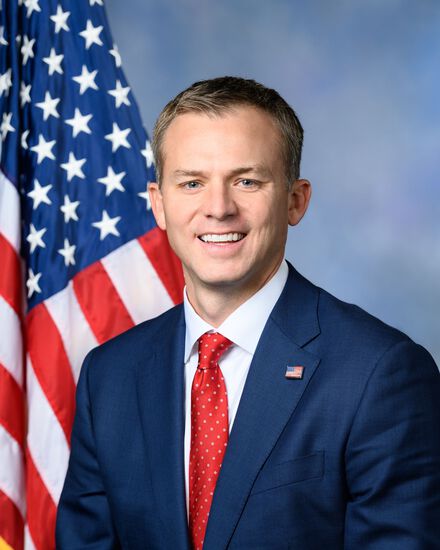
Rep. Blake D. Moore
Sponsored bills
Maddy summaryThis bill directs the Department of Homeland Security to implement the Migrant Protection Protocols (MPP) as outlined in a 2019 policy memo. It requires migrants seeking asylum at the U.S. border to remain in Mexico while their cases are processed, rather than being allowed to stay in the U.S. pending a hearing. The bill does not create new rules but mandates the reinstatement of a policy that was previously in effect from 2019 to 2021. This would directly affect asylum seekers arriving at the U.S.-Mexico border. The policy change would apply to all migrants covered by the existing MPP framework.
Maddy summaryThis proposed constitutional amendment would limit Members of Congress to serving a maximum of three terms in the House of Representatives or two terms in the Senate. It directly affects current and future members by preventing those who have already served the maximum terms from seeking re-election. Key provisions include counting vacancies filled for more than a year (House) or three years (Senate) as a full term toward the limit, while excluding terms served before ratification from the count. As a constitutional amendment proposal, it requires approval by three-fourths of state legislatures to become law.
Maddy summaryThe Supporting America's Children and Families Act reauthorizes federal child welfare programs through 2029, with new provisions to improve services for children in foster care and families. It directly affects states, tribes, child welfare agencies, foster youth, and families through requirements to address poverty-related neglect, expand family preservation services, strengthen kinship care support, and improve court technology for remote hearings. Key mechanisms include new funding for regional partnerships addressing parental substance use, streamlined administrative processes, and demonstration projects for maintaining relationships between incarcerated parents and their children in foster care. The bill also strengthens tribal child support enforcement and improves implementation of the Indian Child Welfare Act, aiming to reduce bureaucracy while improving outcomes for children and families.
Maddy summaryHR 8717 designates the U.S. Postal Service facility at 20 West Main Street in Santaquin, Utah, as the "SGT Bill Hooser Post Office Building." The bill updates all federal references - such as maps, documents, and regulations - to reflect this new name for the building. It does not change postal services, funding, or regulations; it only changes the building's official designation. The bill honors SGT Bill Hooser, though specific details about him are not included in the legislation. This is a ceremonial naming act with no policy or financial impact.
Maddy summary# Summary of the EXPLORE Act Legislative Text This is a comprehensive legislative text (likely the "EXPLORE Act" - Enhancing Recreation Opportunities for People of All Abilities, and Veterans) that establishes several key initiatives to improve outdoor recreation access across Federal lands. ## Key Focus Areas: ### 1. Accessibility for People with Disabilities (Title II - Access America) - Requires comprehensive assessments of outdoor recreation facilities on Federal lands within 5 years - Mandates development of 3 new accessible trails per region for each agency (Forest Service, National Park Service, BLM, USFWS) within 1 year - Requires development of 2 new accessible recreation opportunities per region within 1 year - Requires making accessibility information available on public websites within 7 years - Requires development of accessible features including trail bridges, parking, and restrooms ### 2. Military and Veterans Programs - Requires educational materials for military members/veterans on accessing Federal lands free of charge within 2 years - Establishes Military Veterans Outdoor Recreation Liaisons within relevant agencies within 1 year - Requires a National Strategy for Military and Veteran Recreation within 1 year - Creates a pilot program for veteran employment in conservation positions - Promotes partnerships with organizations providing outdoor recreation for veterans ### 3. Youth Access - Requires a strategy to increase youth recreation visits to Federal lands within 2 years - Extends the "Every Kid Outdoors" program until September 30, 2031 - Focuses on increasing opportunities for underserved youth ### 4. Recreation Permitting Modernization (Title III) - Defines special recreation permits and establishes fee structures - Creates categories for different types of recreation permits - Establishes a process for application and review of permits - Includes provisions for multijurisdictional trips across different Federal lands The legislation aims to improve access to outdoor recreation for people with disabilities, veterans, and youth while modernizing the permitting process for recreational activities on Federal lands. It requires specific timelines for implementation and includes detailed definitions and requirements for each component of the bill.
Maddy summaryHR 137, the TCJA Permanency Act, makes permanent many tax provisions from the 2017 Tax Cuts and Jobs Act. It permanently increases the standard deduction for individual taxpayers, modifies income tax brackets, and makes permanent the child tax credit increase. The bill also permanently limits deductions for state and local taxes, mortgage interest, and miscellaneous itemized deductions. These changes affect most individual taxpayers who file federal income tax returns.
Maddy summaryHR 45 (FIND Act) requires federal government contractors to certify they do not discriminate against firearm businesses (including manufacturers, dealers, and trade associations) in their policies or practices. The bill mandates that contractors and subcontractors (for contracts over 10% of the prime contract value) certify they have no discriminatory policies and will not adopt them during the contract term. Violations could lead to contract termination and potential debarment. This applies to all federal procurement contracts awarded after the bill's enactment, excluding sole-source contracts. The law aims to ensure firearm businesses are treated equally in government contracting without restricting legitimate business criteria like creditworthiness or legal compliance.
Maddy summaryThis bill requires Congress to approve major federal regulations before they take effect. It would mandate that agencies submit detailed reports including cost-benefit analyses, economic impact assessments, and other information to Congress before implementing significant regulations. Major rules - defined as those with at least $100 million annual economic impact or significant effects on costs, competition, or employment - would need a joint resolution of approval from Congress within 70 session days. Nonmajor rules would follow a less stringent disapproval process. The bill aims to increase legislative oversight of the regulatory process, requiring Congress to formally review and approve rules that significantly impact the economy or public regulations.
Maddy summaryThis bill modifies how private colleges calculate a tax on investment income by excluding certain students from the tax threshold calculation. Specifically, it prevents colleges from counting students who don't meet eligibility requirements under the Higher Education Act (20 U.S.C. 1091(a)(5)) when determining if they owe the tax. Private colleges subject to this tax must also report both the pre-exclusion and post-exclusion student counts on their tax returns. The changes apply to tax years beginning after December 31, 2024.