

Maddy summaryHR 6591, the Encouraging Success Act, requires the Small Business Administration (SBA) to regularly update the asset and net worth limits for individuals qualifying as "economically disadvantaged" under the SBA's 8(a) business development program. This affects small business owners seeking eligibility for the 8(a) program, which provides federal contracting opportunities. The bill mandates the SBA reassess these thresholds annually after enactment and every four years thereafter, adjusting for inflation and economic changes through a standard rulemaking process with public comment. The SBA must use existing funding to implement these updates without requiring new appropriations.
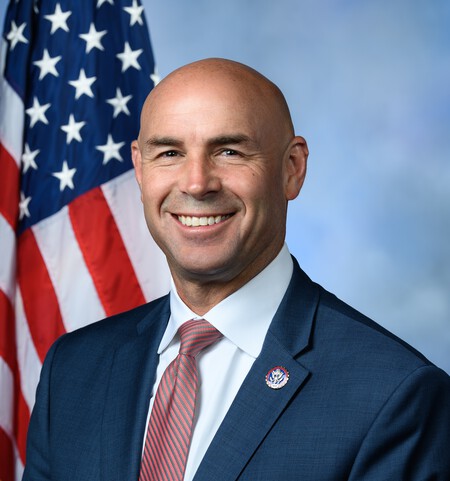
Rep. Jake Ellzey
Sponsored bills
Maddy summaryThis bill requires the Small Business Administration's Office of Rural Affairs to submit annual reports on its rural business activities. The initial report must detail how the office promotes financial assistance, tracks statistics, and conducts outreach events, while annual reports must be submitted alongside the SBA's budget justification. It also mandates a separate report on the SBA's collaboration with the Department of Agriculture regarding rural business efforts. All reporting requirements will use existing SBA funding without new appropriations.
Maddy summaryThis bill directs the Secretary of State to actively use U.S. diplomatic resources, including the voice and influence of U.S. diplomats and officials at the International Boundary and Water Commission, to advance efforts ensuring Mexico complies with the 1944 water treaty. It requires U.S. officials to work toward establishing reliable water delivery agreements under the treaty for the Colorado, Tijuana, and Rio Grande rivers. The key mechanism is mandating diplomatic engagement to address Mexico's compliance with treaty obligations, aiming to secure predictable water flows for U.S. users. The bill affects U.S. diplomatic operations and water management coordination with Mexico, focusing on treaty implementation rather than new water infrastructure.
Maddy summaryHRES 1031 is a non-binding House resolution declaring the U.S. southern border situation an "invasion," citing three specific claims: over 8 million migrant crossings since 2021, a 1,000% rise in watchlist entries, and drug-related deaths. It does not create new laws or affect individuals, as resolutions like this only express legislative sentiment. The bill formally states the House's viewpoint through these cited statistics without proposing policy changes. As a symbolic gesture, it has no legal force or impact on border policy.
Maddy summaryHR 7450, the Protecting Privacy in Purchases Act, prohibits payment card networks and covered entities (like payment processors) from requiring or assigning merchant category codes that specifically identify firearms retailers as different from general stores or sporting goods retailers. This directly affects firearms retailers and payment networks by preventing them from using business classification codes that could flag firearm sales. The bill establishes an enforcement process where the Attorney General investigates complaints, issues remediation notices, and can seek court injunctions for non-compliance, while preempting state or local laws on this issue. It does not create private lawsuits for individuals.
Maddy summaryHR 7129, the "Put America on Commission Act of 2024," creates an Office of Whistleblower Awards within the Small Business Administration (SBA) to incentivize reporting of fraud in pandemic relief loans. It directly affects whistleblowers who provide original information about financial misconduct by SBA loan recipients and the recipients themselves who face penalties. The bill establishes a Whistleblower Award Fund, paying 10% (U.S. entities) or 15% (foreign entities) of recovered funds from convictions or settlements related to "COVID loan actions" (defined as fraud cases under CARES Act provisions). It includes anti-retaliation protections for whistleblowers and requires annual reports to Congress on award distributions. The program sunset provisions end its authority once all related cases are resolved.
Maddy summaryHR 7382 amends existing law to allow law enforcement agencies using Byrne JAG funds (a federal grant program) to specifically fund programs aimed at reducing demand for commercial sex trafficking. This change directly affects state and local law enforcement agencies that receive Byrne JAG grants, enabling them to allocate these funds toward demand reduction initiatives like public awareness campaigns or victim services. The key mechanism is adding "programs to reduce the demand for trafficked persons" as an explicitly authorized use of Byrne JAG funds under the 1968 Crime Control Act. This policy change expands the scope of existing federal funding to target the demand side of sex trafficking, without creating new programs or altering other funding categories.
Maddy summaryHR 7176, the "Unlocking our Domestic LNG Potential Act of 2024," streamlines approval processes for U.S. liquefied natural gas (LNG) export terminals. It grants the Federal Energy Regulatory Commission (FERC) exclusive authority to approve or deny LNG export facility projects, requiring FERC to deem such exports "consistent with the public interest" unless specific legal exceptions apply. The bill explicitly preserves the President’s authority to block LNG exports under sanctions laws targeting countries designated as state sponsors of terrorism. This directly affects LNG companies seeking export permits and FERC’s regulatory role, without altering existing environmental or safety regulations.
Maddy summaryHCONRES 90 is a non-binding congressional resolution condemning the Biden administration's January 26, 2024, decision to indefinitely pause LNG export permit approvals under the Natural Gas Act. It claims this pause harms U.S. economic interests (including jobs and exports to European allies, which accounted for over 50% of U.S. LNG shipments), weakens security partnerships in Europe, and undermines climate goals by reducing a lower-emission energy alternative to Russian gas. The resolution urges the administration to reverse the pause but has no legal effect, as it does not change any laws or permit processes. It is a symbolic statement of disapproval, not a policy change.
Maddy summaryThe No IRIS Act of 2024 prohibits the Environmental Protection Agency (EPA) from using assessments generated by its Integrated Risk Information System (IRIS) program as the primary data source for three specific actions: developing environmental regulations, carrying out regulatory decisions, or informing the National Air Toxics Assessment. This bill directly affects the EPA's process for incorporating scientific data into rulemaking and regulatory enforcement. It does not ban IRIS assessments entirely but restricts their use as the main basis for these key EPA functions. The policy change alters how the agency relies on IRIS findings in environmental policy decisions.