

This resolution condemns Azerbaijan's blockade of the Lachin Corridor to Nagorno-Karabakh (also known as Artsakh). The resolution calls on the U.S. government to work with international partners to deploy observers to explore opportunities for security and peaceful development. The resolution also calls on the President to (1) suspend military and security assistance from the United States to Azerbaijan, and (2) fully enforce a U.S. law prohibiting certain bilateral assistance to Azerbaijan until Azerbaijan takes demonstrable steps to cease all offensive uses of force against Armenia and Nagorno-Karabakh.
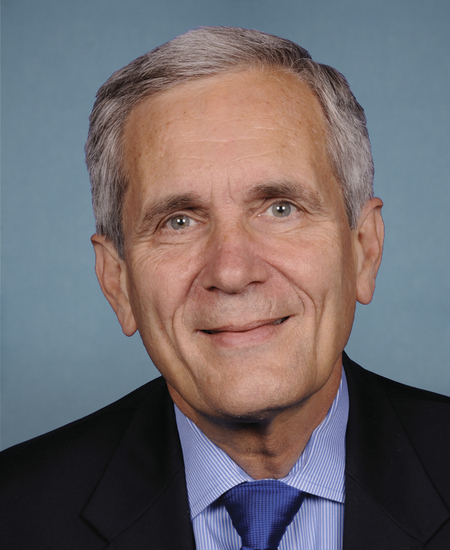
Rep. Lloyd Doggett
Sponsored bills
Maddy summaryThe Better Care Better Jobs Act (HR 547) aims to improve access to home and community-based services (HCBS) for Medicaid beneficiaries by providing states with planning grants and enhanced federal funding. States that develop approved HCBS infrastructure improvement plans will receive a 10 percentage point increase in federal Medicaid funding for HCBS services, with additional incentives for self-directed care programs. The bill requires states to address barriers to access, expand workforce development, improve payment rates for direct care workers, and track demographic data on service utilization. It also establishes quality measurement requirements and mandates regular reporting on progress toward improving HCBS access and quality.
Maddy summaryHR 789, the Caring for All Families Act, expands the Family and Medical Leave Act to allow employees to take leave for a wider range of family members, including domestic partners, son-in-law, daughter-in-law, parent-in-law, adult children, grandparents, grandchildren, siblings, and others with "close association equivalent to family." The bill adds new provisions for employees to take up to 4 hours of leave per 30 days (24 hours annually) for school activities, routine medical appointments for family members, or visiting nursing homes for elderly individuals considered family. This legislation directly affects private sector workers covered by FMLA and federal employees, broadening who qualifies for leave and what types of family care can be accommodated. The bill amends existing FMLA definitions and requirements to include these expanded family relationships and care needs.
Maddy summaryHR 785 requires construction employers to provide each employee with at least one 15-minute paid rest break for every four hours worked. It directly affects construction workers performing general construction services (like building erection, remodeling, or demolition) by mandating these breaks and requiring employers to provide written notice in the employee's primary language about their rights. Employers must also display bilingual (English/Spanish) signs at worksites explaining break entitlements, prohibiting retaliation for taking breaks, and outlining complaint procedures. The bill does not override stricter state or local laws requiring longer breaks and explicitly defines "rest break" to exclude regular meal periods.
Maddy summaryHR 791, the American Music Fairness Act of 2023, requires terrestrial radio stations (AM/FM) to pay royalties for playing music, aligning their payment obligations with those of internet streaming services. It directly affects small local radio stations by establishing low annual fees: $10 for stations with under $100,000 annual revenue, $100 for public broadcasters with $100k-$1.5M revenue, and $500 for other stations in that revenue range. The bill ensures songwriters’ existing royalty rights remain unaffected (Section 6) and mandates that royalty rates for radio be set using economic data, including how radio promotion might impact music sales. This creates a new statutory royalty structure while protecting small broadcasters through tiered, low-cost payment tiers.
Maddy summaryHR 765, the African American History Act, authorizes $2 million annually for the National Museum of African American History and Culture to develop educational resources and programs about African American history. The bill directs the museum to create accessible teaching materials, support teacher professional development, and expand digital content for schools and the public, focusing on contributions, civil rights, and historical contexts. It requires annual reports to Congress and expires in 2028. The program directly supports educators, students, and families in learning about African American history through museums, schools, and online platforms.
Maddy summaryHR 814, the "Protect Social Security and Medicare Act," requires a two-thirds vote in both House and Senate to consider any bill, resolution, or amendment that would reduce benefits administered by the Social Security Administration (SSA) or Centers for Medicare & Medicaid Services (CMS). This directly affects Congress, as it raises the threshold for passing legislation impacting Social Security or Medicare benefits. The bill includes an exception for Medicare Advantage plans: reductions in payments to these plans are allowed only if offset by equal or greater increases in other Medicare payments. Determinations about whether a provision would reduce benefits are made solely by the SSA's Office of the Chief Actuary.
Maddy summaryHR 715, the Bipartisan Background Checks Act of 2023, requires background checks for all firearm transfers between private individuals, not just those through licensed dealers. It mandates that unlicensed sellers must involve a licensed dealer to conduct a background check before transferring a firearm, with exceptions for family transfers (like spouses or parents/children), law enforcement, temporary safety transfers, and certain hunting or range activities. The bill also requires licensed dealers to provide a notice and certification form in both English and Spanish to buyers. It explicitly states it won't create a national gun registry or override state laws on the same topic. The law would take effect 180 days after enactment.
Maddy summaryThis bill amends the Elementary and Secondary Education Act to require that Black history be included in all federally supported American history and civics education programs. It directly affects K-12 public schools receiving federal education funding by mandating that curriculum frameworks, teacher training, and national assessments explicitly incorporate Black history as part of American history. The key mechanism is adding "which shall include Black history" to existing provisions across multiple sections of the law, including classroom instruction, teacher academies, and national assessments. This change ensures Black history is integrated into established educational standards rather than creating new programs.
Maddy summaryHR 709, the Muhammad Ali Congressional Gold Medal Act, authorizes Congress to award Muhammad Ali a gold medal in recognition of his life and achievements. The bill directs the Secretary of the Treasury to strike a gold medal for presentation by congressional leaders, which will then be given to Ali's widow, Lonnie Ali. Duplicate bronze medals may be sold to cover production costs, with proceeds deposited into the U.S. Mint fund. This is a commemorative measure, not a policy change affecting laws or programs.