

This resolution reaffirms the U.S. commitment to Moldova in the face of Russia's malign influence and military aggression. The resolution also (1) lauds the strengthening of civil society, democracy, and democratic institutions in Moldova; (2) welcomes the strong mandate given to pro-reform forces in recent elections; and (3) urges the European Union to continue to promote Moldova's accession processes.
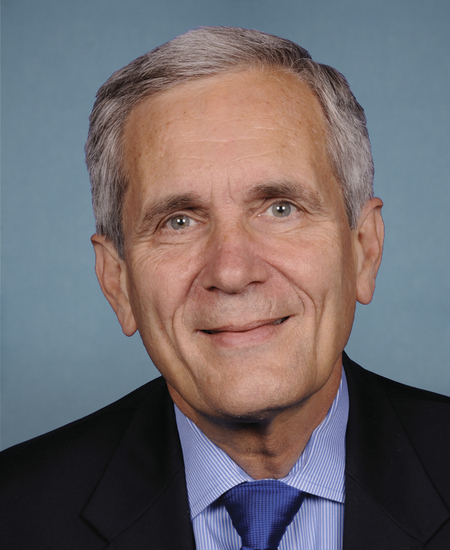
Rep. Lloyd Doggett
Sponsored bills
Maddy summaryHRES 150 is a ceremonial House resolution honoring the late civil rights leader John Robert Lewis (1940-2020). It formally recognizes his lifelong commitment to nonviolent activism, including his leadership in the Civil Rights Movement, the 1965 Selma voting rights march ("Bloody Sunday"), and his 30+ years serving as a U.S. Representative from Georgia. The resolution specifically commends his "towering achievements in the nonviolent struggle for civil rights" and his dedication to building the "Beloved Community" through justice and equality. As a commemorative resolution, it has no policy impact but serves as an official tribute to Lewis's legacy for the public and Congress.
Maddy summaryHR 726, the Veterans for Mustangs Act, amends the Wild Free-Roaming Horses and Burros Act to require the Secretary of the Interior to prioritize recruiting military veterans for training in on-range fertility control methods for wild horse and burro populations. The bill mandates that veterans complete a certification program (like the PZP applicator course) and receive appropriate compensation, with the Bureau of Land Management allowed to contract these veterans for management activities without classifying them as federal employees. This directly affects military veterans seeking employment opportunities and the Bureau of Land Management’s approach to managing wild horse populations. The key change is embedding veteran recruitment into the standard process for implementing fertility controls, replacing previous management language with specific veteran-focused provisions.
This resolution urges states that have not yet expanded Medicaid under the Patient Protection and Affordable Care Act to do so. It also expresses support for H.R. 31, which establishes a demonstration program to allow local governments to provide health benefits to the Medicaid expansion population in states that have not expanded Medicaid.
Maddy summaryHR 1088, the Shirley Chisholm Congressional Gold Medal Act, authorizes a posthumous Congressional Gold Medal to honor Congresswoman Shirley Chisholm, the first African-American woman elected to Congress (1968) and the first Black candidate for a major party's presidential nomination (1972). The bill directs the Treasury Secretary to design and strike a gold medal featuring Chisholm's image, which will be presented by Congress and then permanently displayed at the Smithsonian Institution. Duplicate bronze medals may be sold to the public to cover production costs, with proceeds deposited into the U.S. Mint fund. This bill commemorates Chisholm's legacy and achievements without creating new laws or affecting any current policies.
Maddy summaryThe Heating and Cooling Relief Act significantly expands the Low-Income Home Energy Assistance Program (LIHEAP) to help low-income households with rising energy costs. It increases annual funding to $400 billion for fiscal years 2024-2033 (up from $2 billion), adds $1 billion yearly for cooling assistance during heat events, and expands eligibility to include households with a 3% energy burden. The bill requires states to provide protections against home energy shutoffs and late fees for program participants, and to prioritize energy-efficient, renewable energy solutions. It also creates new "just transition" grants to help communities move away from fossil fuels while reducing energy burdens for vulnerable households.
Maddy summaryHR 964, the Democracy in Design Act, requires the General Services Administration (GSA) to follow the 1962 "Guiding Principles for Federal Architecture" when designing all new U.S. public buildings. It mandates the GSA Administrator to create new regulations within 180 days of the bill's enactment, establishing minimum design standards for federal buildings. These regulations must be developed after public notice and comment, as required by standard federal rulemaking procedures. The bill directly affects all federal building projects and the GSA's design process, ensuring adherence to established architectural principles.
Maddy summaryHR 782 prohibits state officials from interfering with abortion services provided across state lines. It specifically blocks states from restricting: (1) out-of-state patients traveling for legal abortions, (2) providers offering such services, (3) assistance for travel or care, or (4) the interstate shipment of FDA-approved abortion drugs. The bill allows the federal Attorney General or affected individuals to sue violators for injunctions, damages, and attorney fees. It directly affects patients seeking care in other states, healthcare providers, transportation services, and pharmacies handling FDA-approved abortion medications. The law focuses on preventing state laws from blocking access to legally permitted abortion services.
Maddy summaryHR 926 would require the Supreme Court to establish a code of conduct for justices within 180 days of enactment, along with procedures for handling ethics complaints against them. The bill mandates minimum disclosure standards for gifts, income, and reimbursements received by justices and their law clerks, and requires justices to recuse themselves when they or their family received gifts from parties in a case. It would also require parties and amici curiae to disclose gifts given to justices and lobbying contacts related to justices' nominations, and establish a judicial investigation panel to review complaints against justices. The legislation aims to increase transparency in Supreme Court ethics processes and provide clearer recusal standards for justices.
Maddy summaryThis bill makes significant changes to US corporate tax rules to prevent tax avoidance through foreign operations. It requires corporations to calculate foreign income tax liabilities country-by-country, limits interest deductions for large international financial reporting groups, and modifies rules for "inverted corporations" (where US companies move tax residence abroad). The bill also creates new rules treating foreign corporations managed primarily in the US as domestic corporations for tax purposes. These changes aim to close tax loopholes related to outsourcing and foreign tax planning.