

Maddy summaryHRES 1561 is a symbolic House resolution introduced by 11 Republican representatives on November 1, 2024, condemning President Biden's October 29, 2024, remark calling Trump supporters "garbage." The resolution states the House "condemns" this specific comment but does not create any new laws or affect any individuals or policies. It serves solely as a formal expression of disapproval from the House members who signed it. As a procedural resolution, it has no legal effect or practical impact on government operations or constituents.
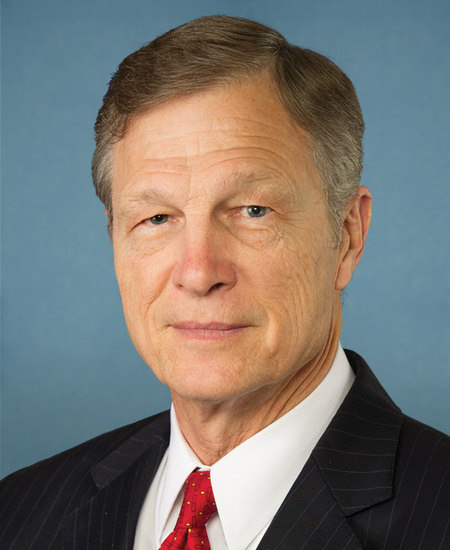
Rep. Brian Babin
Sponsored bills
Maddy summaryThis bill prohibits federal agencies from using the social cost of carbon, methane, nitrous oxide, or greenhouse gases in regulatory decisions. It bans these climate impact estimates from cost-benefit analyses, rulemaking, and agency guidance documents. Agencies must report past use of these metrics since 2009 to Congress. The law removes specific climate cost calculations from energy regulations.
Maddy summaryHRES 1493 is a symbolic congressional resolution condemning Vice President Kamala Harris for her past support of climate policies as a senator. It specifically references her 2019 cosponsorship of the Green New Deal resolution and her 2020 climate plan proposals, which the resolution claims would increase national debt and harm energy independence. The resolution does not create new laws or affect any policies - it only expresses disapproval of these historical positions. It has no legal effect or direct impact on current legislation or constituents.
Maddy summaryThe NASA Reauthorization Act of 2024 authorizes $25.2 billion in funding for NASA in fiscal year 2025, with specific allocations for exploration, space operations, technology, science, and education. The bill advances the Artemis program for lunar exploration by requiring NASA to partner with U.S. private companies for human lunar landing capabilities while ensuring these companies meet U.S. content requirements. It includes provisions for maintaining the International Space Station through 2031, developing commercial low-Earth orbit capabilities, and continuing Earth science and planetary research. The act requires NASA to submit regular reports on program implementation, cost management, and commercial partnerships to ensure transparency and accountability in the use of federal funds.
Maddy summaryHJRES 136 is a resolution seeking to block an Environmental Protection Agency (EPA) rule that would have set new emissions standards for light and medium-duty vehicles sold in 2027 and later model years. The EPA rule, published in April 2024, aimed to require vehicle manufacturers to meet stricter pollution limits for these vehicles. If passed, this resolution would cancel the rule, preventing the EPA from enforcing the new standards. It uses a congressional process that allows Congress to reject agency rules with a simple majority vote.
Maddy summaryThe RIDER Act amends the Stafford Act to expand disaster relief eligibility. It allows areas contiguous to a federally declared disaster zone (even if not directly hit) to access the same aid as the declared area, and permits the President to declare a "major disaster" for multiple smaller events occurring within 12 months if their cumulative impact qualifies. This directly affects states, local governments, and tribal nations near declared disaster zones, as well as communities experiencing repeated but individually minor disasters. Covered assistance includes hazard mitigation, individual/household aid, and public assistance under existing Stafford Act programs.
Maddy summaryThe Royalty Resiliency Act (HR 7377) requires the federal government to make decisions on how oil and gas royalties are allocated among shared production leases within 120 days of a request. Until a decision is issued, companies must pay royalties based on their proposed allocation, and the government will waive interest on underpayments if payments are made on time. This applies to most federal oil and gas leases but excludes agreements involving tribal lands. The law aims to reduce delays and financial uncertainty for oil and gas companies operating on federal land.
Maddy summaryHJRES 144 is a congressional disapproval resolution targeting a specific rule issued by the Bureau of Alcohol, Tobacco, Firearms, and Explosives (ATF) on April 19, 2024. The resolution seeks to block the ATF's rule that redefined the term "engaged in the business" for firearm dealers, which would have affected how federal licensing requirements apply to certain sellers. If enacted, this resolution would nullify the rule, preventing it from taking effect under procedures in Title 5 of the U.S. Code. The bill directly impacts firearm dealers operating under the current regulatory framework and the ATF's enforcement authority.
Maddy summaryHJRES 133 is a congressional resolution seeking to block an Environmental Protection Agency (EPA) rule titled "Greenhouse Gas Emissions Standards for Heavy-Duty Vehicles-Phase 3." This rule, published in the Federal Register on April 22, 2024, established new emissions requirements for large trucks and commercial vehicles. The resolution, if passed, would prevent the EPA rule from taking effect by formally disapproving it under standard congressional review procedures. The measure directly affects the EPA’s regulatory authority and vehicle manufacturers who would have been required to comply with the proposed standards.
Maddy summaryH.J. Res. 117 is a joint resolution that would disapprove an Environmental Protection Agency (EPA) rule concerning the reconsideration of National Ambient Air Quality Standards for particulate matter. The EPA rule, published on March 6, 2024, was part of the agency’s process to review these standards, which set limits for harmful air pollutants. This resolution invokes a congressional disapproval procedure under federal law to block the rule from taking effect. If enacted, the rule would have no force or effect, preserving the existing air quality standards for particulate matter.