

Maddy summaryHR 9185, the Helping Student Parents Succeed Act, requires colleges and universities receiving federal financial aid to create and publicly share clear policies supporting expectant and parenting students. The bill mandates institutions to outline specific provisions including pregnancy-related leave options, lactation accommodations, financial aid details (like dependency status changes and childcare cost adjustments), and access to support services such as childcare, housing, and mental health resources. These policies must be posted on the school’s website and cover complaint procedures under Title IX and disability laws. The law directly affects student parents enrolled at participating institutions under the Higher Education Act, ensuring they have transparent, accessible information about their rights and available resources.
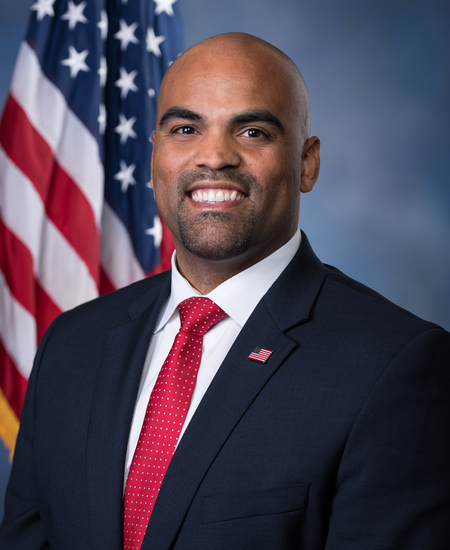
Rep. Colin Z. Allred
Sponsored bills
Maddy summaryThis bill reauthorizes the Debbie Smith DNA Backlog Grant Program, which provides federal funding to state and local law enforcement agencies to reduce backlogs in processing DNA evidence from crime scenes. It extends the program's funding period from fiscal years 2024 through 2029 (previously ending in 2024). The bill also updates audit requirements to ensure grant funds are used properly through 2029. This directly affects law enforcement agencies that receive these grants to accelerate DNA analysis for criminal investigations.
Maddy summaryThe National Quantum Initiative Reauthorization Act (HR 6213) reauthorizes and expands federal efforts to advance quantum information science, engineering, and technology in the United States. It establishes new programs including National Quantum Centers, Quantum Testbeds, and a Quantum Reskilling and Workforce Coordination Hub to develop domestic talent and infrastructure. The bill creates an International Quantum Cooperation Strategy to build partnerships with allies while restricting collaboration with "foreign countries of concern" as defined in the legislation. It provides funding for research, workforce development, and commercialization of quantum technologies across government agencies, universities, and industry. The act aims to strengthen U.S. leadership in quantum technology through coordinated federal investment and international collaboration.
Maddy summaryThis bill designates the U.S. Postal Service facility at 4650 East Rosedale Street in Fort Worth, Texas, as the "Dionne Phillips Bagsby Post Office Building." It updates all official references (in laws, maps, documents, etc.) to this specific location to reflect the new name. The bill has no policy provisions or direct impact on constituents beyond renaming the post office facility.
Maddy summaryHR 9104, the Access to Birth Control Act, requires pharmacies that normally stock contraception to provide birth control or related medications without delay if in stock, or immediately offer alternatives like referrals to other pharmacies or expedited orders if unavailable. It prohibits pharmacists from intimidating customers, misrepresenting availability, breaching confidentiality, or refusing to fill valid prescriptions for birth control. Pharmacies violating these rules face civil penalties up to $1,000 per day or private lawsuits. The law specifically applies to pharmacies that routinely carry contraception and excludes cases where a valid prescription is missing or payment cannot be made. It aims to address documented refusals to dispense birth control, particularly following the Dobbs decision.
Maddy summaryThis bill requires the VA to send veterans letters explaining educational benefits under the Veteran Readiness and Employment (VR&E) program and provide a clear comparison of these benefits against the GI Bill (Chapter 33). It directly affects veterans transitioning from military service who are eligible for VR&E benefits. The key mechanism mandates that each letter include a side-by-side comparison of program benefits, with the same comparison also posted on a publicly accessible VA website. This aims to improve veterans' understanding of available education assistance options.
Maddy summaryThis bill amends a section of law governing Department of Veterans Affairs (VA) employee compensation to clarify that disputes over whether an employee received the correct pay amount under existing rules are not considered "adjustment of compensation" under the statute. It specifically excludes grievances challenging pay accuracy from the definition of "establishment, determination, or adjustment of employee compensation." The change directly affects VA employees covered under Section 7421(b) who might file such pay-related grievances. The bill makes a technical clarification to streamline how these disputes are categorized within VA's compensation process.
Maddy summaryThe Railroad Safety Enhancement Act of 2024 establishes new safety requirements for high-hazard trains carrying hazardous materials, including speed limits of 50 mph (40 mph in urban areas) for trains with 20 or more flammable liquid tank cars. The bill requires rail carriers to provide real-time electronic train consist information to emergency responders and State emergency commissions, including details about hazardous materials being transported, routes, and emergency response contacts. It mandates railroads to develop and regularly update hazardous materials emergency response plans, with triennial reviews by the Federal Railroad Administration. The act also phases out older tank cars by December 2027, requiring all tank cars to meet DOT-117 specifications for flammable liquids, and increases civil penalties for rail safety violations up to $5 million.
Maddy summaryHR 4581, the Maternal and Child Health Stillbirth Prevention Act of 2024, amends Title V of the Social Security Act to explicitly allow federal funds to support stillbirth prevention efforts. The bill directs states receiving Title V maternal and child health funds to use these resources for evidence-based programs and research aimed at reducing stillbirths, including tracking fetal movements, screening for growth issues, smoking cessation, and community support. It directly affects state maternal health programs by clarifying that existing funding can now cover specific stillbirth prevention activities previously not explicitly permitted. The law changes how Title V funds may be spent, adding clear provisions for research and programs targeting stillbirth reduction. This is a policy change that updates funding guidelines without creating new programs or mandates.
Maddy summaryHR 9005, the Teacher, Principal, and Leader Residency Access Act, amends the Higher Education Act to allow Federal Work-Study funds to support paid residency programs for aspiring teachers, principals, and school leaders. The bill enables schools to use these funds for compensation during residency training and travel, prioritizing students eligible for Federal Pell Grants. It defines a "residency program" as a structured, year-long apprenticeship where participants work alongside mentor educators while completing coursework in teaching or leadership skills, culminating in full state certification. This directly affects school districts facing teacher shortages, especially in high-need subjects and schools serving low-income or minority students, by expanding access to a proven model that increases educator retention. The policy change focuses on funding mechanisms rather than outcomes, making residency participation financially feasible for participants and institutions.