

Maddy summaryHR 4335, the VA Loan Informed Disclosure Act of 2023, requires mortgage lenders to include specific information about VA home loan programs in standard mortgage disclosures. The bill amends the National Housing Act to mandate that lenders provide details on VA loans (guaranteed under Title 38) alongside other loan options, including assumptions about prevailing interest rates. This change directly affects lenders processing VA-guaranteed mortgages, ensuring borrowers receive clearer comparisons between VA loans and other financing. The law does not require lenders to verify borrower eligibility for VA loans, only to include the specified disclosure language.
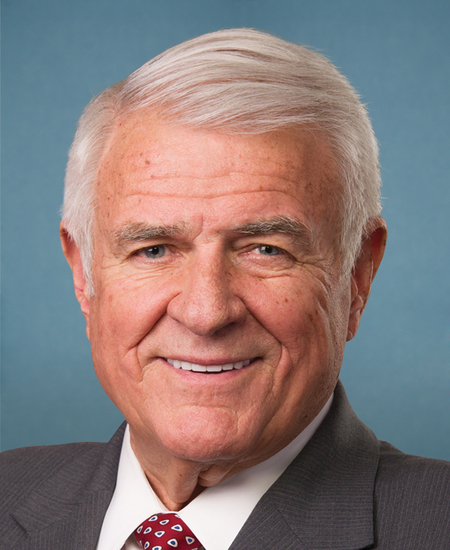
Rep. John R. Carter
Sponsored bills
Maddy summaryThis bill reauthorizes the Virginia Graeme Baker Pool and Spa Safety Act by creating a federal grant program to improve swimming pool safety across the United States. The program provides funding to states, Indian Tribes, and qualified nonprofit organizations that have enacted swimming pool safety laws meeting federal standards. Grant recipients must use at least 25% of funds for hiring and training personnel to enforce safety standards and inspect pool drain covers, with the remainder for public education and swimming lessons (limited to 25% of that portion). The bill authorizes $5 million annually from 2024-2028 for these grants and a separate $5 million for public education campaigns, requiring annual reporting on program implementation and effectiveness.
Maddy summaryHJRES 44 is a congressional resolution seeking to block a 2021 rule by the Bureau of Alcohol, Tobacco, Firearms, and Explosives (ATF). The rule classified firearms with stabilizing braces as "short-barreled rifles," which would have required additional licensing and regulation. This resolution uses a specific legal process (under Title 5, U.S. Code) to formally disapprove the ATF rule, meaning the rule would no longer be in effect. It directly affects firearm owners, manufacturers, and dealers who would have been subject to the rule’s requirements.
End Child Trafficking Now Act This bill imposes restrictions related to adult non-U.S. nationals ( aliens under federal law) being admitted into the United States with a minor. Such an adult may not be admitted with a minor unless the adult (1) presents documents or witness testimony proving that the adult is a relative or guardian of the minor, or (2) submits to a DNA test that proves such a relationship. The Department of Homeland Security may request a DNA test only if the required relationship cannot be established by the presented documents or witness testimony. An adult who does not consent to a requested DNA test shall be inadmissible. If the required relationship cannot be established and the immigration officer believes the adult is guilty of a felony offense, the officer may arrest the adult. The bill makes it a crime for an adult to knowingly use a minor to whom the adult is not a relative or guardian to enter the United States.
Maddy summaryThe HALT Fentanyl Act expands the definition of fentanyl-related substances in the Controlled Substances Act to include many structurally similar compounds, making it easier to regulate new fentanyl analogs without individual listing. It defines these substances based on specific chemical modifications to fentanyl, with limited exceptions for substances already controlled or listed elsewhere. The bill also streamlines research procedures for schedule I substances by creating expedited registration processes and allowing multiple studies under one registration, while requiring the Attorney General to publish a list of substances meeting the new definition.
Maddy summaryThe READI Act prohibits U.S. military installations from housing undocumented immigrants or individuals in immigration removal proceedings. It directly affects military bases (excluding overseas locations) and individuals without lawful immigration status or undergoing deportation processes. The law explicitly bans using domestic military facilities for this purpose, aligning with existing immigration rules that define "unlawful presence." This creates a clear policy change by restricting the use of military infrastructure for immigration detention.
Tribal Gaming Regulatory Compliance Act This bill allows the Ysleta del Sur Pueblo and Alabama-Coushatta tribes to conduct gaming activities on their land in Texas if certain conditions are met. Currently, the Ysleta del Sur Pueblo and Alabama-Coushatta Indian Tribes of Texas Restoration Act prohibits the tribes from conducting gaming activities on their land if those activities are prohibited by Texas law. The bill repeals those provisions and instead applies the Indian Gaming Regulatory Act (IGRA) to gaming activities on Indian lands of the tribes.
National Law Enforcement Officers Remembrance, Support and Community Outreach Act This bill directs the Department of Justice (DOJ) to establish a National Law Enforcement Officers Remembrance, Support, and Community Outreach Program. The bill further directs DOJ to award a grant under the program to the National Law Enforcement Officers Memorial Fund for the expenses associated with community outreach, public education, and officer safety and wellness programs operated by the of the National Law Enforcement Officers Memorial Fund and National Law Enforcement Museum.
Processing Revival and Intrastate Meat Exemption Act or the PRIME Act This bill exempts from federal inspection requirements animals and meats that are slaughtered and prepared at custom animal slaughter facilities for distribution within the state. Under current law, a custom slaughter exemption applies if the meat is slaughtered exclusively for personal, household, guest, or employee uses. Specifically, the bill expands the federal inspection exemption to include the slaughter of animals or the preparation of carcasses, meat, and meat food products that are slaughtered and prepared at a custom slaughter facility in accordance with the laws of the state where the facility is located; and prepared exclusively for distribution to household consumers in the state or restaurants, hotels, boarding houses, grocery stores, or other establishments in the state that either prepare meals served directly to consumers or offer meat and food products for sale directly to consumers in the state. The bill does not preempt any state law concerning (1) the slaughter of animals or the preparation of carcasses, meat, and meat food products at a custom slaughter facility; or (2) the sale of meat or meat food products.
Maddy summaryHRES 396 is a non-binding House resolution recognizing motherhood on Mother's Day. It expresses support for the term "mother" and criticizes language alternatives like "pregnant people" or "birthing person," while stating mothers are defined as women. The resolution contains no policy changes or concrete effects - it is purely symbolic, affirming traditional definitions of motherhood without altering laws or impacting any programs. It was introduced by multiple House members and referred to the Education and Workforce Committee.