

Maddy summaryHR 5184, the School Security Enhancement Act, amends existing education law to allow schools and school districts to use current funds for specific security upgrades. It directs local educational agencies to spend funds already allocated under the Elementary and Secondary Education Act on evidence-based security measures like controlled access points (e.g., metal detectors), bullet-resistant doors, crisis notification systems for law enforcement, and infrastructure to help first responders during emergencies. The bill directly affects schools seeking to strengthen campus safety using existing resources, without requiring new federal funding. Key provisions include installing technology for remote building control during crises and systems to quickly notify parents during safety incidents. All proposed security measures must align with evidence-based effectiveness where available, as determined by the state.
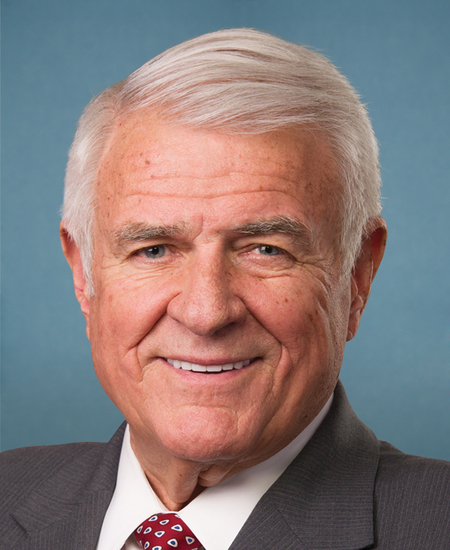
Rep. John R. Carter
Sponsored bills
Maddy summaryHR 5084 designates the U.S. Postal Service facility at 1106 Main Street in Bastrop, Texas, as the "Sergeant Major Billy D. Waugh Post Office." This bill updates all official federal references - including laws, maps, and documents - to use the new name for the location. It directly affects the Bastrop post office and federal records referencing it, without altering postal services or policies. The change is purely ceremonial and procedural, honoring Sergeant Major Billy D. Waugh through the facility's name.
Maddy summaryHR 5073, titled the "Promoting Domestic Energy Production Act," is a tax code amendment affecting oil and gas companies. It changes how businesses calculate adjusted financial statement income by removing specific deductions related to intangible drilling and development costs from their financial reports. The bill requires companies to disregard depreciation and depletion expenses taken into account on their financial statements for these costs when computing taxable income. This applies to tax years beginning after December 31, 2022, directly impacting oil and gas producers who use these accounting methods. The bill does not create new energy policies but alters tax accounting rules for the industry.
Maddy summaryHCONRES 57 is a non-binding concurrent resolution expressing Congress's support for Israel. It states three key points: (1) that Israel is not a racist or apartheid state, (2) that Congress rejects antisemitism and xenophobia, and (3) that the U.S. will remain a steadfast supporter of Israel. This resolution does not create new laws or alter policies - it simply records the expressed sentiment of Congress. It directly affects the U.S. government's public stance on Israel, with no legal effect on citizens or other entities.
Maddy summaryHJRES 83 is a congressional resolution seeking to block a specific immigration rule. It targets a rule issued by U.S. Citizenship and Immigration Services (USCIS) and the Executive Office for Immigration Review (EOIR) on May 16, 2023, which addressed "Circumvention of Lawful Pathways" in immigration processes. If approved, the resolution would nullify this rule, preventing it from taking effect under federal law. This action directly affects how USCIS and immigration courts apply this particular policy to immigration cases. The resolution uses a standard procedural mechanism (Chapter 8 of Title 5, U.S. Code) to disapprove the rule without altering broader immigration law.
Maddy summaryThis bill directs the U.S. Treasury to mint commemorative coins marking the Marine Corps' 250th anniversary in 2025. It authorizes three coin types: $5 gold coins (max 50,000), $1 silver coins (max 400,000), and half-dollar coins (max 750,000), with surcharges of $35, $10, and $5 respectively. The surcharge proceeds will fund the Marine Corps Heritage Center's educational programs, with no net cost to taxpayers as the Treasury must recover all minting costs through the surcharges. The coins can only be issued during 2025, and the Treasury must ensure all costs are covered before distributing funds to the Heritage Foundation.
Maddy summaryHR 4663, the Federal Mechanical Insulation Act, defines "mechanical insulation" (insulation around pipes and equipment in federal buildings) as an eligible energy efficiency measure. It requires federal agencies to include mechanical insulation in their required energy and water evaluations, specifically mandating that evaluations identify this insulation as a potential efficiency measure. The bill specifies that such insulation must meet minimum standards under Reference Standard 90.1 to qualify. This change directly affects federal building managers and contractors by formally recognizing mechanical insulation as a standard efficiency option in compliance with existing energy conservation laws.
Maddy summaryThis bill modifies federal sentencing for youth under 18 who were trafficked, abused, or assaulted before committing a violent offense. It allows courts to sentence below statutory minimums and suspend portions of sentences to account for trauma, applying only to cases with clear evidence of prior victimization under specific laws (like sex trafficking). The law directs the U.S. Sentencing Commission to update guidelines to align with these changes, effective only for convictions after the bill’s enactment. It directly affects juvenile offenders with documented prior victimization, focusing on trauma-informed sentencing rather than standard penalties.
Maddy summaryHR 4610 amends federal tax law by changing a specific date in the Tax Reform Act of 1984 from October 9, 1969, to March 1, 1985. This adjustment aligns federal tax rules with the Texas Constitution, allowing the State of Texas to continue leveraging the Permanent University Fund (PUF) for public university funding without triggering federal tax penalties. The PUF, which supports Texas public universities, has historically benefited from a special tax rule enabling its financial investments, and this bill maintains that benefit. The change takes effect upon the bill's enactment.
Maddy summaryThis bill authorizes the Department of Homeland Security and Department of Justice to detect, identify, monitor, and mitigate drone threats to specific high-risk facilities including government buildings, airports, critical infrastructure, and locations hosting special events. It establishes a 5-year pilot program allowing state and local law enforcement agencies to use drone detection technology under federal oversight, with strict privacy protections requiring 180-day data retention limits and mandatory training for personnel. The bill requires coordination with the Federal Aviation Administration to minimize impacts on air traffic and mandates regular congressional reporting on how these authorities are being used. It sets an expiration date of 7 years after enactment for these new authorities.