

Maddy summaryThis bill creates a new grant program to fund partnerships between Hispanic-serving institutions (HSIs) and local school districts with high Hispanic/Latino enrollment (at least 25% Hispanic/Latino students and 50% poverty rate). It authorizes $150 million for fiscal year 2024 to support specific activities like aligning high school coursework with college requirements, providing college application assistance, addressing non-academic barriers (such as housing and food insecurity), and developing teacher pipeline programs. The grants require eligible partnerships to report on outcomes, disaggregating data by student demographics to measure impact on Hispanic/Latino students' college enrollment, persistence, and completion rates. The program directly affects HSIs, qualifying school districts, and the Hispanic/Latino students they serve, aiming to close educational gaps through targeted collaboration.
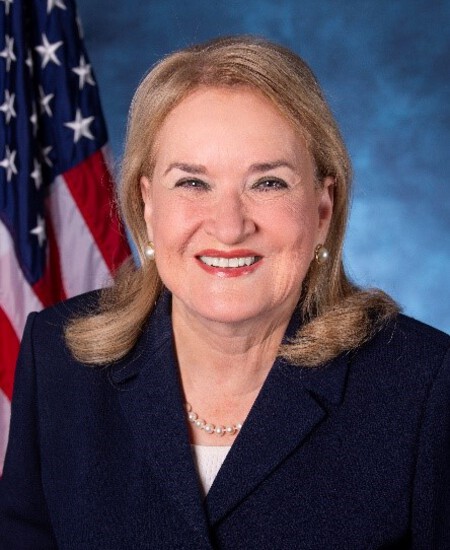
Rep. Sylvia R. Garcia
Sponsored bills
Maddy summaryHRES 682 is a symbolic resolution designating the week beginning September 11, 2023, as "National Hispanic-Serving Institutions Week." It does not create new programs or funding but formally recognizes Hispanic-Serving Institutions (HSIs) for their role in educating Hispanic students and underserved communities. The resolution calls for the public to observe the week with ceremonies during Hispanic Heritage Month, highlighting HSIs' contributions to higher education access and economic mobility. This resolution affects no specific entities or policies, as it is purely commemorative.
Maddy summaryHR 5433, the Child Care Stabilization Act, provides $16 billion annually from 2024 to 2028 to stabilize the child care sector through grants administered by the Health and Human Services Secretary. It directly affects licensed child care providers by offering stable funding to cover operating costs, while supporting higher wages for early educators without raising family fees. Key provisions include expanding access to high-quality, affordable care - especially for infants/toddlers, rural communities, and children with disabilities - and addressing shortages in underserved areas. The funding builds on existing American Rescue Plan resources, aiming to strengthen the child care workforce and increase available options for working families.
Maddy summaryHR 5428, the No Tax Breaks for Union Busting (NTBUB) Act, prevents employers from deducting certain expenses related to influencing workers' decisions about union representation. It targets spending on tactics like anti-union meetings, workplace surveillance, or consultants during organizing campaigns, making these costs non-deductible for tax purposes. Employers must report such expenses on their tax returns, including details about the activities and amounts spent. The bill aims to remove tax incentives for employer interference in union elections, aligning with federal labor law protections for workers' collective bargaining rights.
Maddy summaryThis bill expands SNAP eligibility for college students by modifying existing rules. It allows students attending higher education institutions (as defined by the Higher Education Act) to qualify for SNAP benefits if they have a zero expected family contribution (EFC) from FAFSA or meet specific criteria for independent student status under the Higher Education Act. The changes replace outdated language about "employment" with "attending school or working" and remove barriers that previously excluded many low-income students. This directly affects low-income undergraduate and graduate students who may face food insecurity while enrolled in college. The policy change takes effect 180 days after enactment.
Voters on the Move Registration Act of 2023 This bill requires the Consumer Financial Protection Bureau to develop, and specified agencies to distribute, a statement providing individuals with information on how to register to vote and their voting rights. This information must be provided to individuals upon their participation in certain rental assistance programs or application for certain residential mortgages.
Maddy summaryThe Sustaining Our Democracy Act creates a federal program to provide states with annual funding to improve election administration and increase voting access. It allocates $2 billion each year from 2024-2033 through the State Election Assistance and Innovation Trust Fund to support activities like upgrading voting equipment, training election workers, and expanding voting access for underserved communities, people with disabilities, and voters on Indian lands. States must submit detailed plans for using funds, which cannot be used for activities that restrict voting access or target election officials. The Act establishes an Office of Democracy Advancement and Innovation to administer the program, monitor fund usage, and oversee compliance with its requirements.
Maddy summaryHR 5295, the Expanding the VOTE Act, modifies Section 203 of the Voting Rights Act to expand language access for voters. It requires states and localities to provide voting materials (including ballots and instructions) in the language of covered language minority groups, with new provisions for American Indian and Alaska Native languages requiring tribal government consultation for unwritten languages. The bill creates $15 million in grants to help jurisdictions provide voting materials in languages that don’t currently trigger Section 203 coverage, while mandating continued provision for those groups in future elections. It also directs a study to evaluate lowering population thresholds for language protections and expanding the definition of covered languages.
This resolution calls on the Senate to remove the name of Richard B. Russell from the Russell Senate Office Building and revert to the building's original name—the Old Senate Office Building.
This resolution condemns racism and invidious discrimination as evil and antithetical to the U.S. Constitution and declares unconditional war on racism and invidious discrimination in America. (Invidious discrimination generally refers to discrimination based on a classification that is arbitrary or irrational and not related to a legitimate purpose.) The resolution also expresses the intention of the House of Representatives to pass legislation establishing a Cabinet-level Department of Reconciliation. The department shall be charged with developing and coordinating the implementation of a comprehensive national strategy to eliminate racism and invidious discrimination.