

Maddy summaryThe END Child Exploitation Act extends the required preservation period for reports of online child sexual exploitation submitted to the CyberTipline from 90 days to one year. It also allows the organizations submitting these reports (such as internet service providers) to voluntarily keep report contents - including any mixed content - for longer than one year to help prevent further exploitation. This directly affects companies and groups that use the CyberTipline to report child exploitation incidents. The key change is lengthening the mandatory retention period and enabling extended voluntary preservation to support law enforcement efforts.
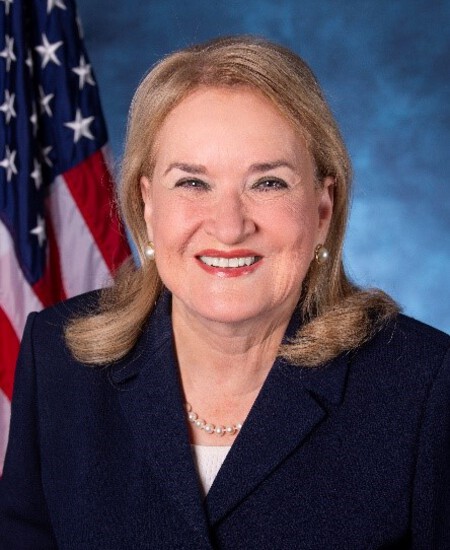
Rep. Sylvia R. Garcia
Sponsored bills
Maddy summaryThe Counseling Not Criminalization in Schools Act prohibits federal funding for school police officers and establishes a $5 billion grant program to help schools replace law enforcement with mental health professionals like counselors, social workers, and psychologists. The bill directly affects schools serving marginalized students, particularly Black, Native American, Latino, and LGBTQI+ students, who disproportionately face school discipline and police involvement. Key provisions require schools to terminate police contracts within 30 days of receiving funds and use the money for trauma-informed services, restorative justice programs, and anti-bias training. The bill also prohibits using funds for surveillance technology, punitive discipline policies, or arming school staff, while requiring schools to report on disciplinary practices and demographic data. This legislation aims to address racial disparities in school discipline and shift school safety toward supportive, evidence-based approaches rather than criminalization.
Maddy summaryThe Healthcare Workforce Resilience Act (HR 6205) reallocates unused employment-based immigrant visas from fiscal years 1992-2021 to directly support foreign nurses and physicians seeking permanent residency in the U.S. It creates 40,000 new visas - 25,000 for nurses and 15,000 for physicians - available only to those with petitions filed within three years of the bill’s enactment. The bill includes expedited processing without fees, exempts these visas from country limits, and requires employers to attest that hiring foreign workers won’t displace U.S. workers. This policy change specifically targets healthcare staffing shortages by streamlining pathways for qualified foreign healthcare professionals.
Maddy summaryHRES 831 is a symbolic congressional resolution supporting October as "National Domestic Violence Awareness Month." It does not create new laws or allocate funding, but formally expresses the House of Representatives' support for the goals of raising awareness about domestic violence. The resolution urges Congress to continue highlighting domestic violence's impact and backing programs that prevent and address it. It directly affects public awareness efforts and serves as a non-binding statement of congressional support for victims and advocacy organizations.
Maddy summaryHRES 599 is a non-binding resolution urging the European Union to fully designate Hizballah (Hezbollah) as a terrorist organization, rather than just its military wing as the EU did in 2013. It recommends the EU implement sanctions, freeze assets, issue arrest warrants, and prohibit fundraising for Hizballah, aligning with actions taken by the U.S. and other nations. The resolution cites Hizballah’s history of attacks, its criminal activities in Europe (including drug trafficking and money laundering), and its ties to Iran as justification. It directly addresses EU decision-makers, calling for coordinated action to disrupt Hizballah’s operations across the continent. The resolution follows prior House efforts, including H.Res. 359 (2017) and H.Res. 558 (2022), which made similar requests.
Maddy summaryHR 6145 creates a specialized "Children's Court" within U.S. immigration courts to handle cases involving unaccompanied children under 18. The bill requires immigration judges assigned to this court to complete mandatory training on child development, trauma-informed practices, and child-appropriate procedures - including explaining court processes in simple terms, providing breaks during testimony, and ensuring access to legal counsel. It also prohibits sharing sensitive personal information about children without their consent, protecting privacy during proceedings. Annual reports will track case processing, appearance rates, and the court's effectiveness in upholding due process for these children.
Maddy summaryHR 5983, the Clean Water Act of 2023, redefines "protected water resources" under federal law to explicitly include all interstate and intrastate waters (such as intermittent and ephemeral streams), wetlands, and their tributaries. This directly affects federal agencies like the EPA, states managing water quality, and developers or landowners needing permits for activities near these waters. The bill eliminates the Supreme Court’s narrow "navigable waters" definition from Sackett v. EPA (2023), restoring protections for tens of millions of acres of wetlands and millions of miles of small streams. Key mechanisms require the EPA to annually review and adjust exclusions from protections based on scientific evidence, ensuring water bodies critical to drinking water, flood control, and ecosystems remain safeguarded.
Maddy summaryHRES 819 is a symbolic resolution recognizing the 5-year anniversary of the October 27, 2018, antisemitic attack at Pittsburgh’s Tree of Life Synagogue, which killed 11 people. It condemns antisemitism and references rising hate incidents, including the Anti-Defamation League’s 2022 report of record antisemitic activity (3,697 incidents). The resolution honors the victims, expresses solidarity with affected Jewish communities, and reaffirms the U.S. commitment to combatting hate and protecting religious freedom. As a procedural resolution (not a law), it has no binding effect but serves as a formal statement of congressional stance.
Maddy summaryThis bill establishes a federal grant program administered by the National Academy of Sciences to fund research on safe and ethical artificial intelligence development. It directs the Academy to create public guiding principles for AI safety through consultation with industry, government, academia, and stakeholders, before launching the grants. The program targets researchers and institutions developing AI systems that prioritize security, reliability, and alignment with human values. Within one year of enactment, the Academy must submit a detailed proposal to Congress outlining the grant structure, budget, research priorities, and evaluation methods for funded projects.
Maddy summaryHCONRES 72 is a non-binding concurrent resolution recognizing the wage gap between Latina women and White, non-Hispanic men, where Latina women earn 57 cents for every dollar earned by White, non-Hispanic men working full-time. It highlights that this disparity results in Latina women losing over $1.2 million in potential earnings over a 40-year career and places them at risk of poverty. The resolution reaffirms congressional support for equal pay but does not create new laws or policy changes. It serves as a symbolic statement to raise awareness about systemic inequities affecting Latina women workers.