

Maddy summaryThis resolution (HRES 1271) is a symbolic gesture expressing the House's support for designating June 7, 2024, as "National Gun Violence Awareness Day" and June 2024 as "National Gun Violence Awareness Month." It does not create new laws or policies but urges the public to wear orange, raise awareness about gun violence, and focus on community safety during summer months when such incidents often increase. The resolution references statistics on gun-related deaths and honors victims like Hadiya Pendleton, who was killed in 2013. It directly affects the public by calling on individuals and communities to participate in awareness activities. This is a non-binding, commemorative measure with no direct legal impact on legislation or regulations.
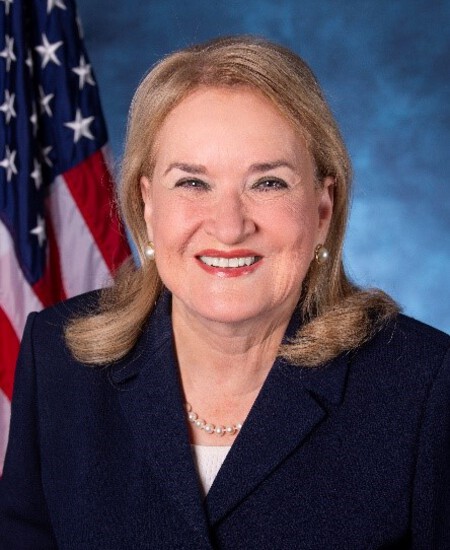
Rep. Sylvia R. Garcia
Sponsored bills
Maddy summaryThis bill, the GOSAFE Act, prohibits the sale, manufacture, transfer, and possession of gas-operated semi-automatic firearms and large capacity ammunition feeding devices (those holding more than 10 rounds). It defines "gas-operated" firearms as those using gas from fired cartridges to cycle the action, and requires the Attorney General to maintain a list of prohibited firearms. Manufacturers must seek approval for new semi-automatic firearms before selling them to civilians, and the bill creates a fund to support buy-back programs for prohibited firearms and devices. Violations could result in fines up to $5,000 or 12 months in jail, with harsher penalties for those who commit other federal crimes while in possession of prohibited firearms.
Maddy summaryHRES 1260 is a non-binding resolution expressing the U.S. House of Representatives' support for designating May 2024 as "Progressive Supranuclear Palsy Awareness Month." It recognizes progressive supranuclear palsy (PSP) as a rare neurodegenerative disease affecting approximately 30,000 Americans, with no known cure and symptoms including cognitive decline, balance issues, and speech difficulties. The resolution specifically supports raising public awareness, encourages research for better treatments and a cure, and commends efforts by patients, families, and organizations working to improve PSP care. As a symbolic gesture, it does not create new laws or allocate funding but aims to increase visibility for this under-recognized condition.
Maddy summaryThe George Floyd Justice in Policing Act of 2024 establishes a National Police Misconduct Registry to track complaints and disciplinary actions against officers, requiring all federal, state, and local law enforcement agencies to report use-of-force incidents with racial, gender, and age data. It bans chokeholds and carotid holds in police encounters, prohibits no-knock warrants in drug cases, and reforms qualified immunity to make it harder for officers to avoid accountability for misconduct. The bill mandates body cameras for federal officers, requires independent investigations of officer-involved shootings, and creates new data collection systems to monitor racial profiling and use-of-force patterns. It also includes provisions for civilian oversight boards, improved officer training on de-escalation and implicit bias, and restrictions on military equipment transfers to local police departments. This law affects all law enforcement agencies receiving federal funding under programs like Byrne and COPS grants.
Maddy summaryHRES 1233 is a symbolic resolution supporting National Honor Our LGBT Elders Day. It does not create new laws or allocate funds but encourages federal, state, and local entities to observe the day through programs raising awareness about health disparities and unique challenges faced by LGBTQ+ older adults. The resolution specifically urges healthcare providers to offer culturally competent care and calls for prioritizing the health and human rights of LGBTQ+ elders in government and aid efforts. It directly affects LGBTQ+ elders by highlighting their needs, though it has no binding legislative effect.
Maddy summaryHR 8524, the Elementary and Secondary School Counseling Act, provides federal grants to help high-need schools hire more mental health staff. It requires states to use these funds to support local schools in meeting specific staffing ratios: no more than 250 students per school counselor or social worker, and 500 students per school psychologist. Schools receiving funds must report annually on staffing levels and progress toward these ratios, with the goal of increasing access to school-based mental health services for students. The bill directly affects public elementary and secondary schools identified as "high-need" under existing law.
Maddy summaryHRES 1250 is a ceremonial resolution (not a law) introduced in the U.S. House of Representatives on May 22, 2024, to commemorate the 60th anniversary of President Lyndon Baines Johnson’s Great Society initiative. It honors the historical legacy of Johnson’s domestic policy agenda, which led to landmark legislation like the Civil Rights Act of 1964, Medicare, and the Elementary and Secondary Education Act. The resolution has no binding effect or policy impact - it solely expresses recognition of past legislation and Johnson’s public service without creating new programs or affecting any individuals or entities.
Maddy summaryHRES 1244 is a formal House resolution censuring Supreme Court Associate Justice Samuel Alito for allegedly violating judicial ethics rules. The resolution claims Alito knowingly violated the Federal recusal statute and the Supreme Court’s 2023 Code of Conduct by flying an upside-down American flag in front of his home during the 2020 election dispute period - a symbol associated with false claims of election fraud. It demands Alito recuse himself from all cases related to the 2020 election and the January 6, 2021, Capitol insurrection, arguing his conduct created a reasonable appearance of bias. This is a symbolic resolution with no legal effect, as censures in Congress do not alter judicial duties.
Maddy summaryHRES 1229 designates May 15, 2024, as "National Senior Fraud Awareness Day" to highlight scams targeting seniors in the U.S. It does not create new laws but urges awareness about common fraud types (like impersonation scams and tech support fraud) and encourages existing organizations - such as law enforcement, area agencies on aging, and financial institutions - to prevent scams and educate seniors. The resolution specifically recognizes the need to address underreported fraud, including scams causing seniors to lose over $2 billion annually, and promotes coordinated efforts to improve protections.
Maddy summary# Summary of Legislative Text This is a comprehensive legislative proposal focused on addressing substance use disorder through public health approaches, with significant funding and program requirements. Key elements include: 1. **Major Funding Programs:** - **Subtitle A (Local Grants):** $3.0 billion annually (2024-2033) for local entities to provide prevention, treatment, and recovery services - **Subtitle B (State/Regional Grants):** $4.6 billion annually (2024-2033) for state-level programs - **Subtitle C (Other Grants):** $1.0 billion annually (2024-2033) for specific entities and underserved populations - **Subtitle D (Innovation/Training):** $1.5 billion annually (2024-2033) for training, research, and capacity building 2. **Key Program Requirements:** - Mandates for evidence-based treatment services across multiple levels of care - Requirements for cultural competency, particularly for Native American communities - Specific focus on harm reduction, prevention, and recovery support - Provisions for naloxone distribution and overdose reversal programs 3. **Regulatory Changes:** - New certification requirements for covered manufacturers, distributors, and dispensers of Schedule II controlled substances - Penalties for failure to submit certifications or submitting false certifications - Creation of a "Comprehensive Addiction Resources Fund" for penalty revenues 4. **Focus Areas:** - Prevention services (including trauma-informed approaches) - Early intervention services - Recovery support services - Harm reduction programs - Workforce development for treatment providers - Special attention to underserved populations (rural communities, racial minorities, formerly incarcerated individuals) 5. **Funding Priorities:** - 10% of funds for Native American communities - Specific requirements for cultural competency and language access - Mandated data collection and reporting systems This legislation represents a significant shift toward public health approaches to substance use disorder, emphasizing prevention, treatment, and recovery support rather than punitive measures, with substantial funding commitments over a decade.