

Maddy summaryThe Treat and Reduce Obesity Act of 2023 expands Medicare coverage for obesity treatment by allowing a wider range of healthcare providers - including nurse practitioners, dietitians, psychologists, and community-based counseling programs - to deliver intensive behavioral therapy for obesity, provided they coordinate with primary care providers. It also adds Medicare Part D coverage for medications used to treat obesity or for weight loss management in overweight individuals with related health conditions like diabetes or high blood pressure. These changes directly affect Medicare beneficiaries, particularly older adults (65+), who face higher obesity rates and associated costs, including $50 billion annually in Medicare spending for obesity-related care. The bill requires annual reports to Congress on implementation to improve coordination of obesity care across federal health programs.
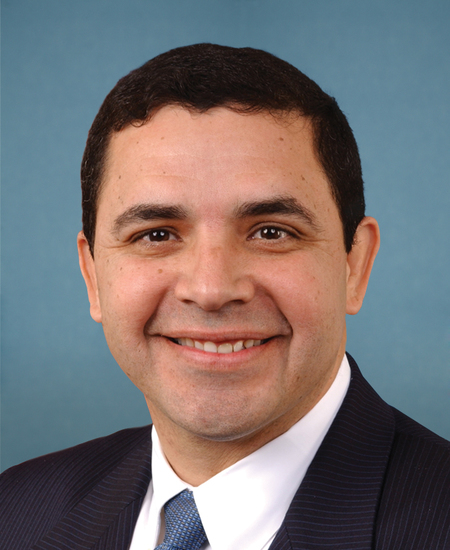
Rep. Henry Cuellar
Sponsored bills
Maddy summaryThe Autism CARES Act of 2024 reauthorizes and enhances federal programs supporting individuals with autism spectrum disorder. It requires the National Institutes of Health to expand research to include more fields like gerontology and psychiatry, and to ensure research reflects the full range of needs of people with autism, including those with co-occurring conditions. The bill mandates regular reports to Congress on progress, mental health needs, and transition services for young adults with autism, while increasing funding for autism-related programs from fiscal year 2025 through 2029. This legislation directly affects individuals with autism, their families, caregivers, and healthcare providers by improving access to evidence-based services and research.
Maddy summaryThis bill, HR 1097 (Everett Alvarez, Jr. Congressional Gold Medal Act of 2023), authorizes the award of a Congressional Gold Medal to Everett Alvarez, Jr., in recognition of his service as a U.S. Navy pilot and Vietnam War prisoner of war. It directly honors Alvarez, who was the first U.S. pilot shot down in the Vietnam War, spent over 8.5 years in captivity, and later served in the Peace Corps and Veterans Administration. The bill’s key mechanism is directing the U.S. Mint to strike a gold medal bearing his name and image, with bronze duplicates available for sale to cover costs. It does not create new policies or affect any group beyond the honoree.
Maddy summaryHR 8505, the Household Goods Shipping Consumer Protection Act, requires household goods motor carriers, brokers, and freight forwarders to designate a "principal place of business" and disclose recent ownership relationships during registration. It gives states the option to use federal grant funds to enforce federal household goods shipping regulations for both interstate and intrastate transport, if state laws align with federal rules. The bill also ensures states retain fines and penalties collected from shipping companies for violations, rather than forwarding them to the federal government. These changes aim to improve regulatory oversight and accountability in the household goods shipping industry.
Maddy summaryHR 3356, the Motor Carrier Safety Screening Modernization Act, updates existing law to replace the term "preemployment" with "employment" in safety screening requirements for motor carriers under 49 U.S. Code § 31150. This technical change clarifies that safety screenings apply to current employment status, not just initial hiring, aligning the law with current industry practices. The bill directly affects motor carriers (like trucking companies) and their compliance with safety background checks. It makes no substantive changes to screening procedures or requirements, only modernizing the statutory language.
Maddy summaryHR 2367, the Truck Parking Safety Improvement Act, creates a federal grant program to address commercial truck parking shortages on highways. It provides competitive grants (totaling $175M-$320M over three years) for projects like building new rest areas, expanding parking at ports or truck stops, or improving safety at existing facilities. The program requires all funded parking to be free, publicly accessible to all truck drivers, and maintained without user fees. This directly affects commercial truck drivers, motor carriers, and highway safety by aiming to improve parking access, reduce traffic congestion, and enhance safety on federal-aid highways.
Maddy summaryHR 5798, the Protecting Our Nation’s Capital Emergency Act of 2023, aims to address rising crime in Washington, D.C., by reversing two specific policies affecting the city’s police force. It restores collective bargaining rights for police discipline (by removing a 2022 restriction) and reinstates a longer statute of limitations for claims against Metropolitan Police Department members (repealing a 2022 law that shortened it). These changes target D.C. law enforcement officers directly, seeking to improve recruitment and retention by ensuring fairer treatment. The bill focuses solely on modifying these two legal provisions, without introducing new funding or crime-fighting measures.
Maddy summaryThis bill amends the Unfunded Mandates Reform Act of 1995 to strengthen requirements for federal agencies when creating regulations that impose costs on state, local, tribal governments or the private sector. It requires agencies to conduct detailed regulatory impact analyses for "major rules" (defined as rules with significant economic effects, such as annual costs of $100 million or more) before finalizing them, including analyzing costs and benefits of alternatives. The bill enhances consultation requirements with state, local, tribal governments and private sector entities, including small businesses, throughout the rulemaking process. Agencies must select the regulatory alternative that maximizes net benefits, and the Office of Information and Regulatory Affairs gains new oversight responsibilities to ensure compliance with these requirements.
Maddy summaryHR 3269, the Law Enforcement Innovate to De-Escalate Act, exempts specific less-than-lethal projectile devices from federal firearm taxes and National Firearms Act restrictions. The bill defines these devices as those firing projectiles at under 500 feet per second and designed not to cause death or serious injury. This directly affects law enforcement agencies using such devices and manufacturers producing them, by removing tax burdens and registration requirements. The key change is creating a clear legal exemption for these devices under federal law, streamlining their use for de-escalation purposes.
Maddy summaryThe Save Our Sequoias Act establishes a coordinated approach to protect giant sequoia groves in California from wildfires, insects, and drought. It creates a Giant Sequoia Lands Coalition including federal agencies, state governments, and the Tule River Indian Tribe to assess grove health, develop protection projects, and recommend forest management activities. The bill streamlines implementation of certain projects through categorical exclusion from environmental reviews, authorizes $10-40 million annually for conservation efforts, and establishes a fund for philanthropic support of sequoia protection.