

Maddy summaryHR 5530, the VA Emergency Transportation Access Act, prevents the Department of Veterans Affairs (VA) from lowering payment rates for specialized transportation used by veterans and eligible individuals (like ambulances or wheelchair vans) without strict requirements. It mandates that any rate change that could reduce access to care must first undergo a detailed review analyzing economic impacts on the VA and transportation industry, and ensure the new rate covers actual costs. The VA must also develop a formal process for rate changes and consult with industry experts, veterans' groups, and healthcare agencies before implementing such changes. This bill directly affects veterans relying on specialized transportation for medical care, particularly those in rural or underserved communities, by safeguarding their access to necessary emergency transport services.
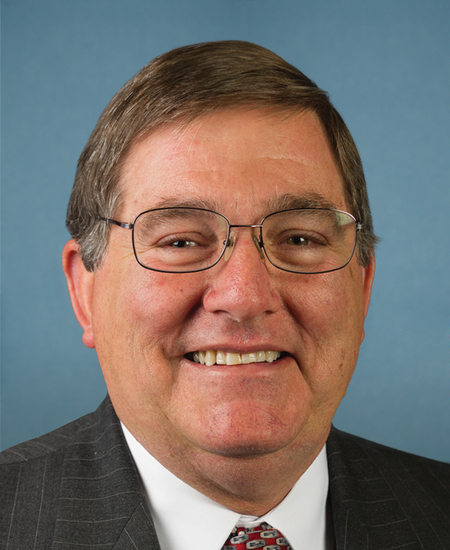
Rep. Michael C. Burgess
Sponsored bills
Maddy summaryHRES 1148 is a resolution passed by the U.S. House of Representatives that condemns the Iranian government for supporting terrorism, regional proxy conflicts, and internal suppression of dissent - including its crackdown on protests following Mahsa Amini's death in 2022. It specifically calls for maintaining sanctions against Iran, supporting the Iranian Resistance's Ten-Point Plan (which advocates for a democratic, secular, nonnuclear Iran), and protecting Iranian political refugees in Albania. The resolution also affirms the Iranian people's right to self-determination under international law and urges the U.S. to recognize their struggle for freedom. As a non-binding resolution, it does not create new laws but formally expresses congressional stance.
Maddy summaryHR 8011, the Iranian Terror Prevention Act, requires the U.S. Secretary of State to designate 12 Iranian-affiliated military groups and any entity controlled by Iran's Revolutionary Guard Corps as Foreign Terrorist Organizations within 90 days. It mandates the President to decide within 60 days whether to impose sanctions under existing law (Executive Order 13224) on these groups, which would block their U.S. assets and restrict transactions. The bill also requires the Secretary of State to submit regular reports to Congress on new entities meeting designation criteria and the President to explain any decisions not to impose sanctions. This law directly affects the listed Iranian military groups and any new entities linked to Iran's Revolutionary Guard Corps.
Maddy summaryThis bill reauthorizes a federal grant program to improve swimming pool and spa safety, targeting states, Indian Tribes, and qualifying nonprofits (501(c)(3) organizations with pool safety experience). It requires applicants to already have state or tribal laws meeting minimum safety standards for pools built after a certain date. Grant funds must be used for at least 25% on hiring/inspecting drain covers and enforcement, with the remainder for public education on drowning prevention - prioritizing underserved, rural, or minority communities with higher drowning rates. The program is funded at $5 million annually from 2024-2028, with recipients required to submit annual reports on grant use and effectiveness.
Maddy summaryHR 7770, the Rosie the Riveter Commemorative Coin Act, authorizes the U.S. Mint to produce and sell three commemorative coins honoring women who worked on the U.S. home front during World War II. It specifies $5 gold coins (max 50,000), $1 silver coins (max 400,000), and half-dollar coins (max 750,000), all to be issued between January 1, 2025, and December 31, 2025. Each coin sale includes a surcharge ($35 for gold, $10 for silver, $5 for half-dollar), with all surcharge funds directed to the Rosie the Riveter Trust for maintaining the Rosie the Riveter WWII Home Front National Historical Park and educational programs. The coins will feature designs reflecting the legacy of diverse women workers and must meet specific weight, diameter, and composition standards.
Maddy summaryThis bill amends budget scoring rules to require the Congressional Budget Office to account for long-term savings from preventive health programs when evaluating legislation. It directs the CBO to assess if a bill reduces future government costs through evidence-based preventive health services (like screenings or vaccinations) and include those savings in budget projections. The change affects how Congress scores the fiscal impact of health-related bills, requiring them to consider savings over 20 years (not just the current budget cycle). It does not create new programs but changes the budget analysis process for preventive health measures.
Maddy summaryThe National Patient Safety Board Act of 2024 establishes an independent board within the Department of Health and Human Services to prevent patient safety events in healthcare settings. The Board analyzes de-identified health data to identify safety patterns, recommend solutions, and address disparities, while ensuring reports cannot be used in liability cases. It requires annual public reporting on progress, solutions, and unmet needs, and mandates that at least three board members have patient safety expertise and two have personal experience with safety events. This bill directly affects healthcare providers, systems, and patients by creating a data-driven system to proactively improve safety outcomes nationwide.
Maddy summaryHRES 1064 is a resolution passed by the U.S. House of Representatives recognizing that Texas operates its own electricity grid through the Electric Reliability Council of Texas (ERCOT), which serves over 26 million Texans and manages 52,700 miles of transmission lines. The resolution explicitly condemns any congressional or federal government action attempting to "federalize" Texas' electricity markets, which operate under the Texas Public Utility Commission and state legislature. It emphasizes that ERCOT is not subject to federal jurisdiction and rejects efforts to force connections to neighboring grids, as seen in previous legislative proposals. This resolution does not change laws but formally states the House's position supporting Texas' control over its energy system.
Maddy summaryHR 7582, the Equal Protection for American Workers Act, prohibits the Secretary of Homeland Security from granting work authorizations to immigrants who have been finally determined, through a valid immigration proceeding with due process, to have been unlawfully present in the United States at any time. This bill directly affects non-citizens who have received a final immigration decision confirming past unlawful presence. The key provision requires the Department of Homeland Security to deny work permits to this specific group, without creating new penalties or altering existing immigration enforcement. The law takes effect upon enactment and applies to all work authorization applications processed after that date. It focuses solely on restricting work authorization eligibility for this defined category of immigrants.
Maddy summaryThis bill reauthorizes the Preventing Maternal Deaths program through 2028, extending existing provisions under the Public Health Service Act. It requires maternal mortality review committees to include obstetricians and gynecologists and improves death certificate accuracy by directing coordination with death certifiers. The Centers for Disease Control and Prevention must annually share evidence-based best practices for preventing maternal mortality with hospitals, state health groups, and perinatal quality collaboratives. The changes directly affect state maternal mortality review committees, healthcare providers, and hospitals receiving CDC guidance. The bill does not create new funding but extends the current program's authorization period from 2019-2023 to 2024-2028.