Promoting New Manufacturing Act This bill directs the Environmental Protection Agency (EPA) to annually publish information related to preconstruction emission permits issued or denied by the EPA. The EPA must publish such information applicable to FY2016-FY2020 not later than 60 days after the date of enactment. Additionally, the EPA must publish guidance for implementing any final rule that establishes or revises a national ambient air quality standard.
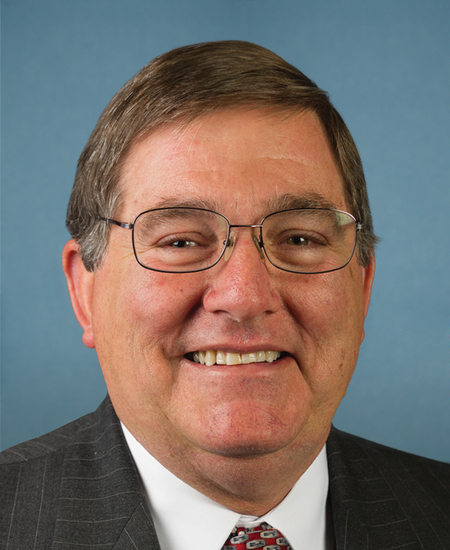
Rep. Michael C. Burgess
Sponsored bills
Clean Energy Hydrogen Innovation Act This bill expands the types of hydrogen projects that are eligible for loan guarantees from the Department of Energy.
Jenna Quinn Law This bill allows the Department of Health and Human Services to provide grants for evidence-informed child sexual abuse awareness and prevention programs. The grants may be awarded for a period of up to five years.
Strengthening American Nuclear Competitiveness Act This bill requires expedited consideration of certain nuclear technology exports, and it requires the Department of Energy (DOE), the Nuclear Regulatory Commission (NRC), and the Government Accountability Office (GAO) to author specified reports. Specifically, DOE must expedite consideration of authorization requests regarding the transfer of technology that involves specified low-proliferation-risk reactors to certain foreign countries. The bill also lifts the prohibition on licensing domestic nuclear projects in which U.S. allies invest if license issuance is not detrimental to common defense and security or the health and safety of the public. DOE must report on U.S. civilian nuclear commerce, including (1) an assessment of practices with respect to the civilian nuclear industry and the impacts of such practices on the industry in domestic and foreign commerce, (2) a comparison of U.S. practices to the practices of foreign countries with respect to their own civilian nuclear industry, and (3) recommendations to improve the competitiveness of U.S. civilian nuclear commerce. The NRC must report on (1) licensing issues or requirements relating to the use of nuclear energy for nonelectric applications, and (2) advanced manufacturing and construction techniques for nuclear energy projects. The GAO must report on actions by DOE regarding the retrospective risk pooling program that requires nuclear suppliers to help cover the contingent cost of certain nuclear incidents.

Advanced Nuclear Deployment Act This bill sets forth requirements to provide for the rapid deployment of new nuclear reactors. Specifically, the bill excludes from Nuclear Regulatory Commission (NRC) fees preapplication activities and review of an application for an early site permit to demonstrate an advanced nuclear reactor on a Department of Energy (DOE) or Department of Defense site. The NRC must also develop and implement (1) risk-informed and performance-based strategies and guidance to license and regulate micro-reactors, and (2) schedules to complete review activities applicable to the licensing of micro-reactors within two years. In addition, the NRC must establish and carry out an expedited procedure for issuing a combined license to construct a new nuclear reactor on or adjacent to a site that already has an existing reactor. Finally, the bill establishes a pilot program that allows DOE to make long-term power purchase agreements for power generated by commercial nuclear reactors.
Nuclear Industrial Base Act This bill requires the Department of Energy (DOE) to establish the Nuclear Industrial Base Analysis and Sustainment Program. A nuclear industrial base means the persons or organizations within the federal government and the private sector that are engaged in designing, producing, maintaining, developing, or integrating nuclear energy systems, components, parts, or other assets. In carrying out the program, DOE must monitor and assess the needs of the nuclear industrial base, support partnerships to develop and deploy new nuclear power assets, and make recommendations to address supply chain vulnerabilities of such base.
Ensuring Economic Recovery Act This bill requires the Small Business Administration to report on the recovery of small businesses from the COVID-19 (i.e., coronavirus disease 2019) pandemic and the effects on small businesses of increasing the federal minimum hourly wage to $15.
Promoting Interagency Coordination for Review of Natural Gas Pipelines Act This bill expands the authority of the Federal Energy Regulatory Commission (FERC)to act as the only lead agency for the purpose of coordinating the environmental review process under the National Environmental Policy Act of 1969 (NEPA) of natural gas pipeline project applications under the Natural Gas Act. Thus, federal, state, and local agencies involved in the environmental review process must defer to FERC's approved scope for a NEPA review. FERC must invite and designate the other participating agencies involved in the authorization process. In addition, FERC must consult with the Transportation Security Administration regarding pipeline infrastructure security, pipeline cybersecurity, pipeline personnel security, and other pipeline security measures. The bill establishes a deadline for agencies to complete NEPA reviews of pipeline projects and requires concurrent reviews when multiple federal or state agencies are involved. If a federal or state agency requires the person applying for a pipeline authorization to submit data, the agency must consider any such data gathered by aerial or other remote means that the person submits.
Reducing the Demand for Human Trafficking Act of 2021 This bill modifies the requirements regarding trafficking victim services grants. Specifically, it creates a preference for applicants who use the grant funds to investigate and prosecute individuals who solicit or purchase commercial sex.
This joint resolution proposes a constitutional amendment prohibiting total outlays for a fiscal year from exceeding total receipts for that fiscal year unless Congress authorizes the excess by a three-fifths roll call vote of each chamber. The prohibition excludes outlays for repayment of debt principal and receipts derived from borrowing. The amendment requires roll call votes of (1) three-fifths of each chamber of Congress to increase the public debt limit, and (2) a majority of each chamber for legislation increasing revenue. It also requires the President to submit a balanced budget to Congress annually. Congress is authorized to waive these requirements when a declaration of war is in effect or if the United States is engaged in a military conflict which causes an imminent and serious military threat to national security.