

Safe Step Act This bill requires a group health plan to establish an exception to medication step-therapy protocol in specified cases. A medication step-therapy protocol establishes a specific sequence in which prescription drugs are covered by a group health plan or a health insurance issuer. A request for such an exception to the protocol must be granted if (1) an otherwise required treatment has been ineffective, (2) such treatment is expected to be ineffective and delaying effective treatment would lead to irreversible consequences, (3) such treatment will cause or is likely to cause an adverse reaction to the individual, (4) such treatment is expected to prevent the individual from performing daily activities or occupational responsibilities, (5) the individual is stable based on the prescription drugs already selected, or (6) there are other circumstances as determined by the Employee Benefits Security Administration. The bill requires a group health plan to implement and make readily available a clear process for an individual to request an exception to the protocol, including required information and criteria for granting an exception. The bill further specifies timelines under which plans must respond to such requests.
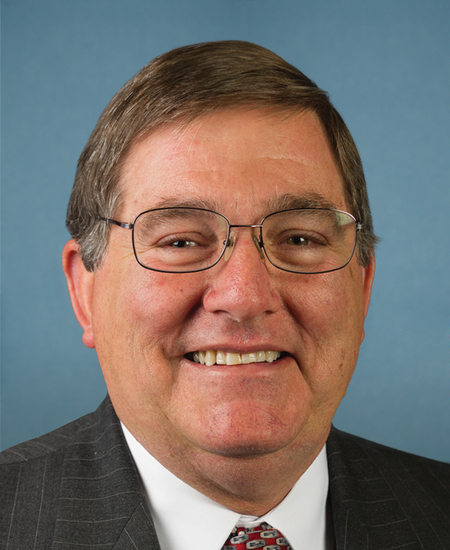
Rep. Michael C. Burgess
Sponsored bills
Recognition of Local Interests in NEPA Decision Making This bill sets forth requirements for determining the venue for judicial review of an agency action under the National Environmental Policy Act of 1969 (NEPA). Specifically, the bill requires a proceeding for judicial review of an agency's compliance with NEPA to be brought in the U.S. district court for a district in which the authorized activity is proposed to be carried out or the U.S. District Court for the District of Columbia.
Stop Greenlighting Driver Licenses for Illegal Immigrants Act This bill prohibits a state from receiving certain federal law enforcement grants if it takes certain immigration-related actions. Specifically, a state may not receive such grants if it (1) issues a driver license to an individual who does not have proof of U.S. citizenship or lawful presence in the United States, or (2) prohibits a local or state government entity or official from sharing immigration enforcement information with the Department of Homeland Security.
Just and Unifying Solutions To Invigorate Communities Everywhere Act of 2021 or the JUSTICE Act This bill addresses policies and issues regarding policing practices and law enforcement accountability. The bill funds state and local grants, incentivizes state and local reporting on the use of certain policing practices, creates new federal offenses for certain misconduct, and establishes best practices and training requirements. The bill funds state and local grants, including to support the use of body-worn cameras, to implement information sharing systems for disciplinary records of law enforcement officers, and to prohibit officers from engaging in sexual acts under color of the law. Further, it requires state and local governments that receive grants under the Edward Byrne Memorial Justice Assistance Grant program to report information related to use-of-force incidents and the use of no-knock warrants. At the federal level, the bill establishes new criminal offenses related to falsifying police reports and engaging in sexual acts under color of law. The bill directs the Department of Justice to develop training on de-escalation tactics, behavioral health crises, alternatives to the use of force, and the duty to intervene when another officer uses excessive force. Finally, the bill establishes and funds the National Criminal Justice Commission. Among other tasks, the commission must develop best practices for policing tactics and procedures.
Born-Alive Abortion Survivors Protection Act This bill establishes requirements for the degree of care a health care practitioner must provide in the case of a child born alive following an abortion or attempted abortion. Specifically, a health care practitioner who is present must (1) exercise the same degree of care as would reasonably be provided to any other child born alive at the same gestational age, and (2) ensure the child is immediately admitted to a hospital. Additionally, a health care practitioner or other employee who has knowledge of a failure to comply with the degree-of-care requirements must immediately report such failure to law enforcement. A health care practitioner who fails to provide the required degree of care, or a health care practitioner or other employee who fails to report such failure, is subject to criminal penalties—a fine, up to five years in prison, or both. An individual who intentionally kills or attempts to kill a child born alive is subject to prosecution for murder. The bill bars the criminal prosecution of a mother of a child born alive under this bill and allows her to bring a civil action against a health care practitioner or other employee for violations.
This resolution removes Representative Eric Swalwell from the House Permanent Select Committee on Intelligence.
Protect Seniors and Cut Waste Act This bill prohibits the budgetary effects of the American Rescue Plan Act of 2021 from being counted for the purposes of determining whether a specified sequester occurs under the Statutory Pay-As-You-Go Act of 2010. (The American Rescue Plan Act of 2021 provided funding to address the impact of COVID-19. Sequestration is a process of automatic, usually across-the-board spending reductions under which budgetary resources are permanently cancelled to enforce specific budget policy goals.) The bill also modifies several other provisions related to COVID-19 spending. Among other modifications, the bill provides supplemental appropriations for the Public Health and Social Services Emergency Fund to reimburse certain health care providers for health care related expenses or lost revenues that are attributable to the coronavirus; rescinds certain funds that were provided for payments to states, territories, and tribal governments to mitigate the fiscal effects stemming from the COVID-19 public health emergency; prohibits individuals who are incarcerated or unlawfully present in the United States from receiving 2021 recovery rebates; and rescinds funds that were provided by the American Rescue Plan Act of 2021 for the National Endowment for the Arts, the National Endowment for the Humanities, and the Emergency Federal Employee Leave Fund.
This resolution honors the life and legacy of former Representative Ronald Wright and extends the condolences of the House of Representatives to his wife and family.
Medicare Multi-Cancer Early Detection Screening Coverage Act of 2021 This bill provides for Medicare coverage and payment for multi-cancer early detection screening tests that are approved by the Food and Drug Administration and that are used to screen for cancer across many cancer types.
This bill directs the Speaker of the House and the President pro tempore of the Senate to arrange for the award of three Congressional Gold Medals to the U.S. Capitol Police (USCP) and other law enforcement agencies that protected the U.S. Capitol on January 6, 2021. Following the award of these medals, one medal shall be given to the USCP, one medal shall be given to the Metropolitan Police Department of the District of Columbia, and one medal shall be given to the Smithsonian Institution and displayed with a plaque listing all law enforcement agencies that participated in protecting the Capitol on January 6, 2021.