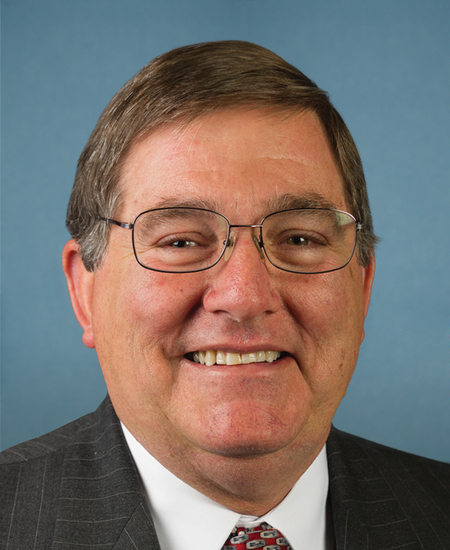
Photo of Michael C. Burgess
R United States House · District 26 · Texas

Rep. Michael C. Burgess

Compare
Total votes
2,168
all sessions
Attendance
97%
61 missed
Near the chamber average
With party
91%
of cast votes
Near the chamber average
Bipartisan score
5%
crosses aisle rarely
Near the chamber average
Sponsored
582
bills & resolutions
Near the chamber average
Committees
0
assignments
582 bills and resolutions

Sponsored bills

Total
582
Primary
86
Co-sponsor
496
This page
582
matching current filters
Co-sponsor HR 497
Passed · United States House · Co-sponsor
Freedom for Health Care Workers Act

Maddy summaryHR 497, the Freedom for Health Care Workers Act, eliminates a federal requirement for healthcare workers in Medicare and Medicaid programs to be vaccinated against COVID-19. The bill directly affects healthcare providers who treat patients under these federally funded programs by preventing the enforcement of the November 2021 HHS rule mandating staff vaccinations. Its key provision prohibits the Department of Health and Human Services from implementing, enforcing, or creating a similar rule regarding vaccination for these workers. This bill changes the policy by removing a specific vaccine mandate for providers in Medicare and Medicaid programs.

Passed Dec 17, 2024 1 co-sponsor
Co-sponsor HR 485
Passed · United States House · Co-sponsor
Protecting Health Care for All Patients Act of 2023

Maddy summaryHR 485, the Protecting Health Care for All Patients Act of 2023, prohibits federal health programs from using quality-adjusted life years (QALYs) or similar measures to decide coverage, payment, or incentives. It directly affects Medicare, Medicaid, CHIP, and other federal health programs by banning the use of QALYs - metrics that weigh health outcomes against cost - when determining patient coverage or reimbursement. The bill amends key sections of the Social Security Act to require states and federal agencies to comply with this prohibition in all program rules and administration. This policy change aims to prevent decisions based on metrics that might limit access to care for certain patients, particularly those with chronic conditions or disabilities.

Passed Dec 17, 2024 1 co-sponsor
Co-sponsor HR 7
In committee · United States House · Co-sponsor
No Taxpayer Funding for Abortion and Abortion Insurance Full Disclosure Act of 2023

Maddy summaryThis bill bans federal funding for abortions in most cases, prohibiting the use of taxpayer money for abortion services or health insurance plans covering abortion. Exceptions allow funding for abortions resulting from rape, incest, or when a pregnancy endangers a woman's life. It requires health insurance plans sold through the Affordable Care Act (ACA) marketplaces to clearly disclose any separate costs for abortion coverage and prohibits ACA subsidies from being used for plans that cover abortion (except in the specified exceptions). The law directly affects federal programs like Medicaid, ACA marketplace plans, and insurers offering health coverage to individuals using federal subsidies.

In committee Dec 17, 2024 1 co-sponsor
Co-sponsor HJRES 181
In committee · United States House · Co-sponsor
Providing for congressional disapproval under chapter 8 of title 5, United States Code, of the rule submitted by the Department of Labor relating to "Definition of 'Employer'-Association Health Plans".

Maddy summaryHJRES 181 is a congressional resolution seeking to block a Department of Labor rule that defined "Employer-Association Health Plans." The bill would prevent this specific rule - published in the Federal Register on April 30, 2024 - from taking effect. It directly affects employers and health plan administrators who use these association-based health coverage models. If passed, the rule would have no legal force, reversing the Labor Department's regulatory definition.

In committee Dec 16, 2024 1 co-sponsor
Co-sponsor HR 7438
Signed into law · United States House · Co-sponsor
FIFA World Cup 2026 Commemorative Coin Act

Maddy summaryHR 7438 directs the U.S. Treasury to mint commemorative coins for the 2026 FIFA World Cup, including 100,000 $5 gold coins, 500,000 $1 silver coins, and 750,000 half-dollar coins. The coins will be sold to the public at face value plus surcharges ($35, $10, and $5 per coin, respectively), with all surcharge revenue paid to FWC2026 US, Inc. for U.S. soccer programs. These funds must support soccer initiatives, particularly in underserved communities and youth development, as specified in the bill. The coins are legal tender but will only be issued during 2026, with no net cost to the U.S. government.

Signed into law Dec 11, 2024 1 co-sponsor
Co-sponsor HR 6751
Passed · United States House · Co-sponsor
Roberto Clemente Commemorative Coin Act

Maddy summaryHR 6751 authorizes the U.S. Mint to produce commemorative coins honoring Roberto Clemente, a Hall of Fame baseball player and humanitarian, including 50,000 $5 gold coins, 400,000 $1 silver coins, and 750,000 half-dollar coins. The coins must feature Clemente's image and inscriptions like "Roberto Clemente" and "2027," with all sales including a surcharge ($5-$35 per coin) paid to the Roberto Clemente Foundation. The foundation, which supports youth sports, education, and disaster relief programs, will use these funds for its mission, while the U.S. Treasury must recover all production costs. The coins will be sold exclusively in 2027, with no net cost to the government.

Passed Dec 5, 2024 1 co-sponsor
Primary HR 3284
In committee · United States House · Lead sponsor
Providers and Payers COMPETE Act

Maddy summaryHR 3284, the Providers and Payers COMPETE Act, requires the Health and Human Services Secretary to annually report starting in 2026 on how Medicare regulations (for Parts B, C, and D) affect consolidation among healthcare providers and insurers. It also mandates that beginning in 2025, the Secretary must seek public comment on the potential consolidation impacts of proposed Medicare rules. The bill further modifies Medicare's innovation model testing to require evaluation of how such models affect provider and payer consolidation, including hospital mergers and pharmacy chain integrations. These provisions aim to increase transparency around consolidation trends in Medicare programs without altering existing payment structures.

In committee Dec 5, 2024 0 co-sponsors
Primary HRES 1602
Passed · United States House · Lead sponsor
Providing for consideration of the bill (H.R. 5349) to develop and disseminate a civic education curriculum and oral history resources regarding certain political ideologies, and for other purposes, and providing for consideration of the bill (H.R. 7198) to amend title 5, United States Code, to require greater transparency for Federal regulatory decisions that impact small businesses, and for other purposes.

Maddy summaryHRES 1602 is a procedural resolution that allows the U.S. House of Representatives to debate and vote on two specific bills. It enables consideration of H.R. 5349, which would direct the development of civic education materials about political ideologies, and H.R. 7198, which would require federal agencies to increase transparency in regulatory decisions affecting small businesses. The resolution waives objections to these bills and sets rules for debate, including time limits and amendment procedures. It does not change policy itself but facilitates the legislative process for these two bills. This resolution is a standard procedural step to advance the bills to the floor for voting.

Passed Dec 4, 2024 0 co-sponsors
Co-sponsor HR 6951
In committee · United States House · Co-sponsor
College Cost Reduction Act

Maddy summary# Summary of Proposed Higher Education Act Amendments This document outlines significant proposed amendments to the Higher Education Act of 1965, primarily as part of the "College Cost Reduction Act." The key elements include: ## Accreditation Reform - Major overhaul of accreditation standards, requiring accrediting agencies to demonstrate independence from trade associations - New requirements for accrediting agencies to assess student achievement outcomes, including median value-added earnings relative to median total price charged - Introduction of an "Alternative Quality Assurance Experimental Site Initiative" to test non-accredited institutions - Protections for religious institutions, including a new process for appealing accreditation decisions related to religious mission - Removal of "litmus tests" that would require institutions to support specific political viewpoints ## Student Success Initiatives - Establishment of "Postsecondary Student Success Grants" to increase participation, retention, and completion rates for high-need students - Focus on evidence-based practices, with tiered requirements (tier 1, 2, and 3 reforms) - Mandatory inclusion of high-need student populations (low-income, first-generation, military-connected, etc.) - Requirements for institutions to report on completion rates, retention rates, and student demographics ## Regulatory Changes - Repeal of numerous existing regulations including: * Closed school discharges * Borrower defense to repayment * Pre-dispute arbitration * False certification requirements * Ability-to-benefit rules * Financial responsibility regulations - New restrictions on incentive compensation for recruiters - Changes to third-party servicer definitions and regulations ## Transfer and Credit Policies - New requirement that institutions cannot deny transfer credit based solely on the source of accreditation - Requirements for transparent transfer policies - Changes to reverse transfer policies ## Other Key Provisions - Modifications to the National Advisory Committee on Institutional Quality and Integrity (NACIQI) - New definitions for "total price" and "value-added earnings" - Changes to the process for institutions to change accrediting agencies - New requirements for institutions to report on student outcomes The overall focus of these proposed amendments is to reduce regulatory burden on institutions, promote transparency, improve student outcomes (particularly for high-need students), modernize accreditation processes, and protect religious institutions' rights in accreditation decisions.


In committee Nov 18, 2024 1 co-sponsor
Primary HRES 1568
Passed · United States House · Lead sponsor
Providing for consideration of the bill (H.R. 8932) to establish an earlier application processing cycle for the FAFSA; providing for consideration of the bill (H.R. 7409) to amend the Geothermal Steam Act of 1970 to waive the requirement for a Federal drilling permit for certain activities, to exempt certain activities from the requirements of the National Environmental Policy Act of 1969, and for other purposes; and providing for consideration of the bill (H.R. 8446) to amend the Energy Act of 2020 to include critical materials in the definition of critical mineral, and for other purposes.

Maddy summaryHRES 1568 is a procedural resolution that would allow the House to consider three separate bills. It provides for consideration of H.R. 8932, which would establish an earlier processing cycle for the FAFSA (Free Application for Federal Student Aid) to help students access financial aid sooner. It also provides for consideration of H.R. 7409, which would waive federal drilling permit requirements for certain geothermal energy activities and exempt them from environmental review under the National Environmental Policy Act. Finally, it provides for consideration of H.R. 8446, which would amend the Energy Act of 2020 to include critical materials in the definition of "critical minerals" for energy and technology purposes.

Passed Nov 13, 2024 0 co-sponsors
Showing 31 to 40 of 582 bills
Previous 1 … 3 4 5 … 59 Next