

Maddy summaryThis bill requires U.S. Customs and Border Protection (CBP) to obtain fingerprints from noncitizen children under 14 years old if officers suspect they are trafficking victims upon entering the U.S. It also creates a new federal crime for adults (18+) who knowingly use a minor for entry without being a relative or guardian, punishable by fines or up to 10 years in prison. The bill mandates sharing fingerprints collected under this provision with the Department of Health and Human Services for unaccompanied minors and requires CBP to report monthly data on trafficking-related apprehensions and annual data on fingerprinting to Congress. These provisions directly affect CBP officers, unaccompanied children, and individuals suspected of exploiting minors for entry.
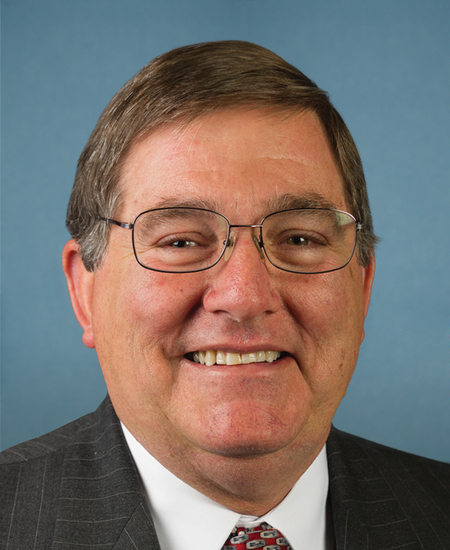
Rep. Michael C. Burgess
Sponsored bills
Maddy summaryThe Southern Border Transparency Act of 2023 (HR 6523) requires U.S. Customs and Border Protection (CBP), the Department of Homeland Security (DHS), and U.S. Citizenship and Immigration Services (USCIS) to publish specific immigration data online. It mandates monthly reports on parole grants at ports of entry (including numbers by nationality and family status), quarterly reports on processing outcomes for aliens encountered at the southern border (disaggregated by nationality, demographics, and processing paths), and annual reports on parolees (including employment status and status changes). These reports must be posted on agency websites and submitted to relevant congressional committees. The bill directly affects federal agencies responsible for border processing and aims to increase public and congressional transparency about immigration enforcement practices at the southern border.
Maddy summaryH.J.Res. 66 disapproves a specific rule issued by the Consumer Financial Protection Bureau (CFPB) regarding small business lending under the Equal Credit Opportunity Act (Regulation B). The resolution, if passed, would prevent this CFPB rule from taking effect by declaring it "have no force or effect." The rule in question (88 Fed. Reg. 35150) aimed to clarify how lenders must evaluate small business loan applications under existing equal credit laws. This disapproval directly affects the CFPB's regulatory authority and would block the rule's implementation for small business lenders and financial institutions.
Maddy summaryHRES 793 is a resolution passed by the U.S. House of Representatives calling on Hamas to immediately release all 199 hostages taken during Hamas' October 7, 2023 attack on Israel. The resolution condemns Hamas for the attack, the taking of hostages, and threats against hostages, while stating that holding hostages violates international humanitarian law under the Geneva Conventions. It demands the immediate release of all hostages and expresses sympathy for victims and their families. As a symbolic resolution, it does not create legal obligations but formally expresses the House's position.
Maddy summaryHR 6479 prohibits plea deals for Khalid Sheikh Mohammed and other individuals directly responsible for the September 11, 2001, terrorist attacks that would avoid a public trial or a death penalty sentence. The bill requires the Attorney General to refuse any such plea agreement, ensuring these defendants cannot secure a resolution that skips a public trial or capital punishment. It directly affects only the 9/11 case defendants named in the legislation. The measure mandates that all legal proceedings for these individuals must proceed to trial or result in a death sentence.
Maddy summaryHRES 864 is a procedural resolution that establishes the rules for considering H.R. 5894, the appropriations bill funding the Departments of Labor, Health and Human Services, and Education for fiscal year 2024. It sets time limits for debate (one hour total), waives points of order against the bill, and specifies how amendments will be handled, including limiting further amendments to those listed in the resolution's report. This resolution affects House procedures for debating and amending the appropriations bill, not the actual funding levels or policy changes. As a procedural resolution, it does not alter the content of the appropriations bill but governs how it will be considered by the House.
Maddy summaryThis bill appropriates $14.3 billion in supplemental security funding to Israel following the October 7, 2023 attacks. The funding includes $4 billion for Iron Dome and David's Sling defense systems, $1.35 billion for the Iron Beam defense system development, and $3.5 billion for foreign military financing. The bill requires regular reporting to Congress on security assistance provided to Israel and designates all funds as "emergency requirements" under federal budget law. It also modifies existing laws to facilitate the transfer of defense articles and services to Israel, aiming to strengthen Israel's defense capabilities against rocket threats.
Maddy summaryHR 6383 prohibits the Department of Homeland Security (DHS) from using federal funds to implement or enforce a "remain in Texas policy." This policy would require migrants released by DHS or HHS to stay in Texas after entering the U.S. The bill's key mechanism is a funding ban, blocking DHS from enforcing such requirements without congressional approval. It directly affects migrants subject to release by DHS/HHS and DHS operations. The policy change is purely procedural, restricting how federal funds can be used for migration management in Texas.
Maddy summaryHR 6374, the Veterans Health Care Stamp Act, directs the U.S. Postal Service to issue a special postage stamp annually for Veterans Day. All revenue from the sale of this stamp will be transferred directly to the Department of Veterans Affairs to fund veterans' medical care. The stamp will be designed by the Postal Service without numerical limits and must be available by Veterans Day each year. This bill creates a dedicated, public contribution mechanism for veterans' healthcare funding.
Adding Coccidioidomycosis to the FDA Priority Review Voucher Program Act of 2023 This bill expands the priority-review voucher program for tropical diseases to include coccidioidomycosis (also known as Valley fever). A voucher entitles the holder to have a future new drug or biological product application acted upon by the Food and Drug Administration within six months.