

Maddy summaryHR 7171, the Distribution Transformer Efficiency and Supply Chain Reliability Act of 2024, prevents the Department of Energy from finalizing rules requiring liquid-immersed or dry-type distribution transformers to meet efficiency standards stricter than "trial standard level 2" (as outlined in a 2023 proposed rule). The bill also mandates that any finalized rule implementing "trial standard level 1" or "level 2" efficiency standards cannot take effect for at least 10 years after the rule's finalization date. This directly affects transformer manufacturers and utilities by delaying stricter efficiency requirements and providing extended compliance timelines. The bill aims to stabilize the supply chain for these critical grid components by limiting near-term regulatory changes.
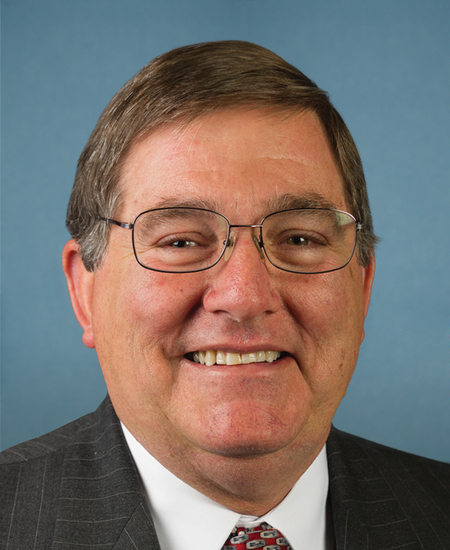
Rep. Michael C. Burgess
Sponsored bills
Maddy summaryHRES 980 is a procedural resolution that sets rules for the House of Representatives to consider four separate bills. It does not change laws itself but establishes debate time limits, amendment procedures, and voting rules for: (1) H.R. 5585 (addressing fleeing federal officers), (2) H.R. 6678 (Social Security fraud inadmissibility), (3) H.R. 6679 (immigration consequences for Israel attack facilitators), and (4) H.R. 6976 (DWI inadmissibility). The resolution waives points of order and limits debate to one hour per bill, controlling how these bills are debated and amended. This resolution only affects the legislative process, not the policy content of the underlying bills.
Maddy summaryThis bill requires the President's annual budget submission and congressional budget resolutions to include the ratio of public debt to estimated gross domestic product (GDP). It amends existing laws (31 U.S.C. §1105(a) and the Congressional Budget and Impoundment Control Act of 1974) to mandate this specific metric be reported. The change would standardize the inclusion of this ratio in federal budget documents, making it a formal part of fiscal planning. It is a procedural update to reporting requirements, not a policy change affecting debt levels or spending.
Maddy summaryHR 6986 limits patent holders from asserting multiple patents in infringement lawsuits against companies developing generic drugs or biosimilars. Specifically, it allows only one patent per "Patent Group" (commonly owned patents related through certain legal filings) to be claimed against such companies in a single lawsuit. This directly affects drug/biosimilar manufacturers submitting applications under FDA approval pathways (21 U.S.C. 355 or 42 U.S.C. 262) or selling approved versions of these products. The rule applies to new applications filed after the bill's enactment, aiming to reduce complex patent litigation tactics.
Maddy summaryThe FORWARD Act of 2023 establishes new funding and coordination mechanisms to address endemic fungal diseases in the U.S., primarily affecting patients with conditions like Valley Fever (coccidioidomycosis), blastomycosis, histoplasmosis, and sporotrichosis. It authorizes $20 million annually (2024-2028) for NIH research on these diseases and creates an HHS working group to coordinate federal efforts, identify research gaps, and recommend strategies - including for antifungal product development. The bill also expands a priority review voucher program to incentivize treatments for Valley Fever and launches a $500 million antimicrobial resistance program requiring at least 20% of funds to support antifungal research. These provisions directly impact federal agencies (NIH, CDC, FDA), researchers, healthcare providers, and patients affected by endemic fungal infections.
Maddy summaryHR 6734 prohibits the use of federal funds to finalize, implement, or enforce the Bureau of Alcohol, Tobacco, Firearms, and Explosives' (ATF) proposed rule (2022R-17) defining "engaged in the business as a dealer in firearms." This bill directly affects the ATF by blocking funding for this specific regulatory rule, which was proposed in August 2023. The legislation does not create new requirements but prevents federal resources from being used to advance this particular ATF regulation.
Maddy summaryThis bill reauthorizes and extends funding for programs addressing substance use disorders and opioid addiction, including residential treatment for pregnant and postpartum women, first responder training, and community recovery initiatives. It increases funding levels for these programs, adds xylazine to Schedule III of controlled substances, and requires a study on remote monitoring for patients prescribed opioids. The bill also expands Medicaid coverage requirements for medication-assisted treatment and mandates reporting on mental health condition data alongside substance use disorder data, directly affecting individuals with substance use disorders, healthcare providers, and state and tribal governments.
Maddy summaryThis bill reauthorizes and extends federal funding for research and support services related to preterm birth through 2028, replacing the previous 2019-2023 funding period. Key provisions include adding chronic condition screening and treatment to maternal health education services, mandating an interagency working group on prematurity within 18 months, and requiring a National Academies study on preterm birth costs, risk factors, and program gaps. The study must assess neonatal care expenses, societal impacts, and effective prevention strategies, with a final report due within 24 months. These changes directly affect preterm infants, their families, healthcare providers, and federal agencies managing maternal health programs.
Maddy summaryHJRES 88 is a resolution seeking to block a Department of Education rule that would have improved income-driven repayment options for federal student loan borrowers. The rule, published in the Federal Register on July 10, 2023, targeted the William D. Ford Direct Loan Program and the Federal Family Education Loan (FFEL) Program. This resolution uses the Congressional Review Act process to disapprove the rule, preventing it from taking effect and preserving the current repayment structure. If enacted, it would stop the proposed changes to repayment terms without altering existing loan policies.
Maddy summaryHR 6619, the PATROL Act, prevents the federal government from suing states for building border barriers. It specifically blocks the Attorney General from filing civil lawsuits under the 1899 Act against states that construct physical barriers (like walls, fences, or buoys) along the border to stop illegal entry or protect state territory. The law directly affects states building such barriers and the federal government’s legal authority to challenge those actions. This is a procedural change that removes a legal obstacle for states pursuing border security measures.