

Maddy summaryHR 5427 prohibits individuals convicted of fraud against the government from receiving most Small Business Administration (SBA) financial assistance. Specifically, it blocks eligibility for any SBA aid (except standard Section 7(b) loans) if a small business has an "associate" (such as an officer, director, owner over 20%, or key employee) who was finally convicted of fraud involving SBA-covered loans or grants. Covered programs include pandemic-era loans like the PPP and grants under the American Rescue Plan Act. The rule applies only to new assistance after the bill's enactment, not existing contracts.
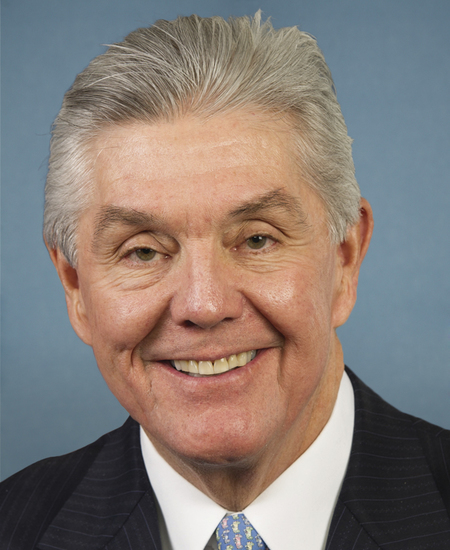
Rep. Roger Williams
Sponsored bills
Maddy summaryH.J.Res. 66 disapproves a specific rule issued by the Consumer Financial Protection Bureau (CFPB) regarding small business lending under the Equal Credit Opportunity Act (Regulation B). The resolution, if passed, would prevent this CFPB rule from taking effect by declaring it "have no force or effect." The rule in question (88 Fed. Reg. 35150) aimed to clarify how lenders must evaluate small business loan applications under existing equal credit laws. This disapproval directly affects the CFPB's regulatory authority and would block the rule's implementation for small business lenders and financial institutions.
Maddy summaryHRES 793 is a resolution passed by the U.S. House of Representatives calling on Hamas to immediately release all 199 hostages taken during Hamas' October 7, 2023 attack on Israel. The resolution condemns Hamas for the attack, the taking of hostages, and threats against hostages, while stating that holding hostages violates international humanitarian law under the Geneva Conventions. It demands the immediate release of all hostages and expresses sympathy for victims and their families. As a symbolic resolution, it does not create legal obligations but formally expresses the House's position.
Maddy summaryHRES 683 is a non-binding resolution expressing the House's support for diplomatic efforts to encourage Mexico to fulfill annual water delivery commitments under the 1944 U.S.-Mexico treaty. The treaty requires Mexico to deliver an average of 350,000 acre-feet of water annually (over a 5-year cycle) to the U.S., but Mexico has historically delayed deliveries until the cycle ends. The resolution specifically acknowledges water shortages faced by South Texas farmers and urges Mexico to meet its annual obligations, while supporting negotiations for more reliable water agreements. It does not create new legal requirements but formally encourages diplomatic action to address the delivery delays.
Maddy summaryHJRES 103 is a congressional resolution seeking to block a Department of Labor rule updating the Davis-Bacon Act regulations. It specifically targets the rule published in the Federal Register on August 23, 2023 (88 Fed. Reg. 57526), which would have modified requirements for paying prevailing wages on federal construction projects. The resolution invokes Chapter 8 of Title 5, U.S. Code, to formally disapprove the rule, stating it "shall have no force or effect" if passed. This procedural measure directly affects federal contractors and the Department of Labor, aiming to prevent the implementation of the updated wage regulations.
Maddy summaryHR 6383 prohibits the Department of Homeland Security (DHS) from using federal funds to implement or enforce a "remain in Texas policy." This policy would require migrants released by DHS or HHS to stay in Texas after entering the U.S. The bill's key mechanism is a funding ban, blocking DHS from enforcing such requirements without congressional approval. It directly affects migrants subject to release by DHS/HHS and DHS operations. The policy change is purely procedural, restricting how federal funds can be used for migration management in Texas.
Maddy summaryThis bill prohibits federal funding for Planned Parenthood Federation of America and its affiliates, clinics, or related entities. It directs that funds previously allocated to Planned Parenthood must instead support other providers - including community health centers, hospitals, and clinics - that offer women’s health services like contraception, cancer screenings, and prenatal care. The bill explicitly states it does not reduce overall federal funding for women’s health care or affect existing abortion-related funding restrictions in appropriations laws. It ensures continued access to these services through alternative providers, particularly in underserved communities.
Maddy summaryHRES 798 is a House resolution condemning support for Hamas, Hezbollah, and other terrorist organizations at colleges and universities. It states such support may create a hostile environment for Jewish students, faculty, and staff, citing incidents like blaming Israel for the October 7 Hamas attack. The resolution urges the Secretary of Education to direct the Office for Civil Rights to investigate and take action where appropriate. This non-binding resolution expresses the House's position but does not create new law or policy changes.
Maddy summaryHR 6170, the Border Security and Terrorism Prevention Act, requires the immediate halt to all immigration processing at the southern border for both legal entries and unlawful crossings. It mandates that migrants apprehended there be detained and removed without delay, with border operations resuming only after the Secretary of Homeland Security certifies no terrorists can enter via the southern border (within 15 days). The bill also requires a detailed report to Congress on border security gaps, counter-terrorism efforts, and a plan to screen all apprehended individuals against terrorist databases before release. This legislation directly affects migrants seeking entry at the southern border and shifts enforcement priorities toward immediate detention and database verification.
Maddy summaryHRES 796 is a non-binding House resolution condemning foreign nationals in the U.S. who have endorsed or supported Hamas, Palestinian Islamic Jihad, or other designated foreign terrorist organizations (FTOs) responsible for the October 7, 2023, attacks on Israel. It calls on the President to enforce existing immigration law (8 U.S.C. 1182(a)(3)(B)(i)(VII)) to revoke visas and initiate deportation for such individuals. The resolution affirms that terrorism by these groups cannot be equated with Israel’s self-defense actions and rejects all forms of anti-Semitism. It does not create new laws but urges enforcement of current visa restrictions for those endorsing FTOs. The resolution references the Oct. 7 attacks that killed 1,300 Israelis and 30 U.S. citizens, as cited in the resolution’s preamble.