

Maddy summaryHR 3989, the Fluent Forces Act, requires the Secretary of Defense to submit annual reports starting in 2025 through 2030 on recruiting efforts to increase enrollment at the Defense Language Institute Foreign Language Center (DLIFLC). These reports must track which high schools military recruiters target, how many students from those schools join the military and attend DLIFLC, and challenges like access to schools or follow-up with students. The bill mandates recommendations for improving recruitment awareness of linguist careers and systematic documentation of school engagement. It directly affects military recruiters, high schools, and future linguists in the Armed Forces by focusing on measurable progress in building language skills for national security. The legislation aims to strengthen military language training through structured recruitment data, not by creating new programs.
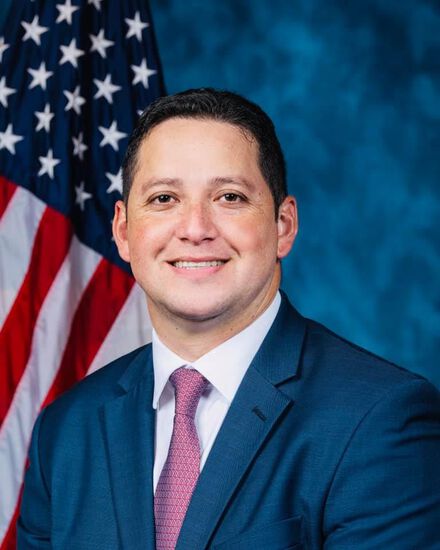
Rep. Tony Gonzales
Sponsored bills
Maddy summaryHRES 481 is a symbolic resolution condemning recent antisemitic attacks in the U.S., specifically referencing the June 1, 2025, Boulder, Colorado, assault on a Jewish community gathering and other incidents like the May 2025 Washington, D.C., embassy shooting. It formally recognizes a pattern of violence targeting Jewish individuals and institutions, including attacks during religious events. The resolution calls on law enforcement to thoroughly investigate and prosecute such incidents and urges elected officials to publicly oppose antisemitism and politically motivated violence. As a non-binding resolution, it does not create new laws or allocate funding but serves to affirm congressional stance against antisemitism.
Maddy summaryThis bill extends a 100% tax deduction for film and television productions (replacing the standard bonus depreciation) through 2035, increasing the tax benefit for qualifying productions. It requires productions to spend at least $500,000 in one state (or $100,000 for educational content) to qualify. The policy directly affects producers who meet these spending thresholds and choose to film in any U.S. state. The bill applies nationwide, though its title references Texas as a marketing concept, not a geographic requirement.
Maddy summaryThis bill updates the International Bridge Act of 1972 to modernize border crossing permits. It expands the definition of "international bridge" to include land ports of entry on the U.S.-Mexico and U.S.-Canada borders, covering both bridges and border crossings. Crucially, it removes the requirement for environmental reviews under the National Environmental Policy Act (NEPA) for Presidential permits related to these projects. The bill directly affects developers and agencies seeking permits for border infrastructure projects by streamlining the approval process.
Maddy summaryHR 3583 requires funeral honors details presenting a folded U.S. flag to military members or veterans at funerals to recite the 13 specific "Folds of Honor" with their symbolic meanings (e.g., "The 1st fold is a symbol of life"). This applies to flag presentations under federal law for deceased service members or veterans, directly affecting military funeral honors teams. Families may opt out of the recitation if they choose, per the bill's exception clause. The bill adds this requirement to U.S. Code without changing existing funeral procedures.
Maddy summaryHRES 441 is a symbolic House resolution expressing support for designating May 2025 as "Mental Health Awareness Month." It does not create new laws, allocate funding, or change existing policies - it solely aims to raise public awareness about mental health challenges. The resolution cites statistics on rising mental health issues (including youth depression, suicide rates, and disparities in care access) to underscore the need for greater attention. It encourages the public, schools, and organizations to use the month to promote mental well-being and reduce stigma, but contains no concrete policy changes or mandates.
Maddy summaryHRES 421 is a resolution memorializing 345 law enforcement officers killed in the line of duty during 2024, listing each officer's name. It expresses the House of Representatives' support for law enforcement, acknowledges the sacrifice of these officers, and recognizes the need for adequate resources to protect officers while they serve the public. The resolution also extends condolences to the families of fallen officers. As a ceremonial resolution, it does not create new laws or policies but serves as a formal tribute.
Maddy summaryThis bill establishes the Law Enforcement Education Grant Program, providing $4,000 annual grants to students pursuing associate or bachelor's degrees in law enforcement or criminal justice. To qualify, students must be enrolled at approved institutions, complete required coursework, and agree to serve as full-time law enforcement officers for four years within eight years of graduation. Failure to fulfill this service obligation requires repayment of the grants as federal loans, with repayment terms mirroring unsubsidized Stafford Loans. The program is funded separately from Pell Grants and Direct Loans, with a lifetime cap of $16,000 per recipient.
Maddy summaryHRES 412 is a non-binding House resolution congratulating Pope Leo XIV on his historic election as the 267th pope and the first American-born pope in the Catholic Church's 2,000-year history. The resolution recognizes his Chicago upbringing, missionary work in Peru, and commitment to humility and pastoral care, highlighting his significance for American Catholics. As a symbolic gesture with no legal effect, it expresses the House's support for his leadership without altering any policies or affecting any stakeholders.
Maddy summaryHR 3392, the STOP Screwworms Act, requires the U.S. Department of Agriculture to build modular facilities for rearing sterile New World screwworm flies within 180 days of enactment. These facilities will disperse sterile flies into at-risk agricultural areas - identified based on migratory patterns and suitability for dispersal - to prevent infestations that threaten livestock. The bill authorizes $300 million in funding for construction, operation, and annual reporting to Congress on threat assessments and effectiveness. It directly affects livestock producers and agricultural regions vulnerable to screwworm fly migration, using sterile insect technique as a preventive measure.