

Maddy summaryHR 4498 increases the annual funding cap for the Colonia Set-Aside Program from $1 million to $2 million. This change directly affects colonias - unincorporated, low-income communities along the U.S.-Mexico border that often lack basic infrastructure like water and sewage systems. The bill amends Section 916(e)(4) of the Cranston-Gonzalez National Affordable Housing Act to raise the funding limit. This adjustment provides more resources to support housing improvements in these underserved border areas.
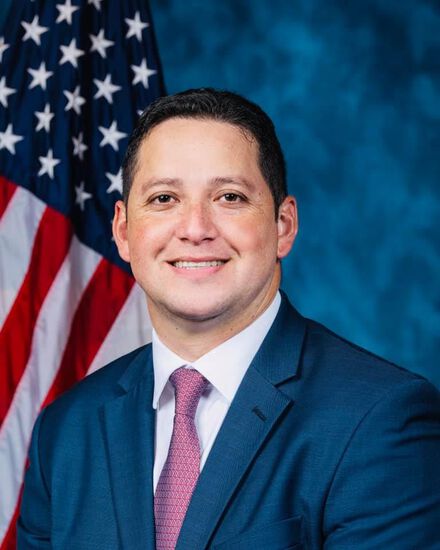
Rep. Tony Gonzales
Sponsored bills
Maddy summaryHR 4474, the Equal Shot Act of 2025, prohibits the Small Business Administration (SBA) from denying financial assistance - such as loans or guarantees - to firearm businesses solely because of their industry. It directly affects firearm manufacturers, distributors, trade associations, and affiliated entities like shooting ranges or training providers. The bill requires the SBA to treat these applicants equally under existing law, removing any policy that would block them based on their connection to firearms. This is a concrete policy change ensuring firearm-related businesses have the same access to SBA programs as other eligible applicants.
Maddy summaryThis resolution (HRES 583) condemns the July 7, 2025, attack on a U.S. Border Patrol facility in McAllen, Texas, where Ryan Louis Mosqueda injured agents and police. It expresses support for the affected personnel, wishes them a full recovery, and reaffirms the House’s backing of Border Patrol officers in their border security mission. The resolution directly addresses the McAllen community and Border Patrol staff impacted by the violence, serving as a symbolic statement of solidarity without creating new laws or policies.
Maddy summaryHRES 570 is a House resolution commending Petty Officer 3rd Class Scott Ruskan for rescuing 165 people during catastrophic July 2025 flooding in central Texas. The resolution honors Ruskan, a Coast Guard Aviation Survival Technician from Air Station Corpus Christi, for his role as the sole triage coordinator during the disaster. It recognizes his "exceptional courage" and "selflessness" in saving lives during the Guadalupe River flooding that caused extensive damage and loss of life. As a ceremonial resolution, it does not create new laws or policies but formally expresses the House's gratitude for Ruskan's service.
Maddy summaryThe Head Start for Our Future Act amends Section 441(c)(1) of the Higher Education Act of 1965 to replace "literacy training" with "child development and early learning (including Head Start programs and Early Head Start programs carried out under the Head Start Act), literacy training." This technical change formally integrates Head Start and Early Head Start programs into the federal definition of early learning initiatives under the Higher Education Act, while maintaining a separate reference to literacy training. The bill directly affects how federal grants for early childhood education are categorized and administered under the Higher Education Act. It does not alter funding levels, program requirements, or operations but updates administrative terminology to explicitly include Head Start services.
Maddy summaryHR 3179 proposes renaming the Anahuac National Wildlife Refuge in Texas to the "Jocelyn Nungaray National Wildlife Refuge." The bill directly affects the refuge's official name and all federal references to it, including documents and maps. It cites findings about 12-year-old Jocelyn Nungaray's murder in Houston and states the renaming honors her, given her love of animals and local connection. The key mechanism is a straightforward name change for all federal records, with no new policies or funding impacts.
Maddy summaryHR 4254 establishes the "Iranian Campaign Medal" to recognize military personnel who served during specific operations in the Iran-Israel War, including "Operation Midnight Hammer" on June 22, 2025. It authorizes the Secretary of Defense to award the medal to active-duty service members deployed in designated areas of operation or performing prescribed service related to the conflict. The medal may also be issued to the next-of-kin of deceased eligible service members. The bill specifies the medal’s design, limits awards to one per person, and requires uniform regulations for issuance.
Maddy summaryHR 4177, the COPS Act, increases penalties for assaulting, resisting, or impeding federal law enforcement officers. It raises fines for such offenses from up to $200,000 to $500,000 and extends prison sentences from 8 to 10 years for basic assaults, and from 20 to 25 years for assaults involving explosive materials. This bill directly affects individuals who physically confront or obstruct federal officers, including police, border patrol, and other federal personnel. The changes apply to offenses under Title 18, United States Code, Section 111.
Maddy summaryThis symbolic House resolution (HRES 521) expresses support for Israel’s military actions against Iran’s nuclear facilities, citing Iran’s nuclear enrichment progress (including 60% enriched uranium stockpiles nearing weapons-grade levels) and Iran’s attacks on Israeli civilians. It specifically endorses Israel’s "proportional" strikes on Iranian nuclear sites and military targets following Iran’s rejection of diplomatic efforts, while condemning Iran’s attacks that killed 24 Israelis and wounded 590. The resolution calls on Iran to halt nuclear enrichment and dismantle its program, reaffirms U.S. support for Israel’s security, and urges global condemnation of Iran’s nuclear activities. As a non-binding resolution, it does not enact policy but formally aligns the House with Israel’s actions against Iran’s nuclear program.
Maddy summaryThis bill creates an FBI-led task force to investigate oil theft in the Permian Basin, requiring coordination with state, local, and tribal law enforcement agencies. It increases criminal penalties for oil theft, raising maximum sentences from 3 to 5 years for certain offenses and from 10 to 15 years for others under federal law. The bill also authorizes using federal crime-fighting funds to support oil theft prevention programs and hire dedicated investigators. These changes directly affect law enforcement agencies conducting investigations and individuals committing oil theft crimes involving pipelines, refineries, or related equipment.