

Maddy summaryThe VA Same-Day Scheduling Act of 2023 requires the Department of Veterans Affairs to schedule appointments for enrolled veterans during the same phone call when they request care. This applies to veterans enrolled in the VA healthcare system who contact the VA by phone to request appointments. The law mandates that the VA must complete the scheduling during the call - without delay or future scheduling - regardless of the appointment date. The requirement takes effect 120 days after the bill is enacted.
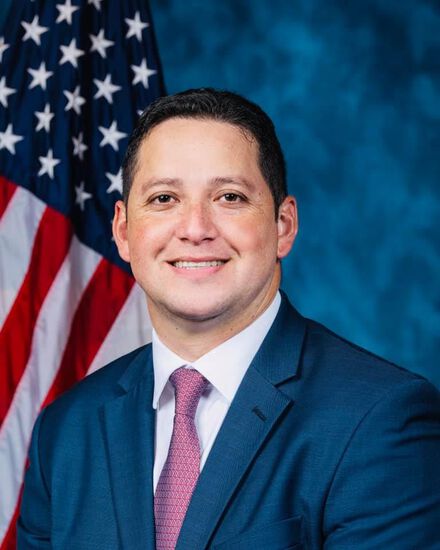
Rep. Tony Gonzales
Sponsored bills
Maddy summaryHJRES 53 seeks to block an Environmental Protection Agency (EPA) rule that would establish new emissions standards for heavy-duty vehicles like trucks and buses. If passed, the resolution would prevent the EPA's rule from taking effect by invoking a congressional disapproval process under Title 5 of U.S. law. The rule, published in the Federal Register on January 24, 2023, aimed to reduce air pollution from new heavy-duty engine standards. This disapproval would halt the implementation of those specific vehicle emissions requirements.
Maddy summaryHR 2584, the SAVE Act, creates a new federal criminal offense for assaulting or intimidating hospital employees while they're performing their duties, punishable by up to 10 years in prison, with enhanced penalties for using weapons, causing injury, or during public emergencies. The bill authorizes $25 million annually in federal grants to hospitals for violence prevention programs, including staff training, security technologies like panic buttons and video surveillance, and coordination with law enforcement. It defines "hospital" broadly to include various medical facilities such as long-term care hospitals, rehabilitation facilities, and critical access hospitals. The legislation directly affects hospital workers and medical facilities by establishing federal criminal penalties for violence against employees and providing funding to improve workplace safety. The law aims to address the rising problem of workplace violence against healthcare workers, which the bill states has increased since 2011.
Maddy summaryHR 2620, the Federal Firearms Licensee Protection Act of 2023, increases penalties for crimes targeting firearms licensees. It amends Section 924 of Title 18 to impose mandatory minimum sentences of 3 years for burglaries or 5 years for robberies committed at the business premises of licensed firearms dealers, manufacturers, or importers. The bill specifically targets violations of Section 922(u), which prohibits unauthorized access to these premises, and adds "attempts to do so" to the penalties. This directly affects licensed firearms businesses by strengthening legal protections against theft or violence at their locations. The law creates clearer, harsher consequences for crimes committed during burglaries or robberies at these specific business sites.
Maddy summaryThis bill amends the law governing Basic Allowance for Housing (BAH) for uniformed service members stationed in the U.S. It changes the calculation method so that BAH amounts must equal the actual monthly cost of adequate housing in each location, as determined by the Secretary of Defense. This directly affects active-duty service members and their families who receive BAH for housing. The key provision replaces the previous formula with a requirement that BAH payments match local housing costs for members in the same pay grade and dependency status. The change ensures BAH reflects current housing expenses rather than an older calculation method.
Maddy summaryHR 2454, the United States-Israel PTSD Collaborative Research Act, establishes a grant program to fund joint research projects between U.S. academic or nonprofit entities and Israeli institutions focused on post-traumatic stress disorder (PTSD). The bill directs the Secretary of Defense, with coordination from the Departments of Veterans Affairs and State, to award grants for collaborative research addressing PTSD treatment gaps, building on existing U.S.-Israel scientific cooperation frameworks. It specifically targets research into improved PTSD diagnosis and treatment methods, rather than providing direct services or benefits. The program requires annual reporting to Congress on research outcomes and terminates seven years after the first grant is issued.
Maddy summaryHR 1139, the GUARD VA Benefits Act, amends federal law to strengthen penalties for individuals or organizations charging veterans unauthorized fees when helping with VA benefit claims. It directly affects veterans seeking assistance with VA claims and the representatives (like advocates or attorneys) who might charge them fees. The bill adds a new provision making it a violation to solicit, charge, or receive any fee for preparing, presenting, or prosecuting VA claims, punishable by fines under Title 18. This change specifically targets unauthorized fee-charging while excluding fees covered under existing exceptions in sections 5904 or 1984 of the law.
Maddy summaryThis bill restores benefits for surviving spouses of military members who died in service and later remarried. It amends two key laws: it prevents termination of Survivor Benefit Plan annuities solely due to remarriage (with a specific provision to restart payments for those who remarried before age 55), and it ensures remarriage doesn't block Dependency and Indemnity Compensation (DIC) payments, requiring the government to restart DIC for eligible spouses who remarried before age 57. The bill directly affects surviving spouses who lost benefits due to remarriage under prior rules. It makes concrete policy changes by removing remarriage as a barrier to ongoing financial support for these families.
Maddy summaryHR 1831 would award Billie Jean King a Congressional Gold Medal to honor her lifelong advocacy for equal rights in sports and society. The bill directs the Secretary of the Treasury to strike the medal and have it presented by congressional leaders, recognizing her pivotal role in advancing women's equality through tennis (including founding the Women’s Tennis Association and securing equal prize money) and her broader impact on society through initiatives like Title IX advocacy.
Maddy summaryHR 5, the Parents Bill of Rights Act, would require public schools receiving federal funding to provide parents with greater access to educational information. The bill mandates that schools post curricula online or widely distribute it to parents, include school budgets in report cards, and provide specific information about school activities including violent incidents and plans to eliminate gifted programs. It also guarantees parents the right to meet with teachers twice a year, review library materials, and address school boards. These requirements would apply to all local educational agencies and schools covered by the Elementary and Secondary Education Act. The bill amends existing education laws to strengthen parental transparency and involvement in their children's education.