

Maddy summaryThe Employee Rights Act (HR 2700) amends key labor laws to strengthen employee rights in collective bargaining and privacy. It requires employers to use secret ballot elections for selecting bargaining representatives and to provide labor organizations with voter lists containing employee names and one form of contact information (chosen by the employee) within two business days of an election. The bill prohibits employers from using employee personal information for non-organizing purposes and mandates written authorization for using union dues on non-bargaining activities, with authorizations expiring after one year. Additionally, it clarifies joint employment standards to prevent misclassification and adds tribal sovereignty protections to labor law definitions.
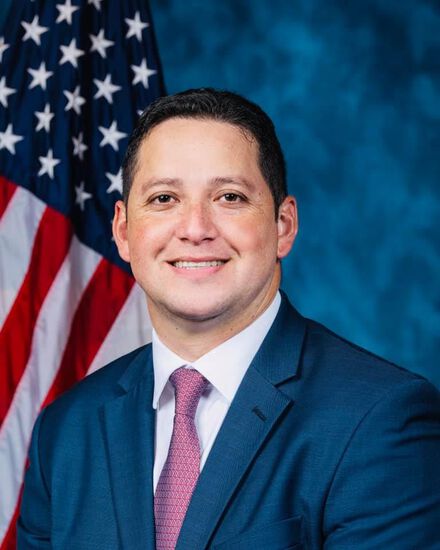
Rep. Tony Gonzales
Sponsored bills
Maddy summaryHR 2906, the "Reject Latinx Act," prohibits U.S. federal executive agencies from using the terms "latinx" or "latin-x" (or variations) in any official public document. This applies to all documents produced on or after a 30-day effective date following the bill's enactment. The bill directly affects federal agencies responsible for creating public-facing communications, such as reports, forms, or websites. It does not restrict the terms in private or non-governmental contexts. The law mandates this language change for all new agency documents but does not require altering existing documents.
This bill prohibits the Federal Housing Finance Agency, the Federal National Mortgage Association (Fannie Mae) and the Federal Home Loan Mortgage Corporation (Freddie Mac) from implementing their January 2023-announced changes to the single-family pricing framework for fees on purchase, rate-term refinance, and cash-out refinance loans. The changes revise the fee charts that provide percentage adjustments based on a borrower's credit score and other factors.
This joint resolution nullifies a Department of Labor final rule entitled Adverse Effect Wage Rate Methodology for the Temporary Employment of H-2A Nonimmigrants in Non-Range Occupations in the United States and published on February 28, 2023. This rule makes changes to the methodology used to set adverse effect wage rates for H-2A workers (temporary agricultural workers), including by using Bureau of Labor Statistics wage surveys in certain instances. (Generally, the minimum wage for an H-2A worker is the highest of the adverse effect wage rate, the applicable minimum wage, the prevailing wage for that occupation in that area, or any agreed-upon collective bargaining wage.)
Maddy summaryHR 2837, the Border Patrol Pay Parity Act, mandates a pay increase for U.S. Border Patrol agents. It requires the Office of Personnel Management to raise the minimum pay for agents at the standard GS-12 pay grade by at least 14% by January 1, 2024, with potential increases for other grades as determined by the Secretary of Homeland Security. The bill specifically prohibits agency heads from using existing pay discretion to reduce these required increases. This legislation directly affects Border Patrol agents by establishing a minimum pay hike for their standard grade, aiming to align their compensation with other comparable federal positions.
Maddy summaryHR 1788, the "Goldie’s Act," strengthens USDA enforcement of the Animal Welfare Act. It requires annual inspections of all regulated animal businesses (like dealers, research facilities, and exhibitors) and mandates immediate, humane confiscation of animals suffering due to violations, while prohibiting owners from destroying animals during this process. The bill increases civil penalties to $10,000 per violation, requires hearing panels including veterinarians, and mandates that penalties consider business size and violation severity. It also requires USDA to share violation records with local animal control within 24 hours.
U.S. Customs and Border Protection Rural and Remote Hiring and Retention Strategy Act of 2023 This bill requires the Office of the Chief Human Capital Officer of the Department of Homeland Security (DHS) and U.S. Customs and Border Protection (CBP) to issue a strategy and implementation plan to improve CBP's hiring and retention of individuals in rural or remote areas. Until the strategy and implementation plan are issued, DHS must periodically brief Congress and the Government Accountability Office (GAO) on its progress. After receiving each DHS report, the GAO must submit to Congress an assessment of the effectiveness of the actions described in the DHS report.
Maddy summaryHR 2743 prohibits large financial institutions (over $100 billion in assets) from denying banking services to lawful businesses based on subjective political reasons, industry type, or reputational concerns. It requires these institutions to use objective, risk-based assessments for service decisions and provide written justifications for denials. The law applies to banks, credit unions, and payment networks, with civil penalties for violations including fines up to $10,000 per incident. It specifically ensures businesses operating legally under federal law receive fair access to financial services without discrimination. The bill mandates that denials be based on documented risk factors, not political bias or category-based exclusion.
American Innovation and R&D Competitiveness Act of 2023 This bill eliminates the five-year amortization requirement for research and experimental expenditures, thus allowing continued expensing of such expenditures in the taxable years in which they are incurred.
Maddy summaryThe Range Access Act (HR 1614) requires the Forest Service and Bureau of Land Management to identify existing target shooting ranges on federal lands and establish new ones where feasible. Within five years, agencies must construct or partner to build new ranges meeting specific safety standards (like berms, firing lines, and no user fees) that accommodate rifles, pistols, shotguns, and archery. The bill mandates public consultation with tribes, shooting clubs, and local governments before site selection, prioritizing proximity to recreational shooters while avoiding conflicts with existing private ranges. Annual reports to Congress will track progress toward ensuring public access to these ranges on federal lands.