

Maddy summaryHR 5981 prohibits federal funding for any program, project, or activity involving drag performances, including shows, testimonials, or demonstrations. It defines "drag" as dressing in opposite-gender clothing with exaggerated gendered mannerisms or combining male/female elements in elaborate costumes. This ban directly affects any federally funded entity - like theaters, community centers, or events - that hosts such performances. The bill restricts the use of all federal funds for these specific activities, without exempting specific venues or audiences. It does not address private funding or performances not receiving federal support.
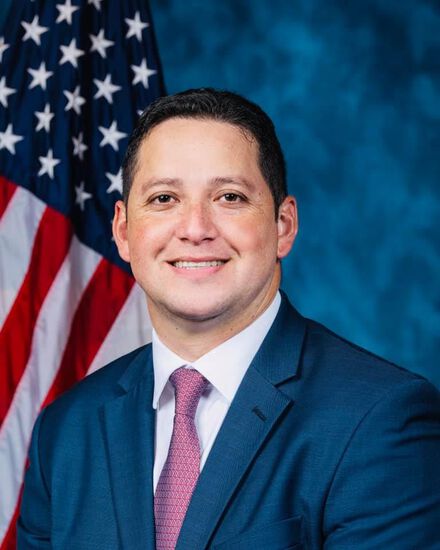
Rep. Tony Gonzales
Sponsored bills
Maddy summaryHRES 755 is a procedural resolution introduced on October 2, 2023, that proposes expelling Representative Jamaal Bowman from the U.S. House of Representatives. It cites Article I, Section 5, Clause 2 of the Constitution, which grants the House authority to expel members. The resolution, referred to the Committee on Ethics, would remove Bowman from his seat if passed by the full House. This is a formal procedural step seeking to end Bowman's membership, not a law with broader policy effects.
Maddy summaryHR 5838, the SAFER Act, changes how asylum claims are assessed for migrants apprehended at the U.S. border during large-scale migration events. It revises the "credible fear" interview standard to require officers to determine if an asylum seeker is "more likely than not" eligible for asylum and if their claims are "more likely than not" true. The bill also mandates prioritizing removal cases for these migrants, requires scheduling hearings to allow fair access to legal counsel, and directs the hiring of at least 150 additional immigration judges to speed up court processing. It includes reporting requirements on processing times, legal representation rates, and in-absentia removal orders for migrants in these prioritized cases.
Maddy summaryHJRES 11 proposes a constitutional amendment that would limit Members of Congress to serving a maximum of three terms in the House of Representatives and two terms in the Senate. If passed and ratified, it would prevent any member who has already served the maximum terms from running for re-election, including time spent filling vacancies (for more than one year in the House or three years in the Senate). This amendment directly affects current and future members of Congress by changing eligibility rules for re-election. The proposal is currently a joint resolution in the House, requiring ratification by three-fourths of state legislatures to become part of the Constitution.
Pay Our Border Patrol and Customs Agents Act This bill provides FY2024 appropriations for the salaries and expenses of certain U.S. Customs and Border Protection (CBP) employees who are required to work during a lapse in appropriations (i.e., government shutdown) in FY2024. Specifically, the bill provides appropriations to CBP for the salaries and expenses of agents of the U.S. Border Patrol and officers of the Office of Field Operations who are excepted from furlough (i.e., required to work) during a lapse in discretionary appropriations in FY2024.
Maddy summaryHR 5246, the National Agricultural Crisis Hotline Act of 2023, creates a federally funded 24/7 crisis hotline specifically for farmers, ranchers, farm workers, and their families facing mental health or substance use challenges. The hotline must provide real-time voice and texting support, staffed by licensed professionals trained in agricultural mental health stress, with 24-hour follow-up calls and translation services. It requires collecting detailed call data and partnering with existing farm helplines, the 988 Suicide Lifeline, and USDA programs to connect callers to resources. The bill appropriates $19 million annually (starting 2024) for the hotline's operation, including $4 million yearly for the hotline itself, and mandates an annual effectiveness report to Congress. This directly addresses the documented crisis of elevated suicide rates among agricultural workers by expanding accessible, specialized mental health support.
Maddy summaryHRES 714 is a formal recognition resolution celebrating Hispanic Restaurant Week (September 22-October 3, 2023) and acknowledging the economic contributions of Hispanic restaurant owners and employees to the U.S. restaurant industry. It highlights statistics showing Hispanic individuals own a significant share of restaurants and workforce participation in the sector, but does not create new policies, funding, or regulations. This resolution is purely ceremonial, expressing congressional appreciation without any legislative impact.
Maddy summaryHRES 684 is a symbolic congressional resolution passed by the U.S. House of Representatives on September 14, 2023, condemning New Mexico Governor Michelle Lujan Grisham's emergency order that temporarily suspended open and concealed carry firearm rights for 30 days. The resolution asserts the order violated the Second Amendment, citing Supreme Court precedents (Heller, McDonald, Bruen) and noting a federal judge had already blocked the order's firearm restrictions. It does not change any laws or impose legal consequences - it is solely a formal expression of disapproval from Congress. The resolution directly addresses the Governor's actions but has no effect on New Mexico's laws or citizens' rights.
Maddy summaryHR 5636, the "Protect Children’s Innocence Act," prohibits federal criminal penalties for performing gender-affirming medical care on minors under specific circumstances. It defines prohibited care as surgeries (like hysterectomy or mastectomy), puberty blockers, and hormone therapies at supraphysiologic doses, with exceptions for medical emergencies, intersex conditions, or life-threatening illnesses. The law only applies when the care involves interstate commerce (e.g., payments, communications, or travel across state lines). Minors receiving such care cannot be prosecuted, but they may sue providers for civil damages. The bill directly affects minors under 18, healthcare providers, and families seeking gender-affirming medical treatment.
Maddy summaryThis bill raises the mandatory minimum prison sentence for trafficking minors under 18 from the previous term to **not less than 25 years or life imprisonment** under federal law (18 U.S.C. § 1591). It directly affects individuals convicted of trafficking children, increasing penalties for this specific offense. The key mechanism is amending the existing sentencing provision to eliminate lower minimums and mandate these severe penalties. The bill focuses solely on strengthening criminal penalties for child trafficking, with no new funding or program requirements.