

Maddy summaryHR 340, the "Hamas and Other Palestinian Terrorist Groups International Financing Prevention Act," imposes sanctions on foreign individuals, entities, and governments that provide significant financial, material, or transactional support to Hamas, the Palestinian Islamic Jihad, or their affiliates. The bill requires the President to identify those supporting these groups and mandates sanctions including restrictions on exports, defense sales, and financial transactions over $10 million, while exempting humanitarian assistance like medicine and food. It also requires regular reports on foreign countries that host or support these groups' financial networks and mandates actions to disrupt their fundraising and money laundering activities. The legislation terminates after 3 years or if Hamas and Palestinian Islamic Jihad are no longer designated as terrorist organizations under U.S. law.
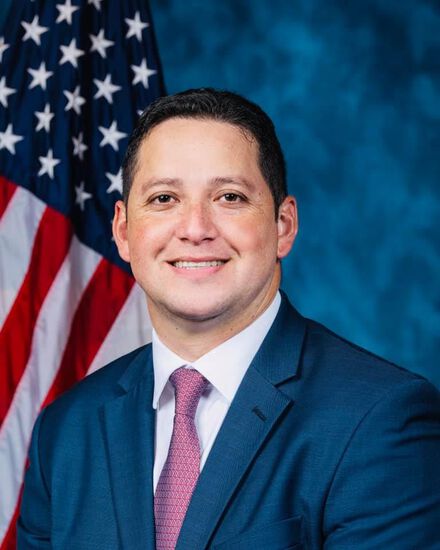
Rep. Tony Gonzales
Sponsored bills
Maddy summaryHR 6089, the Energy Choice Act, prevents state and local governments from banning or restricting the connection of energy services based on the type of energy used. It prohibits regulations that block connections for natural gas, renewable gas, hydrogen, electricity, or other specified fuels like renewable diesel or petroleum products. The bill directly affects energy providers and end-users by ensuring local rules cannot prevent them from using or connecting to different energy sources. This creates a uniform standard for energy service connections across jurisdictions, without mandating specific energy types.
Maddy summaryHRES 798 is a House resolution condemning support for Hamas, Hezbollah, and other terrorist organizations at colleges and universities. It states such support may create a hostile environment for Jewish students, faculty, and staff, citing incidents like blaming Israel for the October 7 Hamas attack. The resolution urges the Secretary of Education to direct the Office for Civil Rights to investigate and take action where appropriate. This non-binding resolution expresses the House's position but does not create new law or policy changes.
Maddy summaryHR 6201, the Iranian Sanctions Enforcement Act of 2023, creates the Iran Sanctions Enforcement Fund to cover costs related to seizing and forfeiting property from Iran or its designated proxies (like Hezbollah or the Revolutionary Guard Corps) that violate U.S. sanctions. The fund, initially $150 million, pays for investigative costs, property management, informant rewards, and equipment for federal, state, and local agencies involved in enforcement. It also establishes an Export Enforcement Coordination Center within Homeland Security to improve interagency cooperation on enforcing export controls targeting Iran. The bill requires annual reports on fund usage and mandates repayment of the initial $150 million by 2034, unless waived for national security reasons.
Maddy summaryThe REPAIR Act requires car manufacturers to provide vehicle owners and independent repair shops with free, unrestricted access to vehicle data and repair information. It bans manufacturers from using technological or legal barriers to block access to diagnostics, tools, or aftermarket parts, and prohibits mandating specific brands for repairs or restricting customers’ choice of repair facility. The law also prevents manufacturers from requiring waivers of these rights as a condition of purchase, lease, or warranty service. The Federal Trade Commission will enforce these provisions to ensure fair competition in vehicle repair.
Maddy summaryHRES 559 is a non-binding House resolution declaring U.S. policy that a nuclear-armed Iran is unacceptable. It states the U.S. must prevent Iran from obtaining nuclear weapons under any circumstances, use all means necessary to stop this, and support allies like Israel in doing so. The resolution does not create new laws or programs but formally expresses congressional position on Iran's nuclear program. It directly affects U.S. foreign policy direction and diplomatic messaging, not specific individuals or groups.
Maddy summaryHRES 796 is a non-binding House resolution condemning foreign nationals in the U.S. who have endorsed or supported Hamas, Palestinian Islamic Jihad, or other designated foreign terrorist organizations (FTOs) responsible for the October 7, 2023, attacks on Israel. It calls on the President to enforce existing immigration law (8 U.S.C. 1182(a)(3)(B)(i)(VII)) to revoke visas and initiate deportation for such individuals. The resolution affirms that terrorism by these groups cannot be equated with Israel’s self-defense actions and rejects all forms of anti-Semitism. It does not create new laws but urges enforcement of current visa restrictions for those endorsing FTOs. The resolution references the Oct. 7 attacks that killed 1,300 Israelis and 30 U.S. citizens, as cited in the resolution’s preamble.
Maddy summaryHRES 771 is a non-binding resolution expressing the U.S. House of Representatives' support for Israel following Hamas' October 7, 2023, attack. It condemns Hamas' actions, affirms Israel's right to self-defense, and calls for the immediate release of hostages. The resolution also urges enforcement of existing laws restricting aid to terrorists and sanctions against Iran for supporting Hamas. It does not create new policies or allocate funds, as it is a symbolic statement of congressional support.
Maddy summaryHRES 768 is a symbolic House Resolution expressing congressional support for Israel following Hamas' October 7, 2023 attacks. It condemns Hamas' actions, reaffirms Israel's right to self-defense, and calls for the immediate release of hostages. The resolution references the U.S. commitment to Israel's security through existing military aid programs, including the 2016 U.S.-Israel Memorandum of Understanding, and emphasizes enforcement of laws like the Taylor Force Act to prevent U.S. aid from reaching terrorist groups. As a symbolic resolution, it does not create new policy but serves as a statement of congressional support for Israel.
Maddy summaryThis bill authorizes a one-time $40,000 payment to former Air America employees who served at least five years during 1950-1976, or to their survivors (widows/widowers, dependents, or children). Additional $8,000 payments are provided for each full year of service beyond five years. The total funding is capped at $60 million, with claims due within two years of regulations being finalized. It does not create ongoing benefits or change Air America’s legal status, and payments are issued as a single lump sum.