

Maddy summaryThis bill changes how U.S. foreign aid is provided to international health organizations. It prevents U.S. agencies from denying aid to foreign non-governmental organizations (NGOs) solely because they offer health services (like counseling or referrals) using their own funds, as long as those services follow local laws. It also stops applying stricter rules about how foreign NGOs can use their own funds for advocacy compared to U.S. NGOs receiving similar aid. The bill directly affects foreign health-focused NGOs that rely on U.S. foreign assistance funding.
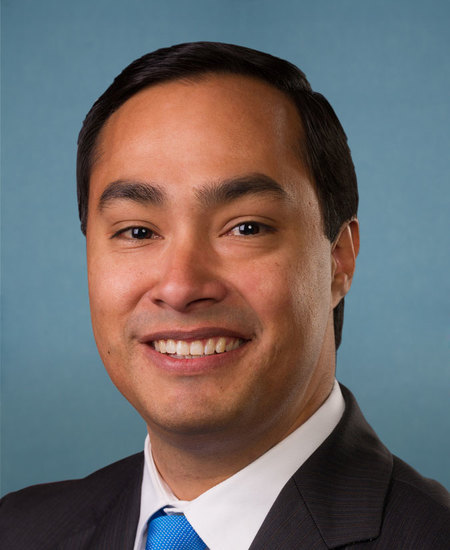
Rep. Joaquin Castro
Sponsored bills
Purple Heart Freedom to Work Act This bill increases the monthly income limit that is used to determine whether certain Purple Heart recipients are eligible for Social Security Disability Insurance (SSDI) benefits. Specifically, when making such determinations with respect to Purple Heart recipients who are entitled to SSDI benefits based on combat-related injuries, the Social Security Administration must use the limit that applies to individuals who are blind rather than the lower limit that applies to other SSDI recipients. In addition, the bill phases out SSDI benefits for these Purple Heart recipients, with benefits reduced by $1 for every $4 of earnings in excess of the limit.
Maddy summaryThe SAFEGUARD Act of 2023 restricts U.S. arms sales to countries committing genocide or war crimes. It prohibits defense exports to countries with credible evidence of such violations, with exceptions only if the government has punished perpetrators, prevented recurrence, and provided compensation. The bill requires recipient countries to agree not to use U.S. weapons to violate human rights, mandates end-use monitoring to ensure proper weapon use, and enhances congressional oversight for arms sales to countries with serious human rights concerns. These changes apply to all defense articles and services sold, exported, or transferred by the United States.
Maddy summaryHR 406 extends U.S. legal immunities to the Association of Southeast Asian Nations (ASEAN) under the same provisions that apply to other international organizations the U.S. engages with through treaties or congressional authorization. This would grant ASEAN diplomatic protections and legal standing comparable to existing international bodies, facilitating smoother interactions between ASEAN and U.S. entities. The bill is procedural, modifying legal recognition without changing U.S. foreign policy or substantive relations with Southeast Asia. It directly affects ASEAN's operational status under U.S. law.
Transparency in Government Contracts Act This bill expands the Small Business Administration's (SBA) reporting requirements to include certain disaggregated demographic data about federal contracts (and subcontracts to the extent practicable) awarded to small businesses owned by socially and economically disadvantaged individuals. The SBA also must include whether such a small business participates in the 8(a) business development program.
Maddy summaryHR 1723, the Abortion is Health Care Everywhere Act of 2023, amends the Foreign Assistance Act to remove restrictions on using U.S. foreign aid funds for abortion services. It explicitly allows U.S. foreign assistance programs to fund comprehensive reproductive health care, including abortion services, training, and equipment. This change directly affects U.S. international health programs and recipient countries, enabling them to integrate safe abortion care into broader reproductive health services. The bill aims to align U.S. policy with global health guidelines by making abortion services a standard part of reproductive health care funded through foreign assistance.
Maddy summaryHR 1619 requires schools participating in the National School Lunch Program to provide fluid milk substitutes (like soy or almond milk) upon request by a student or their parent/guardian. The bill removes the previous requirement that substitutions needed a medical authority's written statement for most dietary needs, instead allowing requests based on the student's or parent's request alone. It aligns the definition of acceptable substitutes with current Dietary Guidelines for Americans. This change directly affects students with dietary restrictions, making it simpler for schools to accommodate their needs without extra medical documentation.
Maddy summaryThis bill authorizes a Congressional Gold Medal to honor the "Hello Girls" - female telephone operators who served in the Army Signal Corps during World War I. They provided critical battlefield communications in France (connecting 26 million calls), wore military uniforms, and faced combat risks, but were denied veteran benefits for 60 years due to being classified as civilian contractors. The medal recognizes their pioneering service, devotion, and the decades-long struggle to gain military recognition. The award follows similar recognition for other WWII women veterans and aims to correct the historical injustice they faced.
Maddy summaryHRES 191 is a symbolic House resolution designating September 2023 as "National LEAD Month" to support greater diversity and inclusion in the entertainment industry. It expresses the House's backing for efforts to increase representation of underrepresented communities - such as racial minorities, women, LGBTQ+ individuals, and people with disabilities - across creative and leadership roles. The resolution encourages awareness campaigns, diversity, equity, and inclusion (DEI) programs like bias training, mentorship partnerships, and inclusive storytelling. It does not create new laws or funding but urges industry stakeholders to prioritize equitable opportunities. The resolution was introduced by Rep. Yvette Clarke and others in March 2023.
Mental Health in International Development and Humanitarian Settings Act or the MINDS Act This bill authorizes and requires certain actions by the U.S. Agency for International Development (USAID) to integrate mental health and psychosocial support (MHPSS) activities across U.S. development and humanitarian assistance programs. The bill authorizes USAID to designate an MHPSS coordinator. The coordinator's duties include (1) guiding, overseeing, and directing MHPSS programming and integration across U.S. development and humanitarian assistance programs; and (2) promoting best practices, coordination, and reporting in MHPSS across such programs. Focus populations for the coordinator include adult caretakers, children separated from a family unit, and displaced populations. In addition, the bill establishes a working group comprised of representatives from relevant USAID bureaus, the Department of State, and other federal agencies. The purpose of the working group is to ensure continuity and integration of MHPSS across U.S. development and humanitarian assistance programs. The provisions of the bill expire five years after enactment.