

Maddy summaryHRES 955 is a resolution commending Taiwan for its democratic election history and supporting Taiwan's democratic institutions. It recognizes Taiwan's transition to democracy since the late 1980s, including 7 presidential and 9 legislative elections held since then, all deemed free and fair. The resolution specifically expresses support for Taiwan's upcoming January 13, 2024, elections and condemns interference by the Chinese Communist Party. It affirms U.S. commitment to a strong partnership with Taiwan across multiple domains and supports Taiwan's self-defense and liberty. As a procedural resolution, it does not create new law but formally expresses congressional support for Taiwan's democratic development.
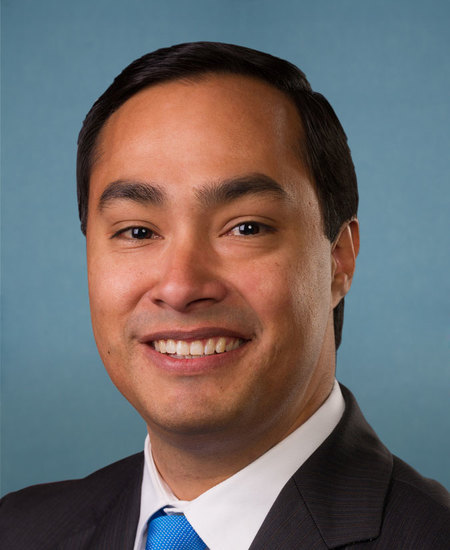
Rep. Joaquin Castro
Sponsored bills
Maddy summaryThe Affordable Connectivity Program Extension Act of 2024 allocates $7 billion in funding for the Affordable Connectivity Program (ACP) during fiscal year 2024. The ACP provides subsidies to low-income households to help cover the cost of internet service and connected devices like laptops or tablets. This funding ensures the program can continue supporting eligible households throughout the year, with the money remaining available until fully spent. The bill extends existing program funding without changing eligibility criteria or service requirements.
Maddy summaryHCONRES 81 is a symbolic concurrent resolution recognizing the anniversaries of multiple United Nations-designated international days focused on peace, such as the International Day of Peace (September 21), International Day of Non-Violence (October 2), and others. It commemorates specific milestones, including the 42nd anniversary of the International Day of Peace and the 5th anniversary of the International Day of Living Together in Peace. The resolution encourages U.S. citizens to observe these days and supports activities promoting peace, nonviolence, and cooperation throughout the year. As a non-binding resolution, it does not create new laws or requirements but expresses congressional support for global peace efforts.
Maddy summaryThis bill requires the State Department to fund internet services in U.S. government-owned or leased residences abroad for personnel stationed at posts with a hardship differential of 30% or more above basic pay. It amends the State Department Basic Authorities Act to add a new funding provision (subsection n) specifically for these high-hardship locations. The change directly affects State Department employees at designated overseas posts where hardship pay exceeds 30% of base salary, ensuring internet access in their official residences.
Maddy summaryThis bill requires intelligence community personnel to serve in multiple elements (agencies) throughout their careers, including making such service mandatory for promotion to certain positions. It also mandates the Director of National Intelligence to create and maintain a detailed, centralized staffing document listing all positions within their office, including required skills, security clearances, pay grades, and representation needs. The bill directly affects intelligence community employees by changing career assignment rules and standardizing position requirements across the intelligence community. These provisions aim to improve cross-agency experience and coordination within the intelligence workforce.
Maddy summaryThis bill expands in-state tuition eligibility at public colleges for dependents of intelligence community members. It amends the Higher Education Act to include officers or employees of intelligence community elements (as defined in the National Security Act) who work for over 30 days. Dependents of these individuals will qualify for in-state tuition rates at public institutions receiving federal higher education funding. The change takes effect for enrollments starting after July 1, 2024.
Maddy summaryHR 6797, the Restoring U.S. Leadership in International Organizations Act of 2023, aims to strengthen U.S. engagement in global multilateral bodies. It requires the State Department to prioritize international organization experience for Foreign Service career advancement, mandates full payment of dues to multilateral organizations, and requires annual reports tracking federal employees detailed to such bodies. The bill also establishes mandatory training for diplomats on multilateral diplomacy and negotiations, targeting State Department staff and those assigned to international organizations. It directly affects U.S. diplomatic personnel and federal employees working with international institutions. The law focuses on structural changes to increase U.S. participation and leadership in global forums.
Maddy summaryThis bill amends existing law to authorize the Starr-Camargo Bridge Company to expand the bridge near Rio Grande City, Texas, including adding adjacent spans and implementing multimodal tolls. It extends the construction deadline from 3 to 60 years and the operational period from 5 to 65 years. The changes specifically apply to the Starr-Camargo Bridge and its operators, without affecting the separate San Benito International Bridge (formerly known as the Free Trade International Bridge). The bill clarifies the company’s rights for expansion, control, operation, and maintenance of the bridge.
Maddy summaryThe ARMAS Act of 2023 transfers regulatory control of certain firearm exports from the Department of Commerce to the Department of State. It designates Mexico, Guatemala, Honduras, El Salvador, Haiti, Jamaica, and other Caribbean nations as "covered countries" requiring special oversight for firearm exports. The bill requires the State Department to develop strategies to disrupt illegal firearm trafficking to these countries, implement tracking systems for firearms, and submit annual reports on exports. It establishes certification requirements for exports to covered countries, including detailed reporting to Congress about proposed exports. The law aims to improve tracking of firearms used in violence and reduce illegal trafficking that fuels crime and violence in the region.
Maddy summaryThe Workers POWER Act (HR 6634) strengthens federal labor enforcement by expanding staffing and resources for the Department of Labor's Wage and Hour Division and Occupational Safety and Health Administration (OSHA). It creates new paid student positions (5 in Washington, DC, plus 2 per regional office), establishes child labor fellowships (5 per agency), and increases student loan repayment benefits for eligible employees. The bill also authorizes performance-based bonuses, retention incentives, and $250 million annually in grants to states to improve their labor enforcement capacity. These changes directly affect Department of Labor enforcement staff and state/local labor agencies working to address wage theft, child labor, and workplace safety violations.