

Maddy summaryThe Love Lives On Act of 2023 modifies benefits for surviving spouses of military veterans and service members. It removes an expiration date on the Marine Gunnery Sergeant John David Fry Scholarship for surviving spouses, ensures remarriage doesn't automatically end eligibility for veterans' dependency and indemnity compensation, and expands access to commissary and exchange privileges for remarried surviving spouses. The bill also clarifies that remarried widows or widowers whose subsequent marriage ended (due to death, divorce, or annulment) can still be considered dependents under TRICARE. These changes directly affect surviving spouses of veterans and military members who have remarried or are considering remarriage, providing more consistent benefits regardless of marital status.
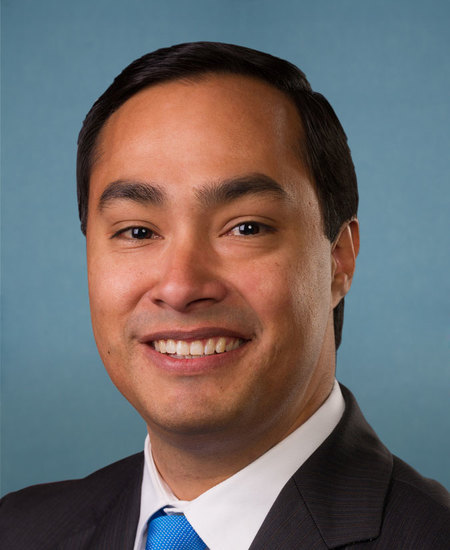
Rep. Joaquin Castro
Sponsored bills
Maddy summaryHR 1083, the Caring for Survivors Act of 2023, increases financial support for surviving spouses of veterans. It amends Title 38 to raise dependency and indemnity compensation from a fixed $1,154 to 55% of the monthly compensation rate under section 1114(j), effective six months after enactment. The bill also modifies eligibility for survivors of veterans who died before 1993, ensuring they receive the greater of their current benefit or the new calculation. Additionally, it reduces the required continuous service rating period for survivors from 10 years to five years when a veteran was totally disabled at death. These changes directly affect surviving spouses, particularly those with veterans who died prior to 1993.
Maddy summaryThis bill amends a provision of U.S. law to clarify that the Inspector General of the International Development Finance Corporation (DFC) has law enforcement authority over environmental matters. It updates a reference in Title 5 of the U.S. Code by inserting "International Development Finance Corporation" before "Environmental" in the relevant section. The change directly affects the DFC's Inspector General, streamlining their oversight role without altering the agency's operations or creating new policies. This is a procedural update to legal text, not a substantive policy change.
Maddy summaryHR 7942, the Open Translation Center Act of 2024, establishes a federally funded center (OTC) to translate and analyze government documents from designated countries - starting with the People’s Republic of China - and make them publicly available. The OTC, managed by a board appointed by the Secretary of State and Director of National Intelligence, will translate foreign-language materials, provide contextual analysis, and publish summaries on a public website, while respecting copyright laws. It directly affects U.S. policymakers, journalists, academics, and the public by improving access to translated foreign government materials, including speeches, official reports, and state-owned business documents. The bill authorizes $85 million for fiscal year 2024 and $80 million annually through 2028 to fund this center’s operations.
Maddy summaryHR 7799, the CATCH Act, requires the U.S. Department of Justice to submit annual reports to Congress on prosecutions related to firearms trafficking to the Caribbean. The bill mandates detailed reporting on investigations, prosecutions, firearm types, transportation methods, and coordination with Caribbean law enforcement partners like CARICOM's Crime Gun Intelligence Unit. It directly affects Caribbean nations (such as Haiti, Jamaica, and the Bahamas) where U.S.-sourced firearms fuel violence and migration, and U.S. agencies prosecuting these cases. The law aims to strengthen oversight of the existing Coordinator for Caribbean Firearms Prosecutions without altering current prosecution authorities.
Maddy summaryThis bill requires USAID to prioritize partnerships with local organizations in development and humanitarian aid programs. It mandates specific changes like simplifying funding access for local partners, allowing applications in local languages, increasing direct funding to local entities, and updating internal policies to support these partnerships. USAID must implement these changes within 180 days and report annually on progress, including funding amounts directed to local partners. The policy aims to make aid more sustainable by enabling local communities to lead programs they directly benefit from.
Maddy summaryHR 7751, the Transparency in Security Clearance Denials Act, requires the Secretary of State to annually report to Congress on security clearance denials, suspensions, or revocations within the State Department's Diplomatic Security. The report must include the number of denials by position type (e.g., Foreign Service officer, civil service employee), appeal success rates, and the criteria used for decisions, with data broken down by ethnicity, national origin, race, and gender where available. This applies specifically to State Department security clearance actions, including initial applications, periodic reinvestigations, and continuous vetting. The law aims to increase transparency around clearance decisions by mandating detailed, disaggregated reporting. It does not change clearance standards or processes but requires the State Department to publicly disclose these metrics annually.
Maddy summaryThe Stateless Protection Act of 2024 would create "stateless protected status" for noncitizens in the United States who are stateless (not recognized as citizens by any country). The bill would allow these individuals to apply for protection from deportation, employment authorization, travel documents, and adjustment to lawful permanent resident status (a green card). It establishes a process for determining statelessness, requiring the Department of Homeland Security to consider evidence from various sources including international organizations and foreign governments. The legislation directly affects approximately 218,000 stateless people living in the U.S., who currently face barriers to work, education, healthcare, and travel due to their legal status. The bill also includes provisions for preventing statelessness internationally and updating U.S. laws to prevent future cases of statelessness.
Maddy summaryHR 6610, the Passport System Reform and Backlog Prevention Act, aims to reduce delays in U.S. passport processing for citizens applying for routine new or renewal passports. It mandates a 30-day processing standard from document submission to mailing, requires technology upgrades like digital tracking dashboards and mobile apps for applicant updates, and authorizes hiring up to 100 temporary staff annually for passport offices. The bill also sets cybersecurity standards, maintains affordable fees, and requires regular progress reports to Congress on implementation. These changes directly affect U.S. citizens seeking passports, particularly those in remote areas with limited access to processing centers.
Maddy summaryHRES 1079 is a symbolic House resolution condemning Russia's claimed suspension of the New START nuclear arms control treaty, which the U.S. considers legally invalid. It calls on Russia to immediately return to full compliance with New START, including resuming inspections and data sharing, and emphasizes the importance of arms control for global stability. The resolution urges the Biden administration to continue arms control talks with Russia and China to prevent a nuclear arms race. As a non-binding resolution, it does not change U.S. policy but expresses congressional support for maintaining the New START framework, which limits Russia's nuclear arsenal to 1,550 warheads.