Russian Travel Sanctions for a Democratic Ukraine Act This bill imposes visa-blocking sanctions on certain citizens of Russia. Specifically, the President must impose such sanctions on citizens of Russia who are (1) Russian oligarchs, (2) employees of Russia's government, or (3) employees of companies that are owned by or receive funding from Russia's government. The President must also impose the sanctions on family members of such individuals. The President must coordinate with allies, including NATO member states, on the imposition of such sanctions. The President may waive the application of such sanctions in certain instances.
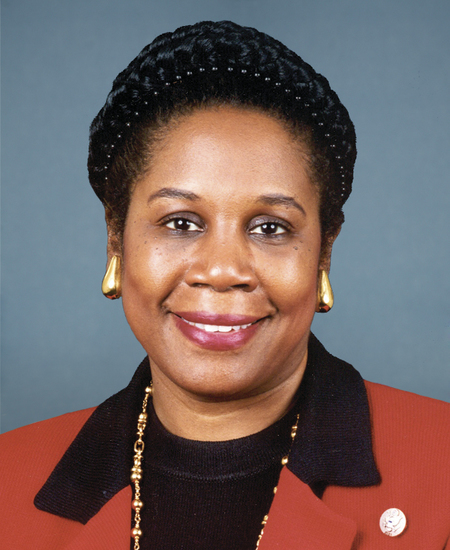
Rep. Sheila Jackson Lee
Sponsored bills
Strengthening Citizenship Services for Veterans Act This bill directs U.S. Citizenship and Immigration Services (USCIS) to ensure that various naturalization-related services are available at a U.S. port of entry, embassy, or consulate that is accessible to noncitizen veterans. Specifically, USCIS must ensure that naturalization examinations, biometric collections, and naturalization ceremonies are available at such locations for noncitizen veterans. Such services must be available to a noncitizen veteran who has been removed from the United States or is inadmissible.
Fair Calculations in Civil Damages Act of 2022 This bill prohibits courts from awarding damages to plaintiffs in civil actions using a calculation for projected future earning potential that takes into account a plaintiff's race, ethnicity, gender, religion, or actual or perceived sexual orientation. The bill requires the Department of Labor to develop guidance for economists to develop future earnings tables that do not rely on race, ethnicity, gender, religion, or actual or perceived sexual orientation. Additionally, Labor and the Department of Justice must develop guidance for states on how to calculate future earnings in state tort proceedings in a manner that is free of such biases. The Judicial Conference of the United States must report on damages awarded under federal law for personal injury, employment discrimination, tort damages, and cases involving protected classes of individuals sharing a common characteristic or identity who are legally protected against discrimination. The Administrative Office of the United States Courts must submit recommendations to ensure that future earnings calculations that take into account age and disability do not conflict with federal equal protection laws. The bill requires the Federal Judicial Center to train federal judges on how to implement this bill.
Comprehensive Addiction Resources Emergency Act of 2021 This bill establishes programs, grants, and other activities to address substance use disorders. Specifically, the Department of Health and Human Services (HHS) must establish a program for purchasing and distributing opioid overdose reversal drugs for states and Indian tribes. HHS must also award grants for and otherwise support addressing substance use, particularly in states, tribes, territories, and localities with disproportionately high drug overdose rates; increasing access to preventive, medical, recovery, and related services; developing innovative models of delivering treatment and harm reduction services; and expanding the treatment capacity of Medicaid providers. In addition, HHS must issue model standards of care for treatment services and recovery residences and may award grants for training health care professionals. The bill also supports prevention and treatment services for workers, addiction and pain management research, and data collection on substance use disorders. Further, dispensers, distributors, and manufacturers of schedule II controlled substances (e.g., oxycodone), with the exception of opioid treatment programs, must certify that they maintain effective drug diversion controls. Violators are subject to specified civil and criminal penalties. Collected penalties shall be used for the grant programs and other substance use disorder activities established under the bill.
Protect Black Women and Girls Act of 2021 This bill establishes an Interagency Task Force to examine the conditions and experiences of Black women and girls to identify and assess the efficacy of policies and programs of federal, state, and local governments designed to improve outcomes for such individuals and to make recommendations to improve such policies and programs. The task force shall (1) cover issues involving Black women and girls in education, economic development, health care, justice and civil rights, and housing; and (2) submit recommendations at specified intervals to Congress, the President, and each state or local government on policies, practices, programs, and incentives that may be adopted to improve outcomes. The U.S. Commission on Civil Rights shall conduct a comprehensive study and collect data with respect to the effects on Black women and girls of a wide range of specified economic, health, criminal justice, and social services factors.
Bivens Act of 2021 This bill provides individuals with a statutory right to sue and recover damages from federal officials for violations of their constitutional rights. Currently, individuals have a statutory right to bring such suits against state or local officials (e.g., law enforcement), commonly known as Section 1983 suits or Bivens actions. Although the statute does not explicitly authorize such suits against federal officials, the Supreme Court has found this right to be inferred from the Constitution in certain situations (e.g., Fourth Amendment violations committed by federal law enforcement officers).
Public Safety Enhancement Act of 2021 This bill reauthorizes through FY2026 the Community Oriented Policing Services (COPS) grant program. Additionally, the bill requires a certain amount of funds made available under the COPS grant program to be used for the hiring and retention of law enforcement officers.
Repeal Existing Policies that Encourage and Allow Legal HIV Discrimination Act of 2022 or the REPEAL HIV Discrimination Act of 2022 This bill addresses federal and state laws, policies, and regulations that may burden people living with HIV/AIDS. Specifically, the bill directs the Department of Justice (DOJ), the Department of Health and Human Services (HHS), the Department of Defense (DOD), and the White House Office of National AIDS Policy to initiate a national review of federal (including military) and state laws, policies, regulations, and judicial precedents and decisions regarding criminal and related civil commitment cases involving people living with HIV/AIDS. DOJ must transmit to Congress and make publicly available the results of such review with related recommendations. The White House Office of National AIDS Policy must also develop and publicly release guidance to assist states with handling relevant cases. The office, DOJ, HHS, and DOD must transmit to the President and Congress any proposals necessary to implement adjustments to federal laws, policies, or regulations. This bill shall not be construed to discourage the prosecution of individuals who act with the intent to do harm to another individual by intentionally transmitting HIV.
Bringing an End to Harassment by Enhancing Accountability and Rejecting Discrimination in the Workplace Act or the BE HEARD in the Workplace Act This bill expands protections against discrimination and harassment in the workplace and raises the minimum wage for tipped employees. Specifically, the bill (1) makes it an unlawful employment practice to discriminate against an individual in the workplace based on sexual orientation, gender identity, pregnancy, childbirth, a medical condition related to pregnancy or childbirth, or a sex stereotype; and (2) provides a statutory definition for what constitutes workplace harassment. Further, these protections apply to all workplaces, regardless of size, and to all workers, including independent contractors, interns, volunteers, and trainees. The bill prohibits employers from entering into contracts or agreements with workers that contain certain nondisparagement or nondisclosure clauses and prohibits certain predispute arbitration agreements and postdispute agreements. It also establishes grant programs to (1) prevent and respond to workplace discrimination and harassment, (2) provide legal assistance for low-income workers, and (3) establish a system of legal advocacy in states to protect the rights of workers. The bill further provides employees the right to retain their tips and it increases, in specified annual increments, the minimum wage for tipped employees to match the federal minimum wage for nontipped employees. Additionally, the bill requires the Equal Employment Opportunity Commission to provide specified training and resource materials, establish and convene a harassment prevention task force, and establish an Office of Education and Outreach with regard to prohibited discrimination and harassment in employment. The bill also requires specified studies, reports, and research on prohibited workplace harassment.

Preventing Vigilante Stalking that Stops Women's Access to Healthcare and Abortion Rights Act of 2021 This bill increases the maximum prison term for a stalking offense, if the offense is committed with the intent to obtain health care information of an individual or to prevent the health care decisions of an individual.