Stop Hate Acts of White Supremacy Act This bill expands federal hate crime offenses to include willfully causing (or attempting to cause) bodily injury to another because of a white supremacy based motivation against any person. Additionally, the bill specifies that a hate crime offense in furtherance of a white supremacy based motivation is subject to an enhanced penalty—a prison term of any years or for life.
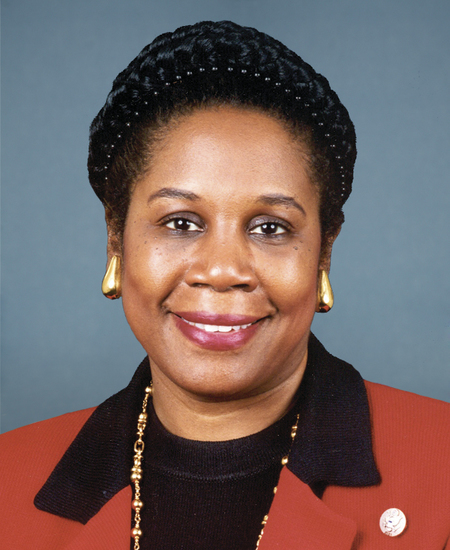
Rep. Sheila Jackson Lee
Sponsored bills
Leading Against White Supremacy Act of 2022 This bill establishes a standard for determining whether a person engaged in a white supremacy inspired hate crime. The bill also sets forth the elements of related conspiracies. Specifically, the bill states that a person engaged in a white supremacy inspired hate crime when white supremacy ideology motivated the actions that constituted a crime or were undertaken in furtherance of activity that would have constituted a crime. Additionally, the bill sets forth the elements of an offense involving the conspiracy to engage in a white supremacy inspired hate crime. Finally, the bill authorizes the Department of Justice to investigate, prosecute, and maintain records of white supremacy inspired hate crimes and related conspiracies.
Justice for Victims of War Crimes Act This bill broadens the scope of individuals who are subject to federal prosecution for war crime offenses. Currently, the federal war crimes statute provides federal jurisdiction over war crime offenses committed anywhere (i.e., inside or outside the United States) if the victim or offender is a member of the Armed Forces or a U.S. national. First, this bill extends federal jurisdiction over war crime offenses committed anywhere to offenses where (1) the victim or offender is an alien lawfully admitted for permanent residence; or (2) the offender is present in the United States, regardless of the nationality of the victim or the offender. Second, the bill expands federal jurisdiction over war crime offenses to include offenses that occur in whole or in part within the United States, regardless of whether the victim or offender is a member of the Armed Forces, a U.S. national, or an alien lawfully admitted for permanent residence.
Supreme Court Families Security Act of 2022 This bill grants the Marshal of the Supreme Court and the Supreme Court Police the authority to protect any member of the immediate family, or employee, of the Chief Justice, any Associate Justice, or any officer of the Supreme Court if the Marshal determines such protection to be necessary.
Telehealth Extension and Evaluation Act This bill expands and otherwise modifies coverage of telehealth services under Medicare until two years after the end of the COVID-19 public health emergency. Specifically, the bill (1) allows federally qualified health centers and rural health clinics to serve as the distant site (i.e., the location of the health care practitioner), (2) allows for Medicare payment of certain audio-only services and of outpatient critical access hospital services consisting of telehealth behavioral therapy, (3) conditions payment for certain high-cost laboratory tests and durable medical equipment that are ordered via telehealth on at least one in-person visit during the preceding 12-month period, and (4) allows Schedule II through V controlled substances to be prescribed online if a practitioner has conducted a telehealth evaluation with video. The bill also generally extends any Medicare telehealth flexibilities that were granted during the COVID-19 public health emergency until two years after the emergency ends. The Centers for Medicare & Medicaid Services (CMS) must report on the effects of changes that were made during the emergency period with respect to the provision or availability of telehealth services under Medicare. The CMS must also award grants to state Medicaid programs to allow them to report on similar information.
Stop Human Trafficking in School Zones Act This bill establishes an enhanced penalty—an additional prison term of up to five years—for certain human trafficking offenses that occur in a school zone or on or within 1,000 feet of a premises on which a school-sponsored activity is taking place.
Kimberly Vaughan Firearm Safe Storage Act This bill directs the Department of Justice (DOJ) to establish voluntary best practices for safe firearm storage solely for the purpose of public education. DOJ must give at least 90 days public notice and afford an opportunity for a hearing before establishing such best practices. The bill authorizes DOJ to award grants for the development, implementation, and evaluation of Safe Firearm Storage Assistance Programs. The bill also provides for a new tax credit through 2030 for 10% of amounts received from the retail sale of a safe firearm storage device for use in the United States.
21st Century Courts Act of 2022 This bill provides for the establishment of a code of conduct for Supreme Court Justices, judges of the courts of appeals, judges of the district courts, and judges of the Court of International Trade. The bill also requires court proceedings to be recorded and published on the internet.
Women in Criminal Justice Reform Act This bill establishes programs and requirements to address the health and wellness of women in the criminal justice system. For example, the bill requires the Bureau of Prisons to (1) ensure that all incarcerated women have access to basic standards of health care specific to their needs, and (2) develop and implement gender-responsive training for its officers and employees.
Latonya Reeves Freedom Act of 2022 This bill prohibits government entities and insurance providers from denying community-based services to individuals with disabilities that require long-term service or support that would enable such individuals to live in the community and lead an independent life. Specifically, these entities may not discriminate against such individuals in the provision of community-based services by such actions as imposing prohibited eligibility criteria, cost caps, or waiting lists or failing to provide a specific community-based service. Additionally, community-based services must be offered to individuals with such disabilities prior to institutionalization. Institutionalized individuals must be notified regularly of community-based alternatives. The bill requires the Department of Justice to issue regulations requiring government entities and insurance providers to offer community-based long-term services to individuals with such disabilities who would otherwise qualify for institutional placement. Government entities must ensure sufficient availability of affordable, accessible, and integrated housing that is not a disability-specific residential setting or a setting where services are tied to tenancy. Regulations shall also (1) require government entities and insurance providers to perform self-evaluation on current services, policies, and practices and concerning compliance with requirements of this bill; and (2) require government entities to submit a transition plan. The bill provides funds for FY2022 for the Department of Health and Human Services to provide technical assistance with respect to transition plans. The bill allows civil actions by individuals subjected to, or about to be subjected to, a violation of its requirements.