Grant Relief for American Children's Elevation Act of 2023 or the GRACE Act This bill establishes that an exceptional and extremely unusual hardship includes a hardship resulting from a removal (or deportation) that separates the individual subject to removal from a family member who is a U.S. citizen, a lawful permanent resident, or lawfully admitted into the United States. Under current law, the Department of Homeland Security may cancel the removal of a non-U.S. national ( alien under federal law) if the removal would result in an exceptional and extremely unusual hardship to an immediate relative who is a U.S. citizen or lawful permanent resident.
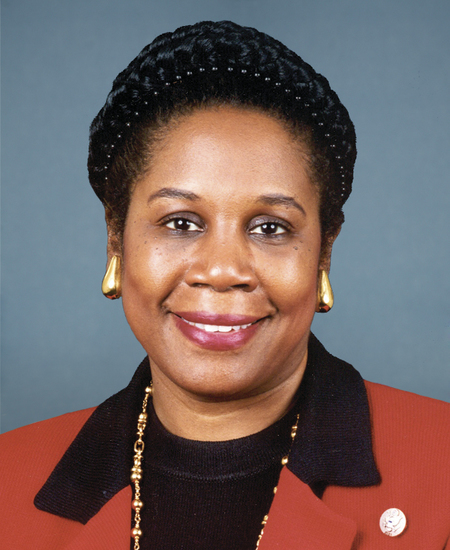
Rep. Sheila Jackson Lee
Sponsored bills
Safeguard Healthcare Industry Employees from Litigation and Distress Act or the SHIELD Act This bill establishes a framework to limit interference with persons seeking to provide or access reproductive health services at the state level. For the purposes of this summary, interference with persons seeking to provide or access reproductive health services includes acts to prevent, restrict, impede, or retaliate against a health care provider who provides reproductive health care services, any person or entity who helps health care providers to provide such services, any person who seeks to access such services, or any person or entity who helps another person to access such services. First, the bill reduces the allocation of funds under certain law enforcement grant programs for a state that has in effect a law authorizing state or local officers or employees to interfere with persons seeking to provide or access reproductive health services. Second, the bill prohibits interference with persons seeking to provide or access reproductive health care services by state or local officers or employees acting under color of law in any manner that would have a discriminatory effect on a woman, and by persons who are not state or local officers or employees and are attempting to implement or enforce a state law in circumstances affecting interstate commerce. The bill authorizes civil remedies for a violation, including damages and injunctive relief. Additionally, it authorizes criminal penalties for a violation involving the use of a deadly or dangerous weapon or the infliction of bodily injury.
Leading Against White Supremacy Act of 2023 This bill expands federal hate crime offenses to include acts motivated by white supremacy. The bill also establishes a standard for determining whether a person engaged in a white supremacy inspired hate crime, sets forth the elements of related conspiracies, and authorizes the Department of Justice to investigate, prosecute, and maintain records of white supremacy inspired hate crimes and related conspiracies.
Accidental Firearms Transfers Reporting Act of 2023 This bill requires the Federal Bureau of Investigation (FBI) to report to Congress on the number of firearm transfers where (1) a licensed gun dealer submits a background check through the National Instant Criminal Background Check System (NICS), (2) NICS fails to respond within three business days, and (3) the licensed gun dealer completes the transfer. The FBI must also report on the procedures followed once the transferee is discovered to be ineligible.
Reforming Alternatives to Incarceration and Sentencing to Establish a Better Path for Youth Act of 2023 or the RAISE Act of 2023 This bill modifies requirements and procedures related to the sentencing, confinement, and release of youth who are involved in the federal criminal justice system. The term youth means an individual who is prosecuted or sentenced for a criminal offense committed at age 21 or younger. The bill modifies federal sentencing options for youth, including by allowing courts to depart from the statutory mandatory minimum for certain nonviolent offenses, to reduce the prison term of a youth who has completed 20 years of the sentence, and to treat as discretionary a sentence of imprisonment for life. Additionally, it requires the Bureau of Prisons to separately designate youth correctional facilities, minimize contact between youth and other offenders, and establish programs regarding youth education, skills training, reentry, and mental and emotional health. Finally, the bill promotes reentry and reintegration into the community, including by providing an early release option for youth offenders who complete one half or more of their prison term and meet certain criteria; authorizing home confinement for a longer period of time; limiting the maximum prison term for technical violations of probation; establishing pilot programs for mentorship, government service, and animal service; and establishing pilot programs for diversion of high-risk, victimized, and primary caretaker youth.

Preventing Vigilante Stalking that Stops Women's Access to Healthcare and Abortion Rights Act of 2022 This bill increases the maximum prison term for a stalking offense, if the offense is committed with the intent to obtain an individual's health care information or prevent an individual's health care decisions.
Federal Prison Bureau Nonviolent Offender Relief Act of 2023 This bill establishes a new early release option for certain federal prisoners. Specifically, the Bureau of Prisons must release early an offender who has completed at least half of his or her sentence if such offender has attained age 45, has never been convicted of a crime of violence, and has not received any institutional disciplinary violations.
Maddy summaryHR 52, the Kimberly Vaughan Firearm Safe Storage Act, promotes safe firearm storage through several concrete measures. It requires firearm manufacturers to include a "SAFE STORAGE SAVES LIVES" notice with each new handgun, rifle, or shotgun sold, directing buyers to the Attorney General’s public website with safe storage guidance. The bill also creates a federal grant program ($10 million annually) for states and tribes to develop public programs distributing safe storage devices (like locked containers or trigger locks), and establishes a tax credit for individuals purchasing such devices. These provisions directly affect firearm manufacturers, state/local governments, and the public seeking to secure firearms responsibly.
Maddy summaryThis bill updates the definition of "covered offense" under the Fair Sentencing Act of 2010 to include specific drug-related violations involving cocaine base. It directly affects individuals convicted under certain sections of the Controlled Substances Act and related laws (like 21 U.S.C. 841(b)(1)(C) or 846) who may now qualify for sentencing adjustments previously available only for other offenses. The key change clarifies that motions challenging sentencing based on this updated definition cannot be treated as denials after a full merits review, ensuring proper legal consideration.
Gun Violence Reduction Resources Act of 2023 This bill authorizes the Department of Justice to hire 200 additional agents and investigators for the Bureau of Alcohol, Tobacco, Firearms and Explosives.