

This resolution condemns all acts of political violence, as well as attacks on health care facilities, health care personnel, and patients. The resolution also states that all people have the freedom to access reproductive health care services and medical advice without fear of violence, intimidation, or harassment. Finally, the resolution calls on the Biden Administration to use all appropriate authorities to uphold public safety, protect health care facilities, and safeguard health care personnel and patients.
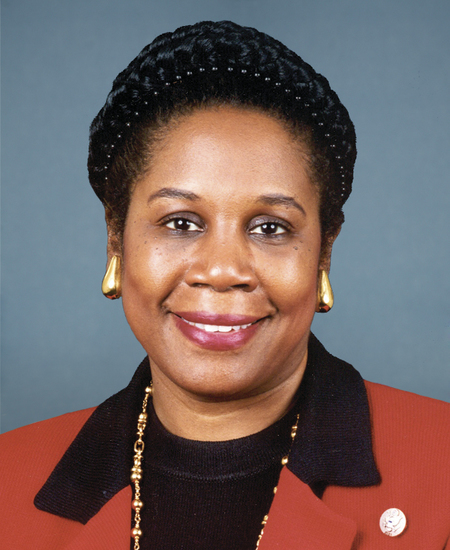
Rep. Sheila Jackson Lee
Sponsored bills
This bill requires the Government Accountability Office to report on the feasibility of a national disaster insurance program that covers all hazards.
Maddy summaryH.J.Res. 14 proposes amending the U.S. Code to require the President to issue an annual proclamation designating a day as "Democracy Day." The proclamation would call on state and local governments, educational institutions, and the public to observe the day with programs and activities promoting democratic values. It does not fix a specific date (though the preamble references January 6 as a potential day), leaving the annual designation to the President's discretion. The bill directly affects the President and state/local authorities by establishing a formal mechanism for nationwide civic observance of democracy.
Maddy summaryHRES 20 is a non-binding congressional resolution expressing support for designating September 2023 as "Gospel Music Heritage Month." It honors gospel music's cultural contributions to the United States, highlighting its historical roots and influence across diverse musical genres and media. The resolution does not create new laws or funding but formally recognizes gospel music's role in American culture through a symbolic congressional endorsement. This designation directly affects the recognition of gospel music's heritage, with no specific impacts on individuals or policies.
Equal Rights and Access for the Women of South Sudan Act This bill requires that activities carried out by the United States in South Sudan relating to governance, post-conflict reconstruction and development, police and military training, or refugee relief and assistance support the human rights of women and their full political, social, and economic participation.
Maddy summaryThis bill establishes a National Jazz Preservation Program at the Smithsonian to record interviews with jazz artists, preserve artifacts, and foster collaborations with museums and community groups. It adds specific jazz education provisions to the Elementary and Secondary Education Act, including programs bringing jazz artists into schools, developing curriculum materials, and sending student jazz ensembles abroad for cultural exchange. The bill also creates a National Jazz Appreciation Program featuring nationwide performances through Smithsonian affiliates. It authorizes $2 million annually for preservation and $1 million annually for appreciation programs through 2024. The bill directly affects schools, Smithsonian institutions, community arts organizations, and jazz artists through these new educational and preservation initiatives.
Maddy summaryHR 238, the Residential Substance Use Disorder Treatment Act of 2023, updates federal funding programs to support residential treatment for substance use disorders in correctional facilities. It expands eligibility to include all FDA-approved medications (not just opioids) for medication-assisted treatment (MAT), requires staff training on addiction science and MAT options, and mandates partnerships with post-release providers to continue care. The bill directs $40 million annually (2023-2027) for state and local correctional facilities, including a 10% allocation for jail-based programs serving people awaiting trial or in pre-trial detention. Key changes include replacing outdated "substance abuse" terminology with "substance use disorder" throughout the law and adding requirements for evidence-based MAT coverage and continuity of care planning.
Real Justice for Our Veterans Act of 2023 This bill expands data collection on the effectiveness of veteran treatment court programs, incentivizes local governments to improve retention rates in veteran treatment court programs and drug court programs, and expands options for veterans to participate in drug court programs. First, the bill requires the Department of Justice (DOJ) to report on the effectiveness of veteran treatment court programs. The report must assess the population served by the programs, whether the programs use evidence-based treatments, the recidivism rates of participants, and program completion rates. The report must also assess whether women and racial and ethnic minorities have equal access to the programs and an equal opportunity to participate. Second, the bill requires DOJ's Bureau of Justice Assistance to implement a pilot program to make grants for local governments to improve retention in veteran treatment court programs and drug court programs. Finally, this bill allows a veteran (including a veteran who is a violent offender) to participate in a drug court program instead of a veteran treatment court program if a jurisdiction does not operate a veteran treatment court program.
This bill directs the Speaker of the House and the President pro tempore of the Senate to arrange for the posthumous award of a Congressional Gold Medal to President Lyndon B. Johnson in recognition of his contributions to the nation. The bill requires such medal to be given to the Lyndon Baines Johnson Library and Museum following its award, where it will be available for display and research.
David Ray Hate Crimes Prevention Act of 2022 or David’s Law This bill adds hate crime offenses and penalties to the criminal civil rights statute that prohibits interference with federally protected activities. Current law already prohibits and penalizes similar offenses under the criminal civil rights statute that prohibits hate crime offenses. Additionally, the bill authorizes state and local grants to combat hate crimes committed by juveniles. It also authorizes the Department of the Treasury and the Department of Justice to hire additional personnel to prevent and respond to alleged criminal civil rights offenses involving interference with federally protected activities. Finally, the bill directs the U.S. Sentencing Commission to study whether it is appropriate to provide a sentencing enhancement for adult defendants who recruit minors to commit hate crime offenses.