

Maddy summaryThis bill prohibits corporal punishment (such as spanking or paddling) in all schools receiving federal funding, directly affecting students, school personnel, and school administrators. It requires schools to notify parents within 24 hours if corporal punishment occurs and establishes enforcement through civil lawsuits by students/parents, Attorney General actions, and Office for Civil Rights oversight. The bill mandates states to submit school climate reports and develop training programs on positive behavioral interventions to reduce exclusionary discipline practices that disproportionately affect students of color, students with disabilities, and other marginalized groups. It creates a grant program to help schools implement these approaches, with priority given to schools with high suspension rates and disciplinary actions. The bill does not apply to private schools or home schools that don't receive federal funding.
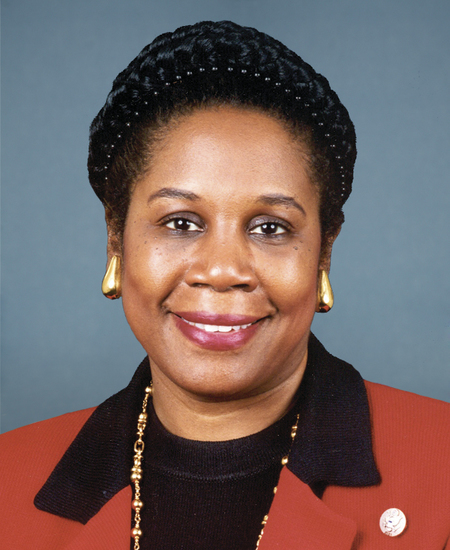
Rep. Sheila Jackson Lee
Sponsored bills
This resolution encourages the U.S. Holocaust Memorial Museum to continue its work in educating the public about the dangers of antisemitism and the origins of the Holocaust, congratulates those responsible for the creation of the museum, condemns antisemitism, supports educational and community-based programs that counter antisemitism and hate, and supports the designation of a U.S. Holocaust Memorial Museum Day.
Tribal Gaming Regulatory Compliance Act This bill allows the Ysleta del Sur Pueblo and Alabama-Coushatta tribes to conduct gaming activities on their land in Texas if certain conditions are met. Currently, the Ysleta del Sur Pueblo and Alabama-Coushatta Indian Tribes of Texas Restoration Act prohibits the tribes from conducting gaming activities on their land if those activities are prohibited by Texas law. The bill repeals those provisions and instead applies the Indian Gaming Regulatory Act (IGRA) to gaming activities on Indian lands of the tribes.
This resolution supports the goals and ideals of National Honor Our LGBT Elders Day to increase awareness of health disparities and other challenges facing lesbian, gay, bisexual, and transgender (LGBT) elders.
Maddy summaryThe EVs for All Act of 2023 establishes a Department of Energy grant program to fund electric vehicle (EV) sharing services at public housing projects. Eligible entities - like public housing agencies, local governments, and partner nonprofits - can apply for grants to purchase used EVs, install charging equipment, and run community outreach. Grants prioritize projects in historically marginalized communities with high pollution or limited transportation access, require fair labor practices, and mandate affordable, non-discriminatory charging fees. The program requires grantees to report on usage, emissions reductions, and service costs while ensuring EVs meet domestic content and worker protection standards.
Maddy summaryHR 3548, the Pursuing Equity in Mental Health Act, aims to reduce mental health disparities for racial and ethnic minority groups by directing federal funding and policy changes. It increases annual grants for primary/behavioral health services to $60 million in 2023 and $80 million yearly through 2029, prioritizing entities serving minority communities. The bill requires the NIH to study mental health disparities within 9 months and mandates new training for mental health professionals (including social work and psychiatry) on culturally appropriate care. Additionally, it funds a $15 million annual outreach strategy to combat stigma and improve access to care, requiring materials tailored to cultural and language needs of minority groups.
Maddy summaryThis bill requires sponsors of NIH-funded or NIH-approved clinical trials (for drugs, devices, biological products, or behavioral interventions) to set specific, measurable goals for recruiting participants reflecting race, ethnicity, age, and sex - either based on disease prevalence or the U.S. population. Key mechanisms include mandating detailed plans for achieving these goals, annual reporting of demographic data (without personally identifiable information), and strategies to reduce participation barriers like virtual visits or flexible scheduling. It also requires training for researchers on diversity and health inequities, and establishes a remediation process if goals aren’t met. The law aims to improve representation in clinical trials to ensure medical research better serves all patient groups.
Maddy summaryHR 3523, the Perinatal Workforce Act, provides $15 million annually from 2024 to 2028 to expand and diversify maternity care providers. It directs HHS to issue guidance for states on recruiting diverse providers (including midwives, nurses, and community health workers) and requires grant recipients to prioritize students from racial/ethnic minority groups, implement bias training, and target health professional shortage areas. The bill also mandates annual reporting on workforce diversity and outcomes, and requires a GAO report assessing barriers to equitable access in maternal healthcare. This legislation directly affects hospitals, nursing schools, midwifery programs, and insurers by funding targeted workforce development to address racial disparities in maternal care.
Maddy summaryThis bill requires that AM radio receivers be included as standard equipment in all new motor vehicles (such as cars and trucks) sold in the United States, with a rule to be issued by the Department of Transportation within one year. The rule must ensure AM radio is easily accessible on the dashboard and allows manufacturers to use digital AM radio technology instead of traditional AM. During the one-year period between the bill's enactment and the rule's effective date, manufacturers must clearly label vehicles without AM radio. The bill also directs a study to evaluate whether an alternative system could deliver emergency alerts as reliably as AM radio across the country, especially during crises.
Maddy summaryHR 3420, the My Body, My Data Act of 2023, restricts how companies can handle reproductive and sexual health data - such as pregnancy details, contraceptive use, or abortion-related information - by requiring them to collect only what’s necessary for requested services and limiting employee access. It gives individuals the right to access, correct, or delete their data, see which third parties received it, and get clear privacy policies explaining data practices. The Federal Trade Commission enforces the law, with penalties for violations including $100-$1,000 per violation per day, and bans retaliation for exercising these rights. The law applies to companies (like health apps or insurers) but excludes HIPAA-covered healthcare providers and entities subject to existing federal health privacy rules.