

Maddy summaryHR 3208 establishes a voluntary on-the-job training program within the Department of Homeland Security (DHS) to prepare current DHS employees (not currently in cybersecurity roles) for cybersecurity positions. The program, led by the DHS Director with input from the Under Secretary for Management, will develop a curriculum using existing training materials and align with national cybersecurity education standards, incorporating methods like online courses, in-person sessions, and supervised on-the-job learning. DHS must submit annual reports to Congress for seven years detailing participant numbers, cybersecurity job placements for graduates, success metrics, and program effectiveness. Additionally, the Under Secretary for Management will track cybersecurity staffing gaps, encourage employee participation through policies like service agreements, and connect program completers with cybersecurity career opportunities within DHS.
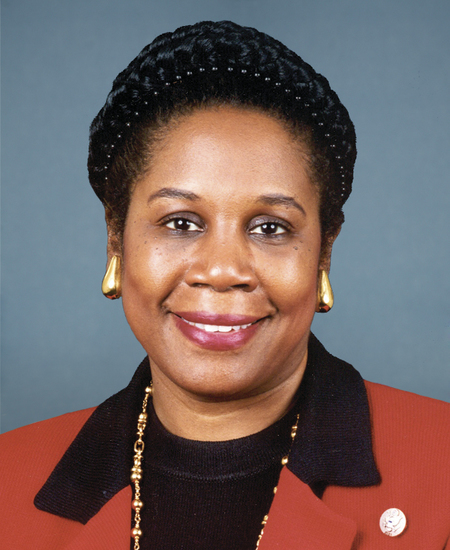
Rep. Sheila Jackson Lee
Sponsored bills
Maddy summaryHR 3086, the "Find It Early Act," requires health insurance plans to cover breast cancer screenings with no cost-sharing for certain individuals at higher risk of breast cancer. The bill affects people with increased risk (based on medical criteria or dense breast tissue) or those needing screening due to factors like age, race, ethnicity, or family history. Key provisions mandate coverage for 2D/3D mammograms, ultrasounds, MRI, and other technologies without frequency limits for these groups. This applies to group health plans, Medicare, Medicaid, TRICARE, and VA healthcare systems starting January 1, 2024. The law aims to improve early detection by removing financial barriers to necessary screenings.
Maddy summaryThe ACCESS Act (HR 3004) temporarily expands health insurance premium tax credits for low-income individuals and creates a federal Medicaid program to close coverage gaps in states that haven't expanded Medicaid. For 2024-2026, the bill removes income limits for premium tax credits and allows credits for low-income employees with household incomes up to 138% of the poverty line. It establishes a Federal Medicaid program that would provide health coverage to individuals in non-Medicaid-expansion states who earn up to 138% of the poverty line, administered through contracts with Medicaid managed care organizations or third-party administrators. The program would transition individuals from Marketplace plans to this federal coverage and includes provisions for income verification and coordination with state Medicaid programs.
Maddy summaryThe Women in Criminal Justice Reform Act (HR 2954) aims to create gender-responsive policies across the criminal justice system for women. It requires law enforcement officers to receive gender-informed training on trauma, domestic violence, and the unique needs of women, and establishes pretrial diversion programs that focus on addressing trauma, substance use, and family needs rather than incarceration. The bill mandates improved healthcare for incarcerated women, including reproductive care, trauma-informed mental health services, and gender-specific prison conditions. It also expands access to programs for mothers and infants in prison and requires facilities to maintain family connections through visitation and community reentry programs. The legislation directly affects women in the criminal justice system, law enforcement officers, correctional staff, and prison healthcare providers.
Maddy summaryThe Green New Deal for Health Act establishes a federal Office of Climate Change and Health Equity within the Department of Health and Human Services to coordinate climate and health efforts across government agencies. It requires health care facilities to become more climate-resilient through infrastructure upgrades, mandates climate risk disclosure for medical products, and creates new training programs for health professionals on climate-related health risks. The bill expands Medicare coverage for home resiliency services like heat pumps and solar batteries for individuals medically vulnerable during climate disasters, and provides funding for community mental health programs focused on climate resilience. It prioritizes support for environmental justice communities and individuals disproportionately affected by climate change, including those with certain health conditions, ages, or social vulnerabilities.
Maddy summaryThe Tribal Family Fairness Act (HR 2762) increases federal funding and streamlines support for tribal child welfare programs. It sets a minimum $10,000 grant per tribe (up from $5,000), raises the tribal set-aside for child welfare funding from 3% to 4.5%, and boosts total mandatory funding from $345 million to $356 million annually. The bill also allows tribes to use funds for "tribal customary adoptions" and simplifies application/reporting for tribes receiving under $50,000, while permitting in-kind contributions to meet matching requirements. These changes directly affect federally recognized tribes operating child welfare programs under the Social Security Act.
Maddy summaryThe I CAN Act (Improving Care and Access to Nurses Act) expands healthcare access by removing barriers for nurse practitioners, clinical nurse specialists, physician assistants, certified registered nurse anesthetists, and certified nurse-midwives within Medicare and Medicaid programs. Key provisions include allowing these professionals to provide cardiac and pulmonary rehabilitation services, prescribe certain diabetic shoes, and deliver hospice care without unnecessary physician supervision. The bill also clarifies reimbursement for services provided by certified nurse anesthetists and improves access to home health services through certified nurse-midwives. These changes directly affect Medicare and Medicaid beneficiaries by potentially increasing access to care and healthcare providers by expanding their scope of practice. The bill aims to improve healthcare delivery by leveraging the skills of advanced practice nurses across multiple care settings.
Maddy summaryThis bill expands Medicare coverage for cardiac and pulmonary rehabilitation programs by updating who can prescribe these services. It allows physician assistants, nurse practitioners, and clinical nurse specialists (in addition to physicians) to authorize these programs under Medicare, broadening access for patients. The changes apply to services starting January 1, 2024, and directly affect Medicare beneficiaries needing cardiac or lung rehabilitation care. The policy simplifies provider eligibility without creating new funding or altering program structure.
Maddy summaryThis bill establishes minimum nurse-to-patient ratios for registered nurses in hospital units (such as 1:1 in trauma units, 2:1 in critical care units, and 3:1 in emergency rooms), requiring hospitals to develop and maintain staffing plans that meet these standards. It mandates transparency in documenting staffing levels, ensures hospitals verify nurses' competence for specific units, and enforces compliance through Medicare and Medicaid programs with penalties for violations. The bill protects nurses who refuse unsafe assignments due to staffing concerns and includes initiatives to improve nurse retention and address staffing shortages. It directly affects hospitals, nurses, and patients by aiming to improve patient safety and care quality through standardized staffing requirements. The bill applies to all hospitals, with extended implementation timelines for rural facilities.
Maddy summaryThis bill would require Medicare to cover FDA-approved blood tests that screen for multiple cancers simultaneously (like breast, lung, or colorectal cancer) for beneficiaries. It directly affects Medicare recipients aged 65+ who could access these new screenings once per year, without prior authorization. The key provision adds "multi-cancer early detection screening tests" to Medicare's covered services under Part B, defining them as blood tests analyzing cell-free DNA, while maintaining existing coverage for standard screenings like mammograms. The bill does not change current coverage for individual cancer screenings but ensures Medicare keeps pace with new medical technology.