

Maddy summaryHR 6079, the CHILD Labor Act, strengthens protections against child labor by defining "oppressive child labor" more clearly and expanding prohibitions on children under 18 working in dangerous occupations like mining, manufacturing, and meat processing. The bill requires Federal contractors and recipients of Federal financial assistance to prevent child labor throughout their supply chains, with new reporting requirements and significant penalties for violations including fines up to $750,000 per violation causing death or serious injury. It creates a new "child labor tag" system to identify goods produced with child labor and establishes a system for victims to seek compensatory and punitive damages. The bill also mandates regular reports to Congress on work-related injuries and deaths, with data collection to be conducted in consultation with the Department of Health and Human Services.
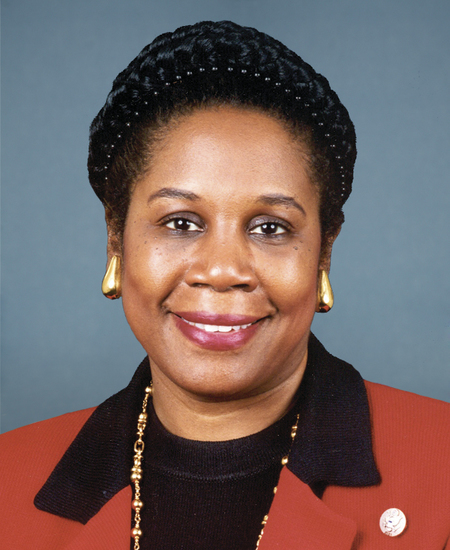
Rep. Sheila Jackson Lee
Sponsored bills
Maddy summaryThis bill establishes new requirements for law enforcement agencies that use facial recognition technology. It requires court orders for most uses (with limited emergency exceptions), prohibits using facial recognition to monitor constitutional rights or for immigration enforcement, and mandates the removal of photos from arrest databases for certain individuals (under 18, released without charges, or acquitted). The bill requires annual accuracy and bias testing of facial recognition systems, detailed logging of searches, and public reporting of usage statistics disaggregated by race, ethnicity, gender, and age. Violations can lead to evidence suppression, civil lawsuits, and disciplinary action against officers. The bill directly affects state and local law enforcement agencies conducting criminal investigations using facial recognition.
Maddy summaryHRES 795 is a non-binding resolution expressing the House's support for the annual proclamation of "National Cybersecurity Awareness Month" in October. It encourages the public and organizations to recognize cybersecurity importance and support efforts by the Department of Homeland Security, CISA, and the National Cybersecurity Alliance. The resolution highlights existing campaign goals like using strong passwords, enabling multi-factor authentication, updating software, and reporting phishing attempts. It does not create new laws or requirements but formally endorses the ongoing October observance that began in 2004.
Maddy summaryHRES 771 is a non-binding resolution expressing the U.S. House of Representatives' support for Israel following Hamas' October 7, 2023, attack. It condemns Hamas' actions, affirms Israel's right to self-defense, and calls for the immediate release of hostages. The resolution also urges enforcement of existing laws restricting aid to terrorists and sanctions against Iran for supporting Hamas. It does not create new policies or allocate funds, as it is a symbolic statement of congressional support.
Maddy summaryHRES 768 is a symbolic House Resolution expressing congressional support for Israel following Hamas' October 7, 2023 attacks. It condemns Hamas' actions, reaffirms Israel's right to self-defense, and calls for the immediate release of hostages. The resolution references the U.S. commitment to Israel's security through existing military aid programs, including the 2016 U.S.-Israel Memorandum of Understanding, and emphasizes enforcement of laws like the Taylor Force Act to prevent U.S. aid from reaching terrorist groups. As a symbolic resolution, it does not create new policy but serves as a statement of congressional support for Israel.
This resolution supports the designation of National Wildlife Refuge Week. The resolution acknowledges the importance of national wildlife refuges for their recreational opportunities and contribution to local economies. Finally, the resolution reaffirms the support of the House for wildlife conservation and the National Wildlife Refuge System.
This resolution expresses respect for the sovereignty of Mexico and condemns calls for military action in Mexico without Mexico's consent. The resolution also states that while the President has the inherent power to repel sudden attacks, the manufacture and sale of fentanyl does not constitute such a sudden attack or an armed invasion.
Maddy summaryThe Safe Schools Improvement Act (HR 6031) requires public elementary and secondary schools to implement comprehensive anti-bullying policies that specifically prohibit harassment based on protected characteristics like race, gender identity, disability, religion, and sexual orientation. It mandates schools to collect and publicly report annual data on bullying incidents while establishing clear grievance procedures for students and parents. The bill also requires states to submit biennial reports on school compliance and supports evidence-based interventions, such as restorative practices, to reduce exclusionary discipline. This legislation directly affects all public K-12 schools and students in the U.S., aiming to create safer learning environments through standardized policy requirements and data transparency.
Maddy summaryHR 5955, the Safe Return Act, amends the State Department's repatriation program to replace loans with grants for specific groups. It directly affects U.S. citizens, lawful permanent residents, and third-country nationals needing financial assistance to return to the U.S. The bill changes eligibility to include destitute lawful permanent residents and updates the program to use "grants" instead of "loans," requiring written grant agreements rather than loan terms. The Secretary of State must also update the Foreign Affairs Manual to reflect these changes.
Maddy summaryThis bill, HR 5920 (Student Loan Marriage Penalty Elimination Act of 2023), changes how married couples can deduct student loan interest on their federal taxes. It amends the tax code to allow each spouse to claim a separate $2,500 deduction limit for student loan interest, instead of a single combined limit for the couple. This directly affects married couples filing jointly who pay student loan interest and qualify for the deduction. The change applies to tax years beginning after December 31, 2022, and ensures the deduction aligns with the tax treatment for individual filers.