This concurrent resolution honors the lives and work of Mary and John Meachum and recognizes the importance of the Mary Meachum Freedom Crossing, which is part of the National Underground Railroad Network to Freedom.
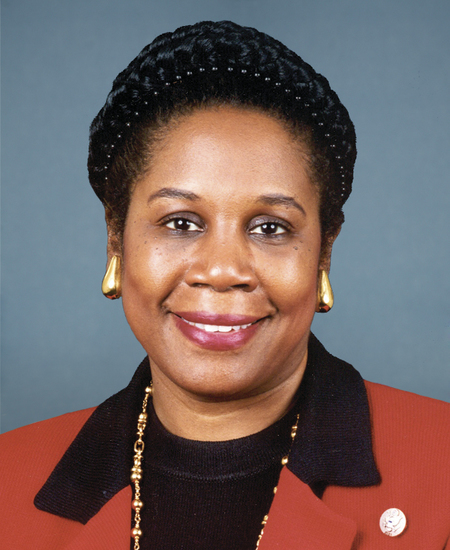
Rep. Sheila Jackson Lee
Sponsored bills
Maddy summaryHRES 1040 is a ceremonial House resolution recognizing February as Black History Month. It formally acknowledges the achievements of Black Americans throughout U.S. history and encourages continued celebration of this observance. The resolution highlights the cultural and artistic contributions of Black Americans, including historical figures and movements like the Harlem Renaissance and hip-hop. As a non-binding resolution, it does not create new programs or affect any specific group, but serves to affirm the importance of commemorating Black history.
Expanding Opportunity for Minority Depository Institutions Act or the Expanding Opportunity for MDIs Act This bill establishes the Financial Agent Mentor-Protégé Program within the Department of the Treasury. The program provides participating minority deposit institutions and small financial institutions with mentorship from large financial institutions or from financial agents designated by Treasury. This mentorship prepares protégé institutions to improve service capacity or to perform as financial agents for the federal government.
Maddy summaryThis bill directs the Secretary of State to actively use U.S. diplomatic resources, including the voice and influence of U.S. diplomats and officials at the International Boundary and Water Commission, to advance efforts ensuring Mexico complies with the 1944 water treaty. It requires U.S. officials to work toward establishing reliable water delivery agreements under the treaty for the Colorado, Tijuana, and Rio Grande rivers. The key mechanism is mandating diplomatic engagement to address Mexico's compliance with treaty obligations, aiming to secure predictable water flows for U.S. users. The bill affects U.S. diplomatic operations and water management coordination with Mexico, focusing on treaty implementation rather than new water infrastructure.
Maddy summaryHRES 1032 is a symbolic resolution designating the week of February 26-March 1, 2024, as "Public Schools Week" in the U.S. House of Representatives. It expresses congressional support for public education, highlighting its role in preparing students and communities. The resolution has no legal effect or funding provisions - it solely serves as a formal expression of backing for public schools. It directly affects no individuals or entities but aims to raise awareness about public education. This is a non-binding gesture, not a policy change.
Maddy summaryThis symbolic resolution (HRES 1026) recognizes Black History Month and honors the 94 African-American recipients of the Congressional Medal of Honor for their military bravery, heroism, and valor. It does not create new laws or policies but formally acknowledges their contributions, referencing historical context like Sergeant William Harvey Carney’s 1863 actions and the 1993 study revealing racial discrimination in Medal of Honor awards during WWII. The resolution specifically calls for the House to recognize Black History Month and honor these 94 service members. It is a non-binding expression of support with no concrete policy changes.
Maddy summaryThis bill requires the U.S. Department of Education to automatically send information about Supplemental Nutrition Assistance Program (SNAP) eligibility to college students with a zero expected family contribution (EFC) who submit the Free Application for Federal Student Aid (FAFSA). It directs the Secretary to provide written and electronic details about SNAP benefits, including how to apply and contact information for state SNAP agencies, in both formats. The bill mandates consultation between the Education and Agriculture Departments to design this communication. It directly affects low-income undergraduate students who qualify for federal aid but may not know about SNAP food assistance. The policy change aims to connect eligible students with existing nutrition support programs.
Maddy summaryThe Connect the Grid Act modifies federal energy regulations to improve grid connectivity, primarily affecting ERCOT (Texas' grid) and neighboring transmission organizations like SPP and MISO. It repeals exemptions for ERCOT under the Federal Power Act and establishes minimum power transfer requirements between ERCOT and other grids (e.g., 4.3-12.6 gigawatts to SPP). The bill requires joint planning by grid operators to build or upgrade transmission facilities by 2035, prioritizing grid-enhancing technologies, existing infrastructure corridors, environmental justice communities, and renewable energy access. Projects must follow environmental reviews under NEPA and the Endangered Species Act, with mandatory community outreach to tribal, Indigenous, and low-income groups.
Maddy summaryThis bill establishes an Interagency Task Force on Black Women and Girls, requiring the Attorney General and Health Secretary to create a group within 180 days of enactment. The Task Force will examine systemic issues affecting Black women and girls - including school discipline, economic opportunities, healthcare access, justice system involvement, and housing - and make policy recommendations across these areas. It mandates the U.S. Commission on Civil Rights to annually study specific disparities like maternal mortality rates, the school-to-prison pipeline, and housing barriers, then report findings to Congress. The bill directly targets policies impacting Black women and girls as defined in the legislation, with recommendations due within two years.
Maddy summaryHR 7314, the Diversify Tech Act, establishes a federal Task Force within the Department of Commerce to address diversity, equity, inclusion, and accessibility (DEIA) in the tech industry. The Task Force, composed of federal officials and industry experts, must conduct an initial audit within 60 days of enactment to assess minority employment rates, hiring practices, and layoff trends in tech companies (defined as entities with over 10 million users/subscribers). It is required to submit annual reports to Congress evaluating DEIA progress, assessing how layoffs affected diversity efforts, and examining AI's role in discrimination, while also advising on outreach for minority-owned startups. The bill directly affects large U.S. tech companies and minority-owned tech startups by mandating transparency and accountability in DEIA practices.