

Maddy summaryHR 5082, the REPORT Act, creates limited liability protections for vendors working with the National Center for Missing & Exploited Children (NCMEC) on child sexual exploitation cases and for minors reporting their own exploitation via NCMEC's CyberTipline. The bill prohibits legal claims against NCMEC-contracted vendors for handling child pornography reports, provided they follow strict data security rules (like end-to-end encryption and limited employee access). It also extends the required preservation period for reports to NCMEC from 90 days to one year and mandates secure storage methods aligned with cybersecurity standards. Additionally, the bill increases civil penalties for large online platforms failing to report such content, with fines up to $850,000 for platforms with over 100 million monthly users.
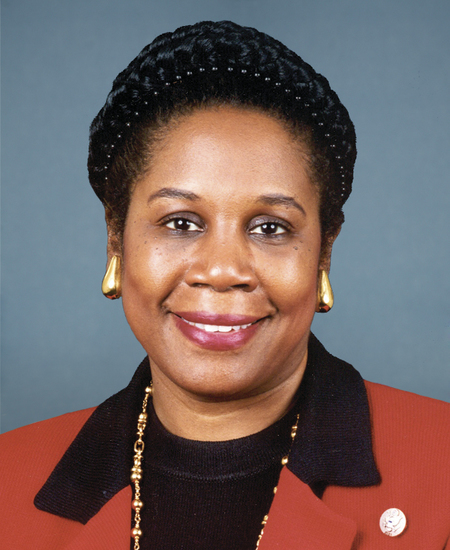
Rep. Sheila Jackson Lee
Sponsored bills
Maddy summaryThis resolution (HRES 149) is a symbolic congressional statement condemning Russia's actions in Ukraine, specifically the forcible transfer and abduction of Ukrainian children. It directly addresses the Russian government, citing evidence including Ukrainian reports of over 2,300 children kidnapped and Russia's policy granting citizenship to children born in occupied territories after February 24, 2022. The resolution formally declares these actions violate the Genocide Convention (Article II(e)) and claims Russia is attempting to erase Ukrainian identity by targeting children. As a non-binding resolution, it holds no legal force but expresses the House's official stance against these practices.
Maddy summaryThis bill prohibits the interstate transport, sale, breeding, or possession of captive American mink raised for fur production (including parts or offspring), directly affecting mink fur farmers and the fur industry. It includes a limited exception for entities covered under the Lacey Act and establishes a buy-out program where the government may purchase mink farms. The buy-out amount is based on the farmer's average mink count over three years and the farm's infrastructure value. Funding for the buy-out depends on available appropriations. The bill does not apply to mink not raised for fur or to certain wildlife management activities.
Maddy summaryThis concurrent resolution (HCONRES 97) recognizes the gender wage gap, noting that women working full-time earn 84 cents for every dollar earned by men. It highlights racial disparities (e.g., Latinas earn 57 cents, Black women 69 cents) and the economic impact of the gap, including $965 billion in annual lost wages for women. As a symbolic resolution, it does not create new laws or policies but formally acknowledges the issue and reaffirms Congress’s commitment to addressing wage inequality.
Maddy summaryThis bill establishes a Federal Advisory Panel to analyze climate change risks to federal retirement investments and advise on transitioning toward low-carbon portfolios. It directly affects the Federal Retirement Thrift Investment Board (which manages retirement funds for over 5 million federal employees) by requiring the panel to assess fossil fuel investments, examine other pension funds' climate strategies, and produce a report within one year. Key mechanisms include creating a new "Climate Choice Stock Index Fund" that excludes fossil fuel companies (if the Board determines fossil fuel investments aren't financially sound), and mandating annual climate cost reports from the Federal Reserve and SEC. The bill focuses on aligning retirement fund investments with climate risk management while maintaining financial responsibility, without mandating immediate divestment.
Maddy summaryHRES 1042 is a ceremonial resolution recognizing the historical significance of the Freedom House Ambulance Service, founded in Pittsburgh's Hill District in 1967. It acknowledges the service as the first U.S. ambulance program staffed by trained paramedics (beyond basic first aid), which pioneered national standards for prehospital emergency care - including life-saving techniques like field intubation and advanced trauma treatment. The resolution highlights how the service, established to provide job training and medical care in an underserved Black community, revolutionized emergency medical services nationwide before ending in 1975 due to political pressures. It does not create new laws or affect any policies - it solely commends the service's legacy and contributions to emergency medical care.
Maddy summaryThis House resolution (HRES 1036) expresses the U.S. House of Representatives' support for designating February 29, 2024, as "Rare Disease Day." It acknowledges the global observance of Rare Disease Day - first recognized in the U.S. in 2009 - and highlights the challenges faced by the over 25 million Americans living with rare diseases (affecting fewer than 200,000 people in the U.S. each). The resolution recognizes the importance of improving awareness, encouraging early diagnosis, and supporting efforts to develop treatments for rare diseases. It is a symbolic gesture with no new policies or funding, aligning with the annual global observance of Rare Disease Day.
Maddy summaryHR 7503, the Health Equity for People with Disabilities Act, amends Section 330 of the Public Health Service Act to require health centers and programs serving underserved communities to explicitly include people with disabilities and provide accessible healthcare services. The bill inserts "including people with disabilities" in multiple sections and adds requirements for communication devices or services to meet accessibility needs. These changes apply to community health centers, migrant health centers, and other programs funded under Section 330, which serve medically underserved populations. The law clarifies that existing funding mechanisms remain unchanged but ensures people with disabilities are included in program eligibility and access to care.
Maddy summaryHR 7481 establishes a new CDC program to address social determinants of health - such as housing, food access, and transportation - that impact community health outcomes. It authorizes $100 million annually (2025-2029) to fund grants for state/local health agencies, nonprofits, and universities to design and implement community-based strategies tackling unmet health needs. Grantees must collaborate with health systems, housing organizations, and local stakeholders to collect data, develop evidence-based solutions, and monitor impacts on health equity and healthcare costs. The bill requires annual reporting and a national evaluation after five years to assess program effectiveness.
Maddy summaryThis resolution (HRES 1050) designates March 2024 as National Colorectal Cancer Awareness Month. It symbolically supports existing public awareness efforts around colorectal cancer prevention, screening, and early detection, without creating new requirements or funding. The resolution encourages the public to observe the month with educational activities, aligning with ongoing annual campaigns. It directly affects public awareness efforts but has no binding policy impact.