National Office of New Americans Act This bill establishes the National Office of New Americans (NONA) within the Executive Office of the President to promote and support the integration of immigrants and refugees into the social, cultural, economic, and civic life of the United States. The NONA shall also establish the Federal Initiative on New Americans. The initiative shall establish a coordinated federal program to respond effectively to immigrant and refugee integration issues such as language learning, adult education and workforce training, health care, and naturalization.
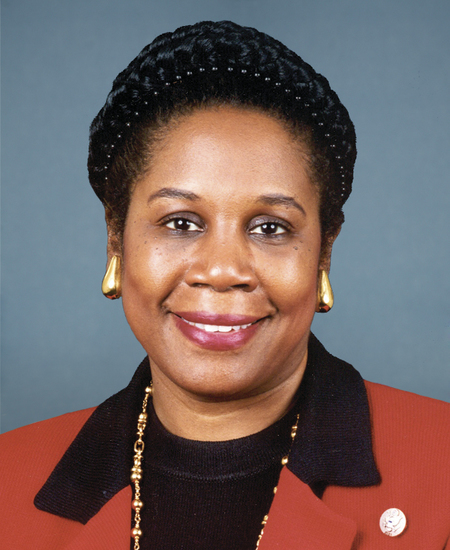
Rep. Sheila Jackson Lee
Sponsored bills
Eliminating the Provider Relief Fund Tax Penalties Act of 2021 This bill excludes from gross income, for income tax purposes, any grant or other assistance provided by the CARES Act Provider Relief Fund under the Coronavirus Aid, Relief, and Economic Security Act or the CARES Act.
Stephanie Tubbs Jones Uterine Fibroid Research and Education Act of 2021 This bill directs the Department of Health and Human Services (HHS) to expand research on, and take other actions to address, uterine fibroids. These are muscular tumors that grow in the wall of the uterus and may cause pain, heavy menstrual bleeding, and reproductive issues. In coordination with the National Institutes of Health and appropriate federal agencies, HHS must undertake research activities on uterine fibroids. In addition, HHS must establish a database of services furnished to individuals diagnosed with uterine fibroids under Medicaid or the Children's Health Insurance Program and must develop a report on federal and state expenditures for such services. Additionally, HHS must disseminate information on uterine fibroids to the public and to health care providers, including information on the elevated risk for minority women and available treatments.
No Surprise Bills for New Moms Act This bill requires health insurers to provide coverage for newborns of enrollees for the first 30-day period after the newborn's date of birth and to provide a special enrollment period for the newborn that extends at least 60 days after the initial coverage period. It also requires insurers to notify an enrollee if they receive a claim for the enrollee's newborn who is not enrolled in a health insurance plan.
This resolution reaffirms and recognizes the importance of partnerships between the United States and African countries, encourages greater and more strategic collaboration to achieve and sustain socioeconomic transformation in Africa, and encourages the United States to advance interests in Africa to reach specified goals.
Fostering Postsecondary Success for Foster and Homeless Youth Act of 2021 This bill establishes a program through which the Department of Education (ED) must annually recognize institutions of higher education (IHEs) that offer outstanding services and programs to foster care and homeless youth. Further, ED must establish a Center for Fostering Postsecondary Success for Foster and Homeless Youth to assist IHEs with creating and maintaining their programs for these youth.
Huntington's Disease Disability Insurance Access Act of 2021 This bill expedites payment of Social Security Disability Insurance (SSDI) benefits and eligibility for Medicare coverage for those with Huntington's disease. This is an inherited disorder that causes brain cells to die, including in areas of the brain that help to control voluntary movement. Specifically, the bill eliminates the 5-month waiting period for SSDI benefits and the subsequent 24-month waiting period for Medicare coverage for individuals with Huntington's disease. Under current law, individuals generally must wait five months after the onset of disability to begin receiving SSDI benefits and an additional 24 months to become eligible for Medicare.
Reading Early and Addressing Dyslexia Act or the READ Act This bill directs the Department of Education (ED) to establish an early literacy and dyslexia intervention pilot program to award grants to five state educational agencies to address early reading deficiencies and dyslexia. Under the program, ED must identify (1) evidence-based methods of screening students in grades K-3 for early reading deficiencies and dyslexia; (2) intensive interventions for these students, including phonological awareness and phonemic awareness, sound symbol recognition, and decoding skills; and (3) best practices to instruct educators on the science of reading and how to execute screenings and intensive interventions for these students. Each participating state educational agency must select at least two local educational agencies (LEAs) to participate in the program. Participating LEAs must provide intensive interventions identified by ED that develop basic reading skills and incorporate systematic phonics instruction to every student in grades K-3, screen each student in grades K-3 three times during each school year using the screening methods identified by ED, notify parents or guardians of screenings, and conduct diagnostic assessments and provide intensive interventions for each student suspected of having an early reading deficiency or dyslexia. The bill also directs ED to establish an online platform to provide educational agencies with resources, such as methods of targeting instruction for early reading deficiencies and dyslexia.

American Dream Employment Act of 2021 This bill establishes that, for the purposes of eligibility to be an officer or employee of an office of Congress, an individual shall be treated as a U.S. citizen if that individual has (1) employment authorization under the Deferred Action for Childhood Arrivals program, (2) employment authorization under a grant of deferred enforced departure, or (3) temporary protected status. (Generally, these programs and statuses allow eligible aliens to remain and work in the United States.)
Increasing Access to Quality Cardiac Rehabilitation Care Act of 2021 This bill accelerates and expands certain changes that are scheduled to take effect relating to the coverage of cardiac, intensive cardiac, and pulmonary rehabilitation programs under Medicare. Currently, such programs require physician supervision. Effective January 1, 2024, physician assistants, nurse practitioners, and clinical nurse specialists may also supervise these programs. The bill expedites the effective date of these changes to January 1, 2022, and also allows these practitioners to administer programs in their offices, prepare and sign treatment plans, and prescribe exercise.