Children and Media Research Advancement Act or the CAMRA Act This bill requires the National Institutes of Health to fund research regarding the effects of media on infants, children, and adolescents. Such research must examine the impact of media (e.g., social media, television, video games) on cognitive, physical, and social-emotional development.
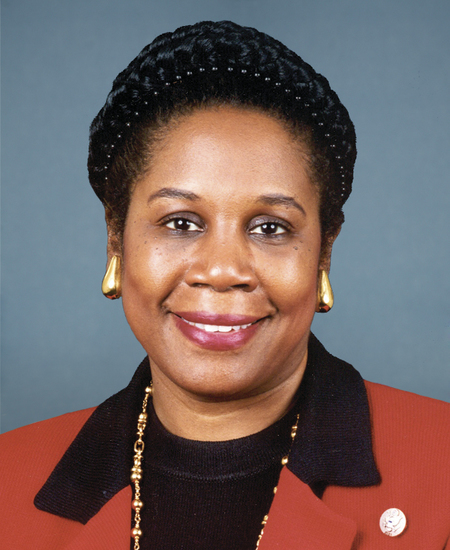
Rep. Sheila Jackson Lee
Sponsored bills
Minority Diabetes Initiative Act This bill authorizes grants for diabetes-related health care services in minority communities. The Department of Health and Human Services may make these grants to public and nonprofit health care providers.
Affordable Insulin for the COVID-19 Emergency Act This bill eliminates cost-sharing under the Medicare prescription drug benefit and Medicare Advantage for insulin and associated medical supplies during the public health emergency relating to COVID-19 (i.e., coronavirus disease 2019). The bill also allows beneficiaries to receive their insulin and supplies via mail order during the emergency period.
This resolution recognizes the disparity between wages paid to men and women, and its impact on women, families, and the nation and reaffirms Congress' commitment to supporting equal pay and to narrowing the gender wage gap.
This joint resolution eliminates the deadline for the ratification of the Equal Rights Amendment, which prohibits discrimination based on sex. The amendment was proposed to the states in House Joint Resolution 208 of the 92nd Congress, as agreed to in the Senate on March 22, 1972. The amendment shall be part of the Constitution whenever ratified by the legislatures of three-fourths of the states.
Safe Step Act This bill requires a group health plan to establish an exception to medication step-therapy protocol in specified cases. A medication step-therapy protocol establishes a specific sequence in which prescription drugs are covered by a group health plan or a health insurance issuer. A request for such an exception to the protocol must be granted if (1) an otherwise required treatment has been ineffective, (2) such treatment is expected to be ineffective and delaying effective treatment would lead to irreversible consequences, (3) such treatment will cause or is likely to cause an adverse reaction to the individual, (4) such treatment is expected to prevent the individual from performing daily activities or occupational responsibilities, (5) the individual is stable based on the prescription drugs already selected, or (6) there are other circumstances as determined by the Employee Benefits Security Administration. The bill requires a group health plan to implement and make readily available a clear process for an individual to request an exception to the protocol, including required information and criteria for granting an exception. The bill further specifies timelines under which plans must respond to such requests.
Improving Child Care for Working Families Act of 2021 This bill increases the limitation on the exclusion from employee gross income for employer-paid dependent care assistance from $5,000 to $10,500.
Ethan's Law This bill establishes a framework to regulate the storage of firearms on residential premises at the federal, state, and tribal levels. At the federal level, the bill establishes statutory requirements for firearms on residential premises to be safely stored if a minor is likely to gain access without permission or if a resident is ineligible to possess a firearm. An individual who violates the requirements is subject to criminal penalties. A firearm stored in violation of the requirements is subject to seizure and forfeiture. At the state and tribal levels, the bill requires the Department of Justice to award grants to implement functionally identical requirements for the safe storage of firearms.
Promoting Apprenticeships through Regional Training Networks for Employers Required Skills Act of 2021 or the PARTNERS Act This bill establishes a grant program to promote registered apprenticeships and other work-based learning opportunities for small and medium-sized businesses within in-demand industry sectors, through the establishment and support of eligible partnerships.
COVID-19 Justice and Accountability Act This bill provides a cause of action for harm suffered as a result of a violation of certain federal laws relating to COVID-19 (i.e., coronavirus disease 2019) and suspends certain predispute arbitration agreements and joint-action waivers during the COVID-19 public health emergency. Specifically, individuals may bring a cause of action in U.S. district court against any person for harm suffered as a result of a violation of, or a failure to comply with, the Coronavirus Aid, Relief, and Economic Security Act (CARES Act), the Families First Coronavirus Response Act, or the Coronavirus Response and Relief Supplemental Appropriations Act, 2021. Further, during the COVID-19 public health emergency period and 180 days thereafter, no predispute arbitration agreement or joint-action waiver (an agreement to waive the right to participate in a joint, class, or collective action) is valid or enforceable with respect to employment, consumer, antitrust, or civil rights disputes.