

Teaching Asian Pacific American History Act This bill requires entities (e.g., institutions of higher education, libraries, and museums), in order to be eligible for certain grants administered by the Department of Education (ED), to include Asian Pacific American history in their teaching of American history. It also requires Asian Pacific American history to be included in tests administered by the National Assessment of Educational Progress (NAEP). Specifically, the bill mandates the inclusion of Asian Pacific American history as a required component of American history for such entities to be eligible for American History and Civics Academies' competitive grants. These grants support the establishment of (1) Presidential Academies for Teachers of American History and Civics, which offer workshops to teachers of American history and civics to strengthen their knowledge and prepare them to teach in these subjects; and (2) Congressional Academies for Students of American History and Civics, which support high school students in developing an understanding of these subjects. (Currently, Asian Pacific American history is not a required component of American history for either academy.) In addition, ED must give priority to grant applicants that align their activities with programs and resources of the Smithsonian Institution's Asian Pacific American Center. The bill also requires the inclusion of Asian Pacific American history in tests administered by the NAEP, which measures student academic achievement in various subjects.
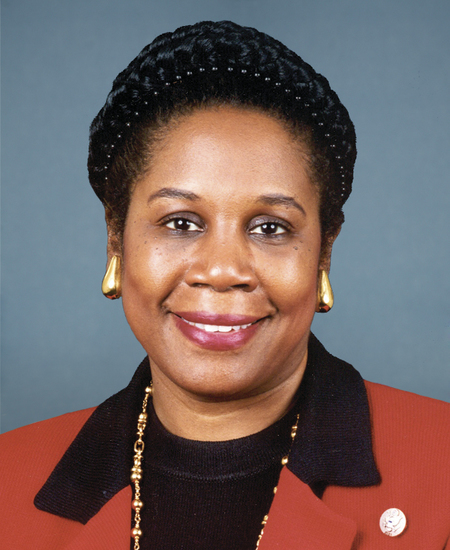
Rep. Sheila Jackson Lee
Sponsored bills
This resolution declares that respect for human rights is foundational to U.S. bilateral and international engagement with Nigeria, and it condemns the violence by Nigerian security forces against peaceful protestors. Further, the resolution supports the demands of the movement for justice, accountability, and meaningful police and security-sector reform in Nigeria, and it calls on the Nigerian government to release everyone who has been wrongfully arrested for participating in or supporting this movement.
This resolution calls on the government of Azerbaijan to immediately return all Armenian prisoners of war and captured civilians. The resolution also urges the Department of State to engage with Azerbaijani authorities to bring about this result.
This resolution supports the vision, mission, and goals of the Global Partnership for Education, and it affirms the role of the United States in improving access to quality public education and improved learning outcomes for children and adolescents (particularly for girls) in the poorest countries.
This resolution encourages the recognition of the collective history and achievements of people of African descent and reaffirms the importance of their equal participation in all aspects of political, economic, social, and cultural life. The resolution also recognizes that many Black Europeans have experienced injustices in the public and private sector and welcomes European efforts to promote racial equality and combat discrimination. Further, the resolution urges the Department of State and the U.S. Agency for International Development to support efforts to promote equality.
This resolution condemns Iranian state-sponsored terrorist attacks against U.S. citizens and officials and Iranian dissidents and expresses support for the people of Iran who are engaged in legitimate and peaceful protests against the Iranian regime.
HIV Epidemic Loan-Repayment Program Act of 2021 or the HELP Act of 2021 This bill directs the Health Resources and Services Administration (HRSA) to carry out a loan repayment program for certain health care providers who agree to provide HIV treatment or HIV dental care in (1) a designated health professional shortage area, (2) a clinical site that is funded under the Ryan White HIV/AIDS Program, or (3) an area that meets requirements specified by HRSA. For each qualifying year of service, HRSA pays one-fifth of the principal and interest on any eligible loan, with total loan repayment after five years; repayment is capped at $250,000 per borrower.
International Human Rights Defense Act of 2021 This bill establishes in the Department of State a permanent Special Envoy for the Human Rights of LGBTQI (lesbian, gay, bisexual, transgender, queer, or intersex) Peoples who shall serve as the principal State Department advisor regarding human rights for LGBTQI people and represent the United States in diplomatic matters relevant to the human rights of LGBTQI people. The special envoy shall periodically provide Congress with a U.S. global strategy to prevent and respond to criminalization, discrimination, and violence against LGBTQI people. The State Department and the U.S. Agency for International Development may provide assistance to prevent and respond to such activities against LGBTQI people. The bill also requires that annual country reports on human rights practices include information on criminalization, discrimination, and violence based on sexual orientation and gender identity.
Equal Rights and Access for the Women of South Sudan Act This bill requires that activities carried out by the United States in South Sudan relating to governance, post-conflict reconstruction and development, police and military training, or refugee relief and assistance support the human rights of women and their full political, social, and economic participation.
Automatic Voter Registration Act This bill provides for automatic voter registration of individuals through state motor vehicle authorities. Specifically, the bill requires each state motor vehicle authority, upon receiving specified identifying information regarding an individual who requests services from the authority, to transmit the identifying information to the appropriate state election official. The state election official must then notify the individual that the individual shall be automatically registered to vote in federal elections unless the individual declines to be registered to vote, does not meet voter registration eligibility requirements, or is already registered to vote. The bill provides an individual with a 21-calendar day period to opt out of automatic voter registration. A state may only use identifying information regarding an individual's citizenship status for determining whether the individual is eligible to vote in federal elections.